 Add to Chrome
 Add to Firefox
 Add to Edge
Improving the Realism of Synthetic Clinical Benchmarks Under Utility Constraints
Aug 06, 2026
Synthetic clinical benchmarks for enterprise AI agents can pass existing utility checks and still remain structurally unrealistic, especially in privacy-sensitive healthcare settings where operational data are hard to access. We study how to improve such benchmarks without breaking the downstream utility checks already used in practice. We formulate benchmark revision as utility-constrained realism improvement: dataset changes should increase realism while staying above an operational utility floor. We instantiate this idea on a care-gap benchmark derived from Synthea-generated patients exercised through demonstration electronic health record workflows and then processed by the same downstream pipeline as operational data. Realism is measured through missingness structure, simplicity, structural plausibility, and population alignment. The baseline benchmark is extremely thin: sampled-pair missingness is 79.44%, only 12.75% of rows are actionable, 38.94% of patients have zero actionable measures, and top-three token concentration reaches 100.0%. Two deterministic revisions improve these panels while remaining above the current utility floor, whereas a naive densification control preserves unrealistic templating. We further show that internal benchmark realism and source fidelity to an aggregate operational reference are related but distinct objectives. These results suggest that synthetic benchmark quality should be optimized explicitly, with utility treated as one constraint rather than as sufficient evidence of realism.

Dwelling Type Classification for Disaster Risk Assessment Using Satellite Imagery
Nov 16, 2022
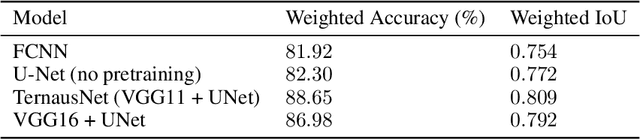
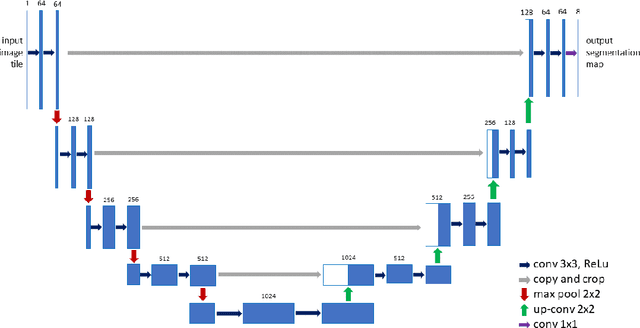
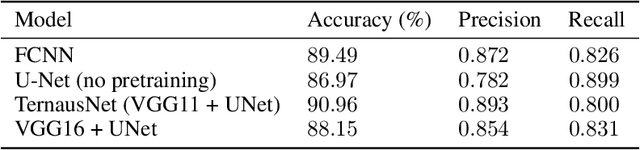
Vulnerability and risk assessment of neighborhoods is essential for effective disaster preparedness. Existing traditional systems, due to dependency on time-consuming and cost-intensive field surveying, do not provide a scalable way to decipher warnings and assess the precise extent of the risk at a hyper-local level. In this work, machine learning was used to automate the process of identifying dwellings and their type to build a potentially more effective disaster vulnerability assessment system. First, satellite imageries of low-income settlements and vulnerable areas in India were used to identify 7 different dwelling types. Specifically, we formulated the dwelling type classification as a semantic segmentation task and trained a U-net based neural network model, namely TernausNet, with the data we collected. Then a risk score assessment model was employed, using the determined dwelling type along with an inundation model of the regions. The entire pipeline was deployed to multiple locations prior to natural hazards in India in 2020. Post hoc ground-truth data from those regions was collected to validate the efficacy of this model which showed promising performance. This work can aid disaster response organizations and communities at risk by providing household-level risk information that can inform preemptive actions.
A Context-Aware Computational Approach for Measuring Vocal Entrainment in Dyadic Conversations
Nov 07, 2022
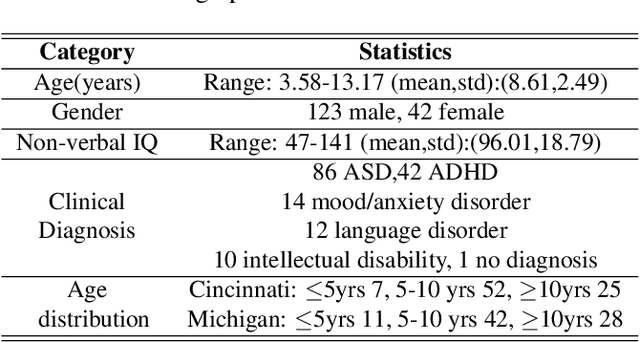

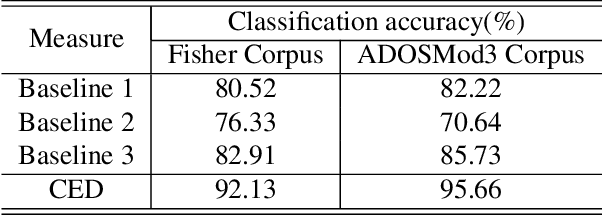
Vocal entrainment is a social adaptation mechanism in human interaction, knowledge of which can offer useful insights to an individual's cognitive-behavioral characteristics. We propose a context-aware approach for measuring vocal entrainment in dyadic conversations. We use conformers(a combination of convolutional network and transformer) for capturing both short-term and long-term conversational context to model entrainment patterns in interactions across different domains. Specifically we use cross-subject attention layers to learn intra- as well as inter-personal signals from dyadic conversations. We first validate the proposed method based on classification experiments to distinguish between real(consistent) and fake(inconsistent/shuffled) conversations. Experimental results on interactions involving individuals with Autism Spectrum Disorder also show evidence of a statistically-significant association between the introduced entrainment measure and clinical scores relevant to symptoms, including across gender and age groups.
Modeling Interpersonal Linguistic Coordination in Conversations using Word Mover's Distance
Apr 12, 2019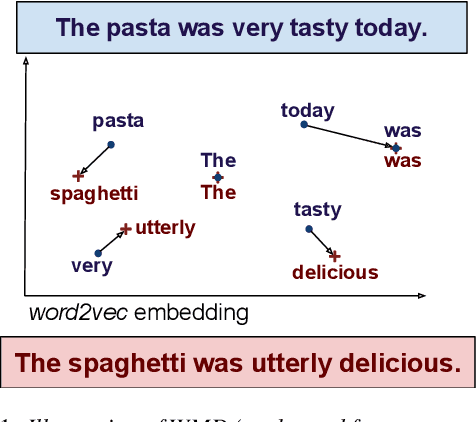
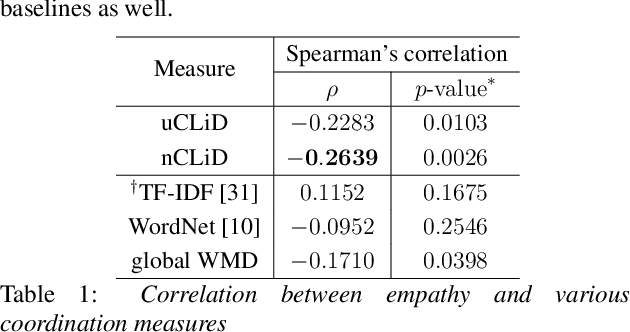
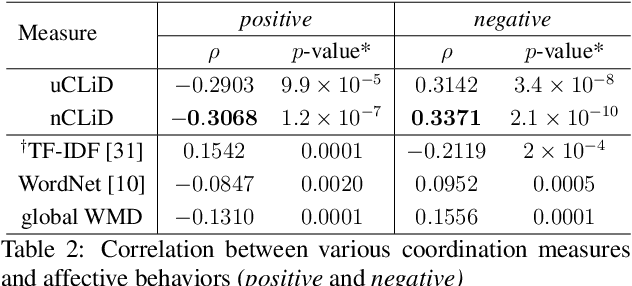
Linguistic coordination is a well-established phenomenon in spoken conversations and often associated with positive social behaviors and outcomes. While there have been many attempts to measure lexical coordination or entrainment in literature, only a few have explored coordination in syntactic or semantic space. In this work, we attempt to combine these different aspects of coordination into a single measure by leveraging distances in a neural word representation space. In particular, we adopt the recently proposed Word Mover's Distance with word2vec embeddings and extend it to measure the dissimilarity in language used in multiple consecutive speaker turns. To validate our approach, we apply this measure for two case studies in the clinical psychology domain. We find that our proposed measure is correlated with the therapist's empathy towards their patient in Motivational Interviewing and with affective behaviors in Couples Therapy. In both case studies, our proposed metric exhibits higher correlation than previously proposed measures. When applied to the couples with relationship improvement, we also notice a significant decrease in the proposed measure over the course of therapy, indicating higher linguistic coordination.
Towards an Unsupervised Entrainment Distance in Conversational Speech using Deep Neural Networks
Apr 23, 2018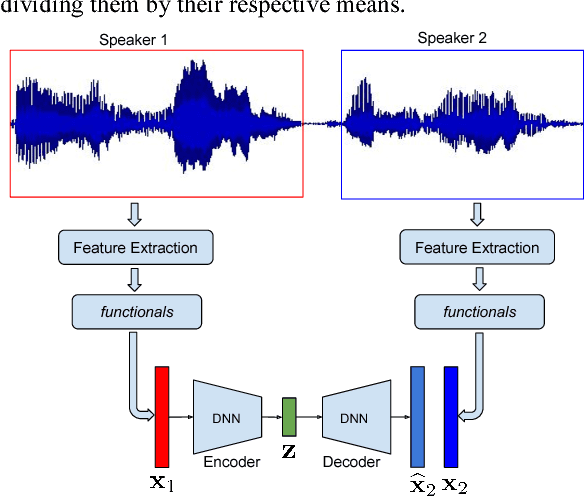
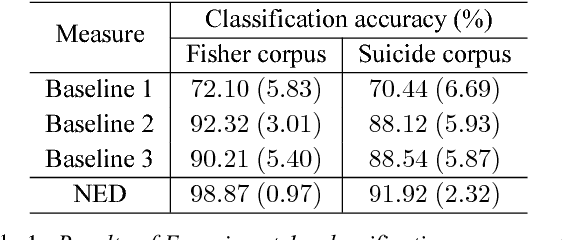
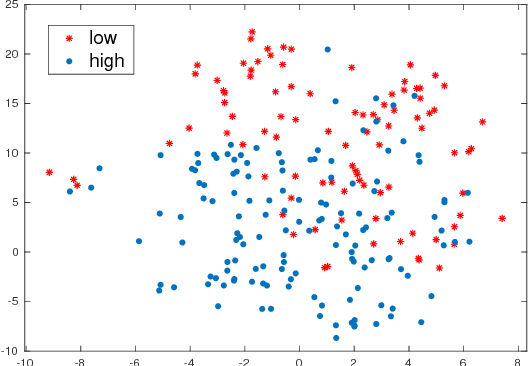
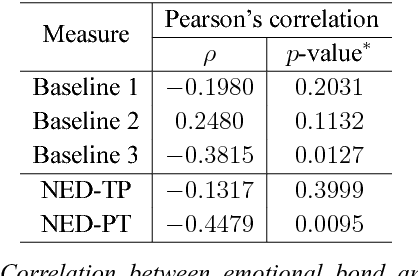
Entrainment is a known adaptation mechanism that causes interaction participants to adapt or synchronize their acoustic characteristics. Understanding how interlocutors tend to adapt to each other's speaking style through entrainment involves measuring a range of acoustic features and comparing those via multiple signal comparison methods. In this work, we present a turn-level distance measure obtained in an unsupervised manner using a Deep Neural Network (DNN) model, which we call Neural Entrainment Distance (NED). This metric establishes a framework that learns an embedding from the population-wide entrainment in an unlabeled training corpus. We use the framework for a set of acoustic features and validate the measure experimentally by showing its efficacy in distinguishing real conversations from fake ones created by randomly shuffling speaker turns. Moreover, we show real world evidence of the validity of the proposed measure. We find that high value of NED is associated with high ratings of emotional bond in suicide assessment interviews, which is consistent with prior studies.