 Add to Chrome
 Add to Firefox
 Add to Edge
Neuromorphic visual attention for Sign-language recognition on SpiNNaker
May 07, 2026
Sign-language recognition has achieved substantial gains in classification accuracy in recent years; however, the latency and power requirements of most existing methods limit their suitability for real-time deployment. Neuromorphic sensing and processing offer an alternative paradigm based on sparse, event-driven computation that supports low-latency and energy-efficient perception. In this work, we introduce an end-to-end neuromorphic architecture for American Sign Language (ASL) fingerspelling recognition that integrates a spiking visual attention mechanism for online region-of-interest extraction with a compact spiking neural network deployed on the SpiNNaker neuromorphic platform. We benchmark the proposed system against two datasets: a synthetically generated event-based version of the Sign Language MNIST dataset and a natively recorded ASL-DVS dataset, whilst providing a comprehensive overview of Sign-language recognition and related work. This work yields competitive performance in simulation (92.27%) and comparable performance on neuromorphic hardware deployment (83.1%), while achieving the most energy-efficient architecture (0.565 mW) and low latency (3 ms) across all benchmarked approaches. Despite its compact design, the system demonstrates the suitability of task-dependent visual attention applications for edge deployment.

evt_MNIST: A spike based version of traditional MNIST
Apr 22, 2016
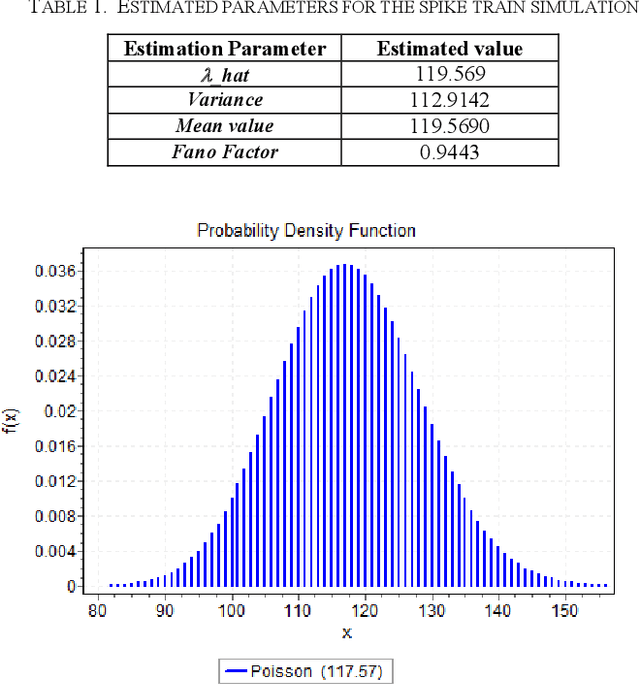
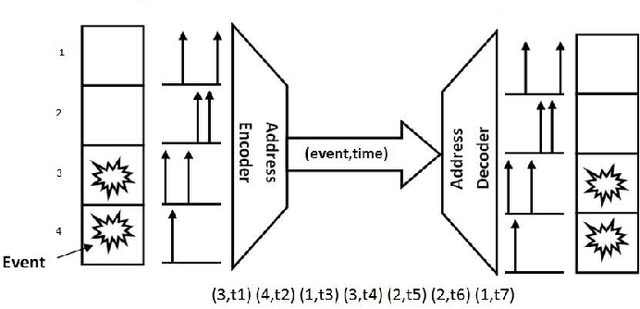
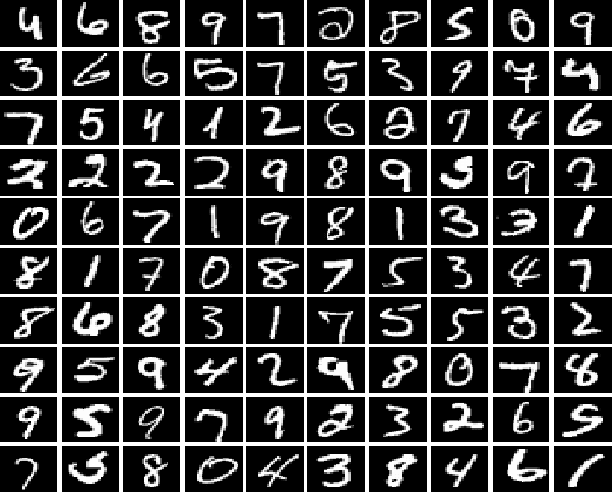
Benchmarks and datasets have important role in evaluation of machine learning algorithms and neural network implementations. Traditional dataset for images such as MNIST is applied to evaluate efficiency of different training algorithms in neural networks. This demand is different in Spiking Neural Networks (SNN) as they require spiking inputs. It is widely believed, in the biological cortex the timing of spikes is irregular. Poisson distributions provide adequate descriptions of the irregularity in generating appropriate spikes. Here, we introduce a spike-based version of MNSIT (handwritten digits dataset),using Poisson distribution and show the Poissonian property of the generated streams. We introduce a new version of evt_MNIST which can be used for neural network evaluation.