 Add to Chrome
 Add to Firefox
 Add to Edge
MedLLM: An Open Medical Language Model at the Sub-Billion Scale
Jul 29, 2026
Open medical language models have converged on a single scale: every widely used system runs at 7B parameters or more, leaving the sub-billion regime uncharacterized. We present MedLLM, an open 0.1B-parameter medical language model trained through a fully open three-phase pipeline: general pretraining with curriculum sequence-length scheduling, domain fine-tuning on MedFineWeb, a reference-guided medical corpus we release that is selected from general web data by embedding similarity to medical question-answering (QA) data, and preference-aligned fine-tuning combining SFT with direct preference optimization (DPO). Across medical benchmarks, MedLLM shows a pattern visible only at sub-billion scale: medical competence does not degrade uniformly under compression but splits by task type. On context-grounded QA it comes within $2.9$pp of a medically adapted 7B model and surpasses the instruction-tuned and general-purpose 7B baselines; on knowledge-recall QA it stays near the task floor on clinical-vignette MedQA yet significantly exceeds every 7B and sub-7B baseline on MedMCQA, indicating that where recall fails the constraint is model capacity rather than adaptation. This dissociation is masked at 7B, where both capabilities are present, and surfaces only when capacity is scarce.

INCLAIR: Inception-Based Longitudinal Clinical Anomaly Detection with Informed Reasoning
Jul 29, 2026Detecting anomalies in longitudinal clinical profiles is clinically important but difficult: abnormal evidence is often sparse, patient histories have unequal length, and expert explanations are costly. We propose INCLAIR, a framework that scores each observation against multiple historical contexts, aggregates evidence at the profile level, and generates grounded natural-language explanations under limited expert supervision. Under stated within-profile exchangeability assumptions, the complete mean subsequence score takes an order-$l$ U-statistic form, yielding a variance decomposition and an incomplete-subset approximation that controls combinatorial inference cost independently of profile length. The same analysis shows that mean aggregation attenuates localized anomalies by a factor set by the anomaly support and profile length, motivating validation-selected top-$k$ pooling. Across three clinical datasets, INCLAIR consistently outperforms state-of-the-art baselines. We further validate practical relevance through a case study on longitudinal steroid profiles, comparing INCLAIR's predictions and explanations against domain-expert assessments supported by DNA analysis. The results show that INCLAIR enables clinically actionable anomaly detection under limited expert supervision.
LongMoE: Longitudinal Multimodal Learning via Trajectory-Aware Mixture-of-Experts
Jun 06, 2026Multimodal clinical learning is increasingly important for integrating diverse patient data, including imaging, text, and personalised health records. However, it faces two fundamental challenges: i) modality missingness, where arbitrary subsets of modalities are unavailable at a given patient visit, ii) longitudinal dynamics, where the diagnostic significance of an observation depends on the patient's evolving disease trajectory over time. Existing methods address these challenges in isolation: missing-modality frameworks treat each visit as an independent static snapshot and discard temporal context, while longitudinal models often assume complete modality availability and degrade under systematic modality incompleteness. We propose LongMoE (Longitudinal Mixture-of-Experts), the unified framework to jointly address both challenges. LongMoE combines a context-aware imputation module with an attentional tokenization module that captures frequency-domain temporal patterns across irregular visit sequences, a trajectory-aware encoder for modeling disease progression, and context-conditioned Sparse MoE routing for patient-specific expert selection. Experiments on ADNI, OASIS-3, and MIMIC-IV show that LongMoE improves robustness under missing or weak contemporaneous modalities and remains competitive in full-modality settings, establishing a strong foundation for longitudinally-aware multimodal clinical learning.
AgentPLM: Agentic Protein Language Models with Reasoning-Augmented Decoding for Protein Sequence Design
Jun 01, 2026Protein language models (PLMs) are passive oracles: they generate sequences in a single forward pass with no mechanism to consult external biophysical feedback or redirect generation when a candidate violates thermodynamic or structural constraints. We introduce AgentPLM, which addresses this by equipping a pre-trained PLM with i) Reasoning-Augmented Decoding (RAD), which interleaves autoregressive generation with tool calls (ESMFold, FoldX, AutoDock Vina), and ii) Contrastive Agent Policy Optimisation (CAPO), a trajectory-level extension of direct preference optimisation that trains the policy end-to-end to learn when oracle feedback is informative rather than merely imitating high-fitness sequences. We evaluate AgentPLM on benchmark tasks spanning de novo enzyme design, antibody optimisation, thermostability, PPI interface design, and zero-shot fitness prediction with standardised oracle APIs and controlled sequence-identity splits. AgentPLM achieves state-of-the-art results with a gain in antibody top-10% hit rate over the strongest passive baseline, providing mechanistic evidence of online error correction without explicit backtracking.
DiGAN: Diffusion-Guided Attention Network for Early Alzheimer's Disease Detection
Feb 02, 2026Early diagnosis of Alzheimer's disease (AD) remains a major challenge due to the subtle and temporally irregular progression of structural brain changes in the prodromal stages. Existing deep learning approaches require large longitudinal datasets and often fail to model the temporal continuity and modality irregularities inherent in real-world clinical data. To address these limitations, we propose the Diffusion-Guided Attention Network (DiGAN), which integrates latent diffusion modelling with an attention-guided convolutional network. The diffusion model synthesizes realistic longitudinal neuroimaging trajectories from limited training data, enriching temporal context and improving robustness to unevenly spaced visits. The attention-convolutional layer then captures discriminative structural--temporal patterns that distinguish cognitively normal subjects from those with mild cognitive impairment and subjective cognitive decline. Experiments on synthetic and ADNI datasets demonstrate that DiGAN outperforms existing state-of-the-art baselines, showing its potential for early-stage AD detection.
RAG for Effective Supply Chain Security Questionnaire Automation
Dec 18, 2024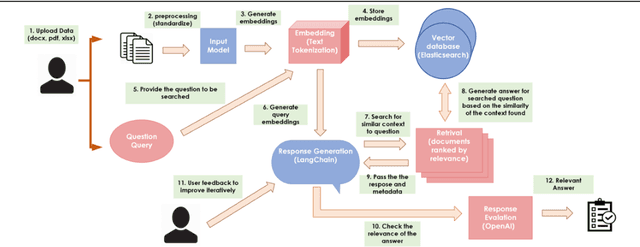
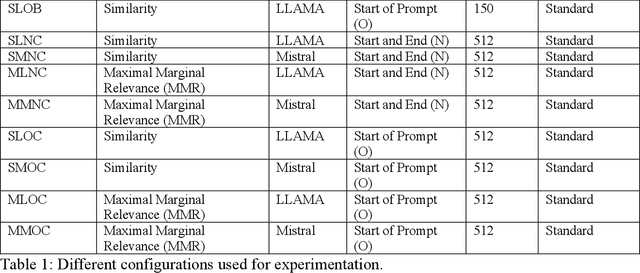
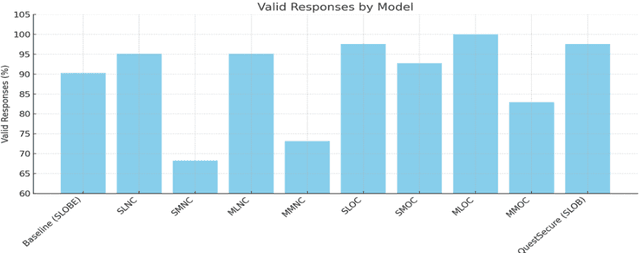
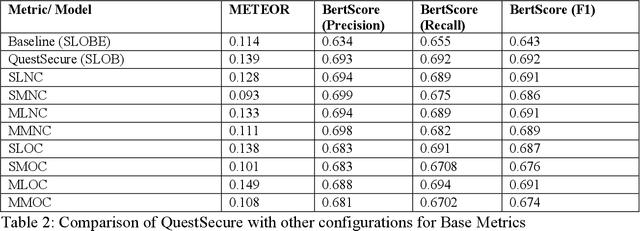
In an era where digital security is crucial, efficient processing of security-related inquiries through supply chain security questionnaires is imperative. This paper introduces a novel approach using Natural Language Processing (NLP) and Retrieval-Augmented Generation (RAG) to automate these responses. We developed QuestSecure, a system that interprets diverse document formats and generates precise responses by integrating large language models (LLMs) with an advanced retrieval system. Our experiments show that QuestSecure significantly improves response accuracy and operational efficiency. By employing advanced NLP techniques and tailored retrieval mechanisms, the system consistently produces contextually relevant and semantically rich responses, reducing cognitive load on security teams and minimizing potential errors. This research offers promising avenues for automating complex security management tasks, enhancing organizational security processes.
LLMRS: Unlocking Potentials of LLM-Based Recommender Systems for Software Purchase
Jan 12, 2024Recommendation systems are ubiquitous, from Spotify playlist suggestions to Amazon product suggestions. Nevertheless, depending on the methodology or the dataset, these systems typically fail to capture user preferences and generate general recommendations. Recent advancements in Large Language Models (LLM) offer promising results for analyzing user queries. However, employing these models to capture user preferences and efficiency remains an open question. In this paper, we propose LLMRS, an LLM-based zero-shot recommender system where we employ pre-trained LLM to encode user reviews into a review score and generate user-tailored recommendations. We experimented with LLMRS on a real-world dataset, the Amazon product reviews, for software purchase use cases. The results show that LLMRS outperforms the ranking-based baseline model while successfully capturing meaningful information from product reviews, thereby providing more reliable recommendations.
AI-based approach for improving the detection of blood doping in sports
Feb 09, 2022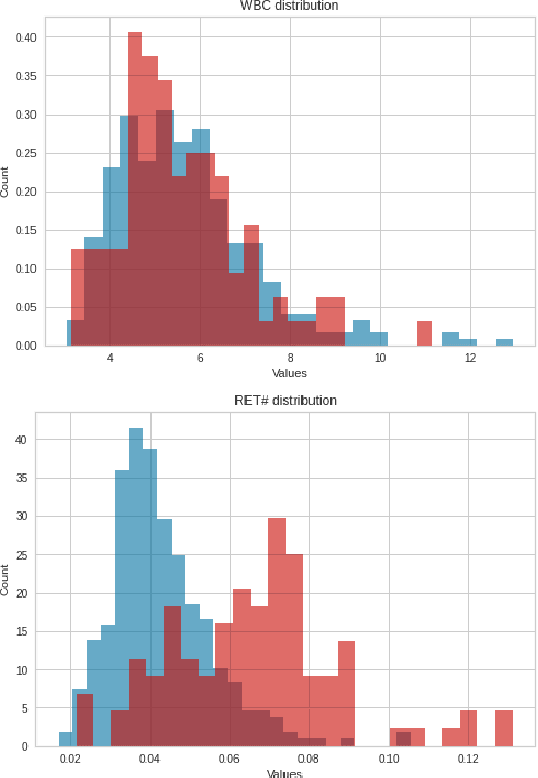
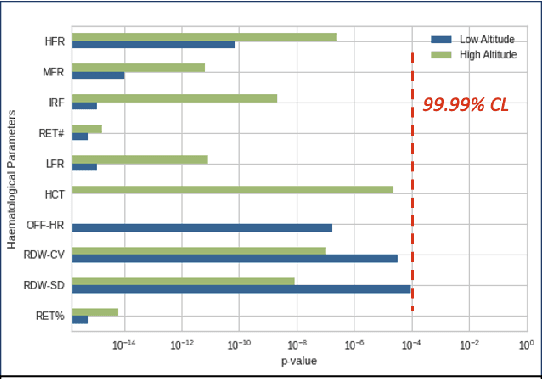
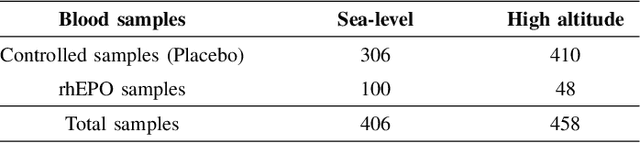
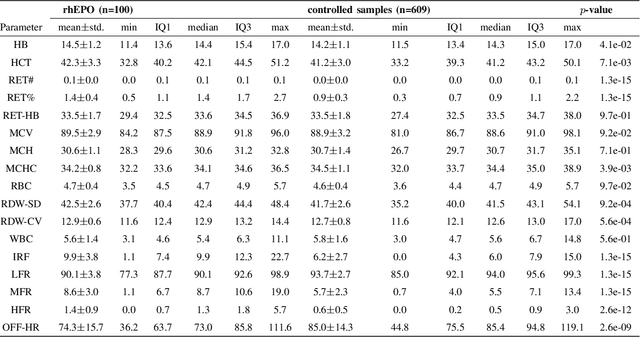
Sports officials around the world are facing incredible challenges due to the unfair means of practices performed by the athletes to improve their performance in the game. It includes the intake of hormonal based drugs or transfusion of blood to increase their strength and the result of their training. However, the current direct test of detection of these cases includes the laboratory-based method, which is limited because of the cost factors, availability of medical experts, etc. This leads us to seek for indirect tests. With the growing interest of Artificial Intelligence in healthcare, it is important to propose an algorithm based on blood parameters to improve decision making. In this paper, we proposed a statistical and machine learning-based approach to identify the presence of doping substance rhEPO in blood samples.