 Add to Chrome
 Add to Firefox
 Add to Edge
EXE-Bench: Ranking the Tradeoffs of AI-based Windows Malware Detectors for Real-World Usability
Jul 27, 2026
Due to the lack of systematic evaluations, we are not yet able to determine which AI-based Windows malware detector to deploy in production, since existing evaluations (i) differ in terms of data used for both training and testing; (ii) do not consider temporal analysis to showcase whether models withstand the passage of time; (iii) avoid security evaluations with adversarial attacks that could highlight their brittleness against content-injection attacks; and (iv) neglect the computational requirements for deployment, risking slow inference on endpoints. For these reasons, we develop EXE-Bench, a comprehensive benchmark of AI-based Windows malware detectors. EXE-Bench assesses performance, temporal and adversarial robustness, and computational overhead, aggregating them into a single score for direct and fair model comparison. Through EXE-Bench, we highlight how evaluations conducted only after deployment are suboptimal and unable to provide a complete picture of their performance. In particular, through our analysis, we remark how much domain knowledge instilled through feature engineering is still extremely useful in this domain, resisting both time and adversarial attacks, in stark contrast with most of the deep networks that only excel right after deployment.

Adversarial Frontiers: Minimum-Norm Attack Ensembles for Robustness Evaluation
Jul 22, 2026Adversarial robustness is commonly evaluated with predefined attack ensembles, such as AutoAttack, at a single perturbation budget $\varepsilon$ and on a selective choice of perturbation norms. We argue this formulation is fundamentally limited. First, robustness--perturbation curves may intersect or decay at different rates across models, making single-$\varepsilon$ rankings unstable. Second, current ensembles provide no evidence of optimality, leaving an unknown gap to worst-case performance. Third, fixed attack configurations provide no systematic control over the trade-off between attack strength and evaluation cost. To address these limitations, we introduce a unified evaluation framework based on a comprehensive pool of minimum-norm attacks and robustness--perturbation curves across $\ell_0$, $\ell_1$, $\ell_2$ and $\ell_\infty$ norms. We define the attack frontier as the worst-case robustness estimate the attack pool produces against a model. We then formalize evaluation as a frontier-approximation problem, constructing minimum-norm attack ensembles, optimized subsets of the comprehensive pool, that approach the frontier under a controllable query budget, with larger budgets monotonically tightening the estimate. Furthermore, we define the defense frontier as the maximum robustness across the model set at each perturbation size. We finally propose the Defense Optimality Index to rank defenses by their gap to the defense frontier, providing a ranking without selecting a reference $\varepsilon$. On CIFAR-10 and ImageNet, our ensembles match or exceed AutoAttack on most defenses at every budget tier, at fixed and controllable query cost, offering practitioners a query-controlled, curve-based alternative to fixed-$\varepsilon$ evaluation.
Latent-space Attacks for Refusal Evasion in Language Models
May 20, 2026Safety-aligned language models are trained to refuse harmful requests, yet refusal behavior can be suppressed by steering their internal representations. Existing methods do so by ablating a refusal direction from model activations, aiming to remove refusal from the model's residual stream. Despite their empirical success, these methods lack a principled account of the latent-space transformation they induce and why it suppresses refusal. In this work, we recast refusal suppression as a latent-space evasion attack against linear probes trained to separate refused from answered prompts. Under this view, prior work's difference-in-means direction naturally defines such a probe, and its ablation is exactly a projection onto its decision boundary, i.e., a minimum-confidence evasion attack. This perspective not only explains the empirical success of prior work but also admits a key limitation: evasion stops at the decision boundary, motivating the need to push representations further into the compliant region, i.e., where the model answers. We leverage this by proposing a Controlled Latent-space Evasion attack that projects representations past the boundary with an optimized confidence. We achieve state-of-the-art attack success rate across 15 instruction-tuned, multimodal, and reasoning models, outperforming existing refusal-ablation baselines and specialized jailbreak attacks.
Label-efficient Training Updates for Malware Detection over Time
Mar 30, 2026Machine Learning (ML)-based detectors are becoming essential to counter the proliferation of malware. However, common ML algorithms are not designed to cope with the dynamic nature of real-world settings, where both legitimate and malicious software evolve. This distribution drift causes models trained under static assumptions to degrade over time unless they are continuously updated. Regularly retraining these models, however, is expensive, since labeling new acquired data requires costly manual analysis by security experts. To reduce labeling costs and address distribution drift in malware detection, prior work explored active learning (AL) and semi-supervised learning (SSL) techniques. Yet, existing studies (i) are tightly coupled to specific detector architectures and restricted to a specific malware domain, resulting in non-uniform comparisons; and (ii) lack a consistent methodology for analyzing the distribution drift, despite the critical sensitivity of the malware domain to temporal changes. In this work, we bridge this gap by proposing a model-agnostic framework that evaluates an extensive set of AL and SSL techniques, isolated and combined, for Android and Windows malware detection. We show that these techniques, when combined, can reduce manual annotation costs by up to 90% across both domains while achieving comparable detection performance to full-labeling retraining. We also introduce a methodology for feature-level drift analysis that measures feature stability over time, showing its correlation with the detector performance. Overall, our study provides a detailed understanding of how AL and SSL behave under distribution drift and how they can be successfully combined, offering practical insights for the design of effective detectors over time.
SAGE-5GC: Security-Aware Guidelines for Evaluating Anomaly Detection in the 5G Core Network
Feb 03, 2026Machine learning-based anomaly detection systems are increasingly being adopted in 5G Core networks to monitor complex, high-volume traffic. However, most existing approaches are evaluated under strong assumptions that rarely hold in operational environments, notably the availability of independent and identically distributed (IID) data and the absence of adaptive attackers.In this work, we study the problem of detecting 5G attacks \textit{in the wild}, focusing on realistic deployment settings. We propose a set of Security-Aware Guidelines for Evaluating anomaly detectors in 5G Core Network (SAGE-5GC), driven by domain knowledge and consideration of potential adversarial threats. Using a realistic 5G Core dataset, we first train several anomaly detectors and assess their baseline performance against standard 5GC control-plane cyberattacks targeting PFCP-based network services.We then extend the evaluation to adversarial settings, where an attacker tries to manipulate the observable features of the network traffic to evade detection, under the constraint that the intended functionality of the malicious traffic is preserved. Starting from a selected set of controllable features, we analyze model sensitivity and adversarial robustness through randomized perturbations. Finally, we introduce a practical optimization strategy based on genetic algorithms that operates exclusively on attacker-controllable features and does not require prior knowledge of the underlying detection model. Our experimental results show that adversarially crafted attacks can substantially degrade detection performance, underscoring the need for robust, security-aware evaluation methodologies for anomaly detection in 5G networks deployed in the wild.
Out-of-Distribution Detection for Continual Learning: Design Principles and Benchmarking
Dec 16, 2025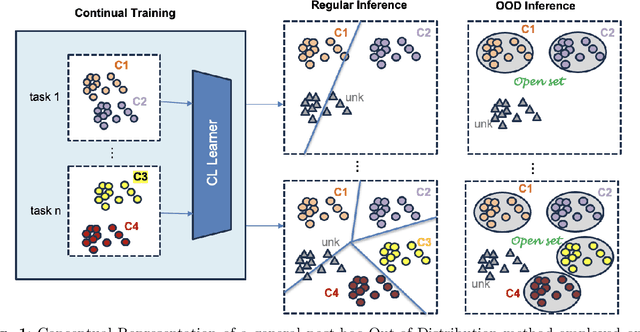
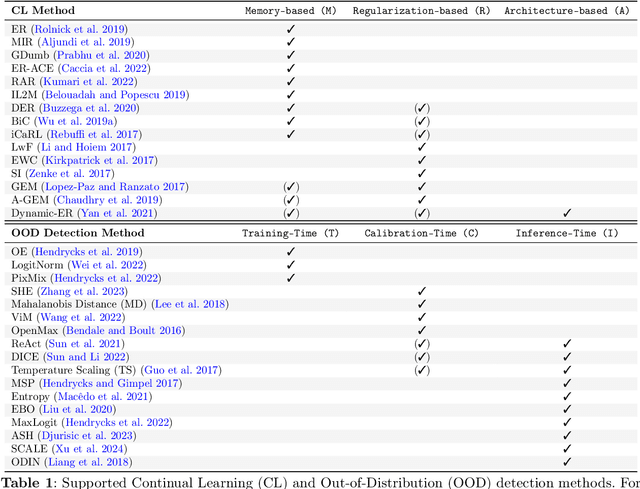
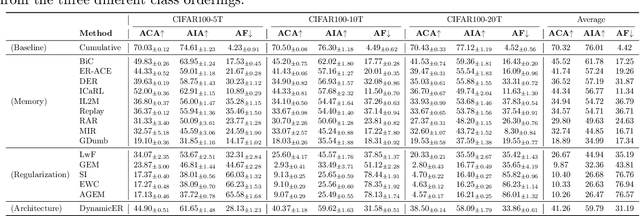
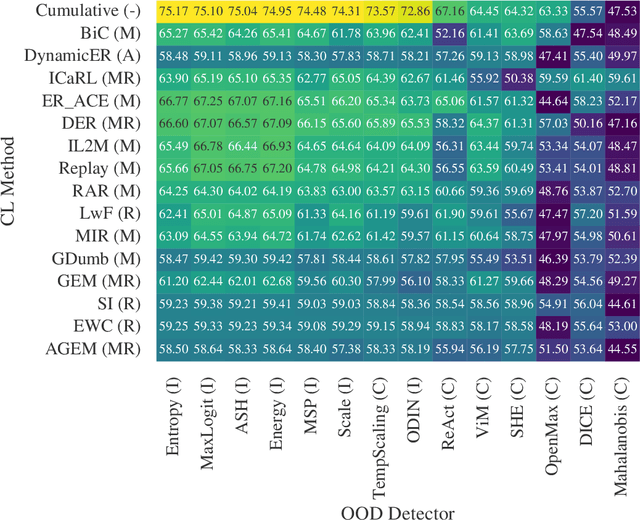
Recent years have witnessed significant progress in the development of machine learning models across a wide range of fields, fueled by increased computational resources, large-scale datasets, and the rise of deep learning architectures. From malware detection to enabling autonomous navigation, modern machine learning systems have demonstrated remarkable capabilities. However, as these models are deployed in ever-changing real-world scenarios, their ability to remain reliable and adaptive over time becomes increasingly important. For example, in the real world, new malware families are continuously developed, whereas autonomous driving cars are employed in many different cities and weather conditions. Models trained in fixed settings can not respond effectively to novel conditions encountered post-deployment. In fact, most machine learning models are still developed under the assumption that training and test data are independent and identically distributed (i.i.d.), i.e., sampled from the same underlying (unknown) distribution. While this assumption simplifies model development and evaluation, it does not hold in many real-world applications, where data changes over time and unexpected inputs frequently occur. Retraining models from scratch whenever new data appears is computationally expensive, time-consuming, and impractical in resource-constrained environments. These limitations underscore the need for Continual Learning (CL), which enables models to incrementally learn from evolving data streams without forgetting past knowledge, and Out-of-Distribution (OOD) detection, which allows systems to identify and respond to novel or anomalous inputs. Jointly addressing both challenges is critical to developing robust, efficient, and adaptive AI systems.
RAID: A Dataset for Testing the Adversarial Robustness of AI-Generated Image Detectors
Jun 09, 2025AI-generated images have reached a quality level at which humans are incapable of reliably distinguishing them from real images. To counteract the inherent risk of fraud and disinformation, the detection of AI-generated images is a pressing challenge and an active research topic. While many of the presented methods claim to achieve high detection accuracy, they are usually evaluated under idealized conditions. In particular, the adversarial robustness is often neglected, potentially due to a lack of awareness or the substantial effort required to conduct a comprehensive robustness analysis. In this work, we tackle this problem by providing a simpler means to assess the robustness of AI-generated image detectors. We present RAID (Robust evaluation of AI-generated image Detectors), a dataset of 72k diverse and highly transferable adversarial examples. The dataset is created by running attacks against an ensemble of seven state-of-the-art detectors and images generated by four different text-to-image models. Extensive experiments show that our methodology generates adversarial images that transfer with a high success rate to unseen detectors, which can be used to quickly provide an approximate yet still reliable estimate of a detector's adversarial robustness. Our findings indicate that current state-of-the-art AI-generated image detectors can be easily deceived by adversarial examples, highlighting the critical need for the development of more robust methods. We release our dataset at https://huggingface.co/datasets/aimagelab/RAID and evaluation code at https://github.com/pralab/RAID.
Buffer-free Class-Incremental Learning with Out-of-Distribution Detection
May 29, 2025Class-incremental learning (CIL) poses significant challenges in open-world scenarios, where models must not only learn new classes over time without forgetting previous ones but also handle inputs from unknown classes that a closed-set model would misclassify. Recent works address both issues by (i)~training multi-head models using the task-incremental learning framework, and (ii) predicting the task identity employing out-of-distribution (OOD) detectors. While effective, the latter mainly relies on joint training with a memory buffer of past data, raising concerns around privacy, scalability, and increased training time. In this paper, we present an in-depth analysis of post-hoc OOD detection methods and investigate their potential to eliminate the need for a memory buffer. We uncover that these methods, when applied appropriately at inference time, can serve as a strong substitute for buffer-based OOD detection. We show that this buffer-free approach achieves comparable or superior performance to buffer-based methods both in terms of class-incremental learning and the rejection of unknown samples. Experimental results on CIFAR-10, CIFAR-100 and Tiny ImageNet datasets support our findings, offering new insights into the design of efficient and privacy-preserving CIL systems for open-world settings.
Adversarial Pruning: A Survey and Benchmark of Pruning Methods for Adversarial Robustness
Sep 02, 2024Recent work has proposed neural network pruning techniques to reduce the size of a network while preserving robustness against adversarial examples, i.e., well-crafted inputs inducing a misclassification. These methods, which we refer to as adversarial pruning methods, involve complex and articulated designs, making it difficult to analyze the differences and establish a fair and accurate comparison. In this work, we overcome these issues by surveying current adversarial pruning methods and proposing a novel taxonomy to categorize them based on two main dimensions: the pipeline, defining when to prune; and the specifics, defining how to prune. We then highlight the limitations of current empirical analyses and propose a novel, fair evaluation benchmark to address them. We finally conduct an empirical re-evaluation of current adversarial pruning methods and discuss the results, highlighting the shared traits of top-performing adversarial pruning methods, as well as common issues. We welcome contributions in our publicly-available benchmark at https://github.com/pralab/AdversarialPruningBenchmark
HO-FMN: Hyperparameter Optimization for Fast Minimum-Norm Attacks
Jul 11, 2024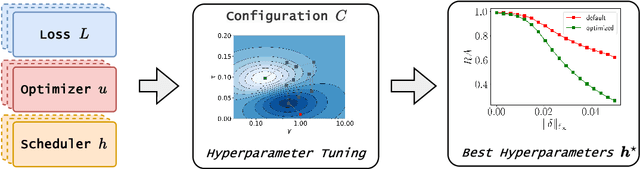
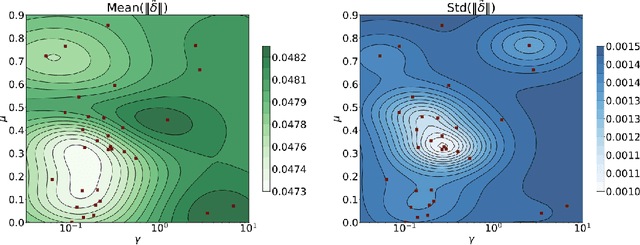
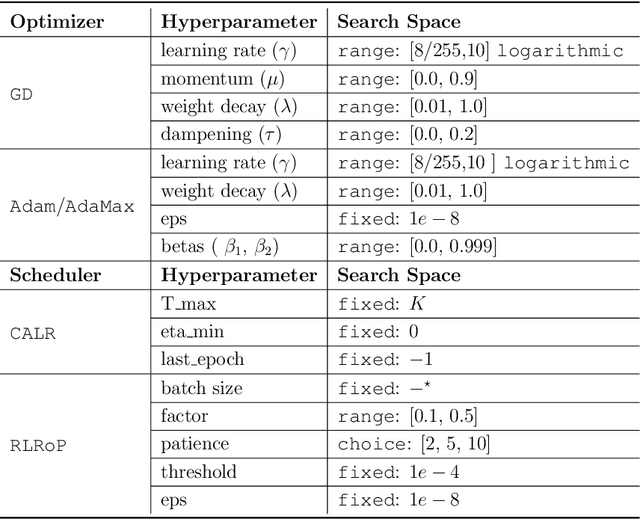

Gradient-based attacks are a primary tool to evaluate robustness of machine-learning models. However, many attacks tend to provide overly-optimistic evaluations as they use fixed loss functions, optimizers, step-size schedulers, and default hyperparameters. In this work, we tackle these limitations by proposing a parametric variation of the well-known fast minimum-norm attack algorithm, whose loss, optimizer, step-size scheduler, and hyperparameters can be dynamically adjusted. We re-evaluate 12 robust models, showing that our attack finds smaller adversarial perturbations without requiring any additional tuning. This also enables reporting adversarial robustness as a function of the perturbation budget, providing a more complete evaluation than that offered by fixed-budget attacks, while remaining efficient. We release our open-source code at https://github.com/pralab/HO-FMN.