 Add to Chrome
 Add to Firefox
 Add to Edge
Adversarial Frontiers: Minimum-Norm Attack Ensembles for Robustness Evaluation
Jul 22, 2026
Adversarial robustness is commonly evaluated with predefined attack ensembles, such as AutoAttack, at a single perturbation budget $\varepsilon$ and on a selective choice of perturbation norms. We argue this formulation is fundamentally limited. First, robustness--perturbation curves may intersect or decay at different rates across models, making single-$\varepsilon$ rankings unstable. Second, current ensembles provide no evidence of optimality, leaving an unknown gap to worst-case performance. Third, fixed attack configurations provide no systematic control over the trade-off between attack strength and evaluation cost. To address these limitations, we introduce a unified evaluation framework based on a comprehensive pool of minimum-norm attacks and robustness--perturbation curves across $\ell_0$, $\ell_1$, $\ell_2$ and $\ell_\infty$ norms. We define the attack frontier as the worst-case robustness estimate the attack pool produces against a model. We then formalize evaluation as a frontier-approximation problem, constructing minimum-norm attack ensembles, optimized subsets of the comprehensive pool, that approach the frontier under a controllable query budget, with larger budgets monotonically tightening the estimate. Furthermore, we define the defense frontier as the maximum robustness across the model set at each perturbation size. We finally propose the Defense Optimality Index to rank defenses by their gap to the defense frontier, providing a ranking without selecting a reference $\varepsilon$. On CIFAR-10 and ImageNet, our ensembles match or exceed AutoAttack on most defenses at every budget tier, at fixed and controllable query cost, offering practitioners a query-controlled, curve-based alternative to fixed-$\varepsilon$ evaluation.

HO-FMN: Hyperparameter Optimization for Fast Minimum-Norm Attacks
Jul 11, 2024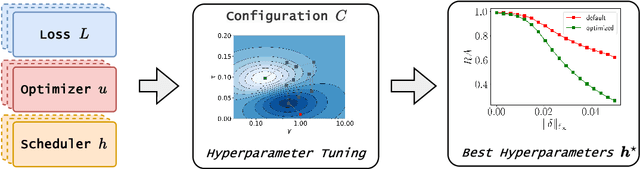
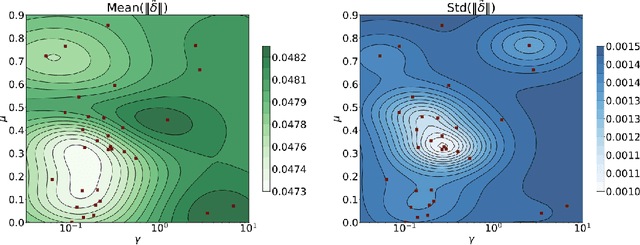
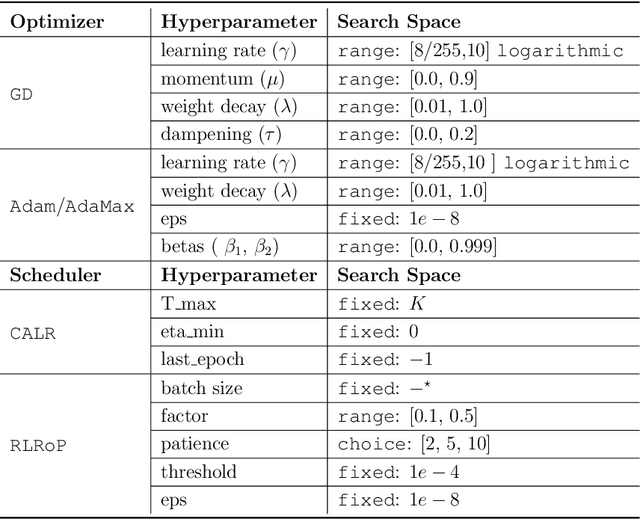

Gradient-based attacks are a primary tool to evaluate robustness of machine-learning models. However, many attacks tend to provide overly-optimistic evaluations as they use fixed loss functions, optimizers, step-size schedulers, and default hyperparameters. In this work, we tackle these limitations by proposing a parametric variation of the well-known fast minimum-norm attack algorithm, whose loss, optimizer, step-size scheduler, and hyperparameters can be dynamically adjusted. We re-evaluate 12 robust models, showing that our attack finds smaller adversarial perturbations without requiring any additional tuning. This also enables reporting adversarial robustness as a function of the perturbation budget, providing a more complete evaluation than that offered by fixed-budget attacks, while remaining efficient. We release our open-source code at https://github.com/pralab/HO-FMN.
Improving Fast Minimum-Norm Attacks with Hyperparameter Optimization
Oct 12, 2023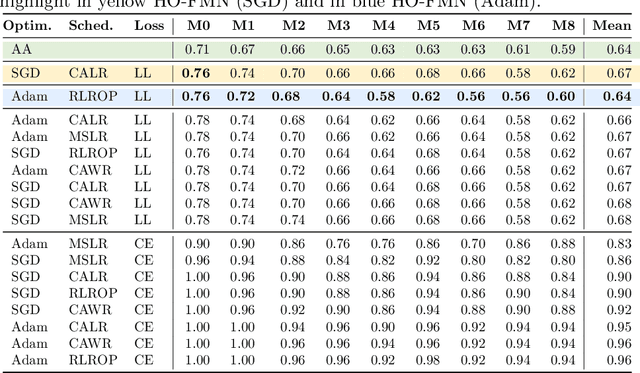
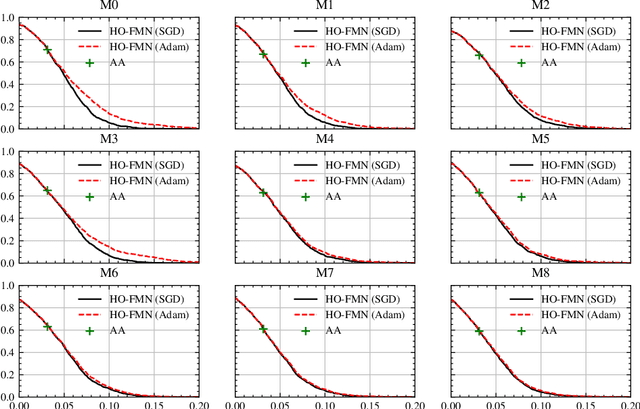
Evaluating the adversarial robustness of machine learning models using gradient-based attacks is challenging. In this work, we show that hyperparameter optimization can improve fast minimum-norm attacks by automating the selection of the loss function, the optimizer and the step-size scheduler, along with the corresponding hyperparameters. Our extensive evaluation involving several robust models demonstrates the improved efficacy of fast minimum-norm attacks when hyper-up with hyperparameter optimization. We release our open-source code at https://github.com/pralab/HO-FMN.