 Add to Chrome
 Add to Firefox
 Add to Edge
AI Agents in Drug Discovery
Oct 31, 2025
Artificial intelligence (AI) agents are emerging as transformative tools in drug discovery, with the ability to autonomously reason, act, and learn through complicated research workflows. Building on large language models (LLMs) coupled with perception, computation, action, and memory tools, these agentic AI systems could integrate diverse biomedical data, execute tasks, carry out experiments via robotic platforms, and iteratively refine hypotheses in closed loops. We provide a conceptual and technical overview of agentic AI architectures, ranging from ReAct and Reflection to Supervisor and Swarm systems, and illustrate their applications across key stages of drug discovery, including literature synthesis, toxicity prediction, automated protocol generation, small-molecule synthesis, drug repurposing, and end-to-end decision-making. To our knowledge, this represents the first comprehensive work to present real-world implementations and quantifiable impacts of agentic AI systems deployed in operational drug discovery settings. Early implementations demonstrate substantial gains in speed, reproducibility, and scalability, compressing workflows that once took months into hours while maintaining scientific traceability. We discuss the current challenges related to data heterogeneity, system reliability, privacy, and benchmarking, and outline future directions towards technology in support of science and translation.

Beyond PID Controllers: PPO with Neuralized PID Policy for Proton Beam Intensity Control in Mu2e
Dec 28, 2023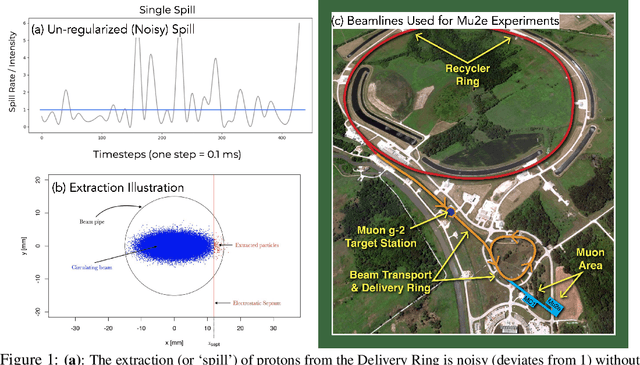
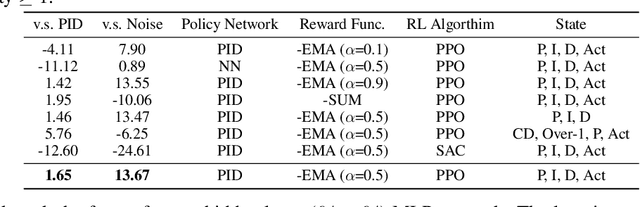
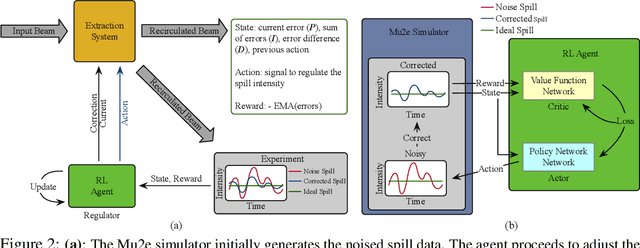
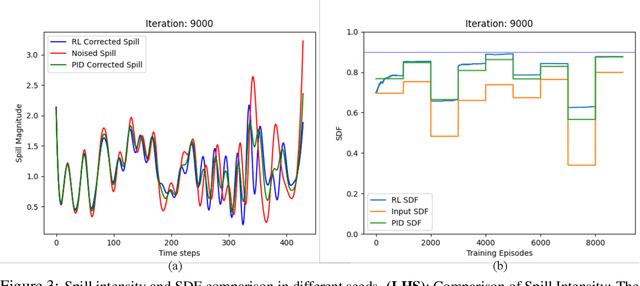
We introduce a novel Proximal Policy Optimization (PPO) algorithm aimed at addressing the challenge of maintaining a uniform proton beam intensity delivery in the Muon to Electron Conversion Experiment (Mu2e) at Fermi National Accelerator Laboratory (Fermilab). Our primary objective is to regulate the spill process to ensure a consistent intensity profile, with the ultimate goal of creating an automated controller capable of providing real-time feedback and calibration of the Spill Regulation System (SRS) parameters on a millisecond timescale. We treat the Mu2e accelerator system as a Markov Decision Process suitable for Reinforcement Learning (RL), utilizing PPO to reduce bias and enhance training stability. A key innovation in our approach is the integration of a neuralized Proportional-Integral-Derivative (PID) controller into the policy function, resulting in a significant improvement in the Spill Duty Factor (SDF) by 13.6%, surpassing the performance of the current PID controller baseline by an additional 1.6%. This paper presents the preliminary offline results based on a differentiable simulator of the Mu2e accelerator. It paves the groundwork for real-time implementations and applications, representing a crucial step towards automated proton beam intensity control for the Mu2e experiment.