 Add to Chrome
 Add to Firefox
 Add to Edge
OTel: Building Domain-Specialized Telecom LLM Foundations for Intelligent Networks
Aug 15, 2026
Frontier AI models have advanced rapidly, but they still struggle with telecom-specific tasks. We present Open Telco (OTel), an open telecom AI resource with derived datasets for retrieval, reranking, instruction tuning, and safety/abstention, plus 30 full-parameter post-trained baselines across embedding, reranking, and language models. The community has already engaged substantially with the resource: as of May 3, 2026, the released models have been downloaded over 16 million times, and the project has received 157+ pieces of media coverage worldwide. Building on prior open telecom datasets and benchmarks, OTel provides documented telecom data sources, held-out evaluation partitions, trained embedding models, rerankers, context-grounded LLMs, and safety/abstention data in one unified resource. OTel post-training improves performance across all three model families: embedding retrieval reaches 93.5% NDCG@10, reranking reaches 0.952 MRR@10, and language-model correctness reaches 88.2%. We release OTel as a reproducible starting point and invite the community to expand the data, improve embedding and reranking models, and build stronger context-grounded telecom LLMs.

Beyond PID Controllers: PPO with Neuralized PID Policy for Proton Beam Intensity Control in Mu2e
Dec 28, 2023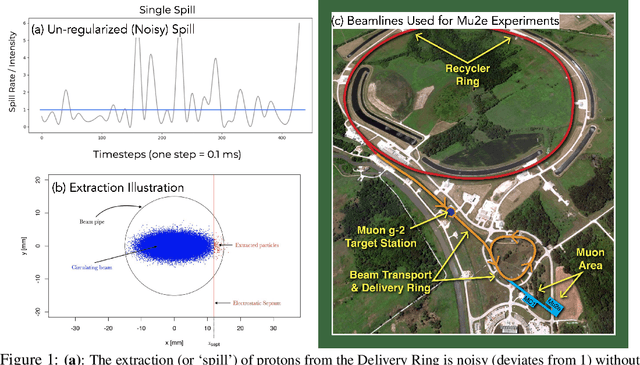
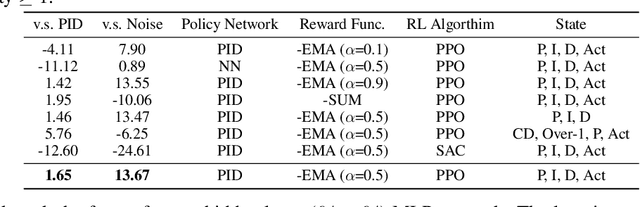
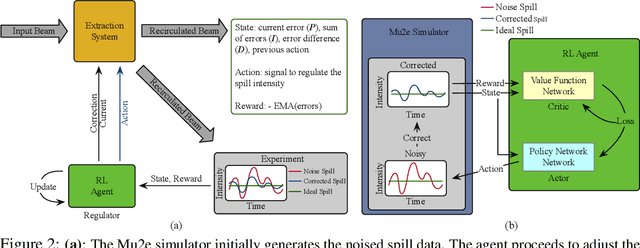
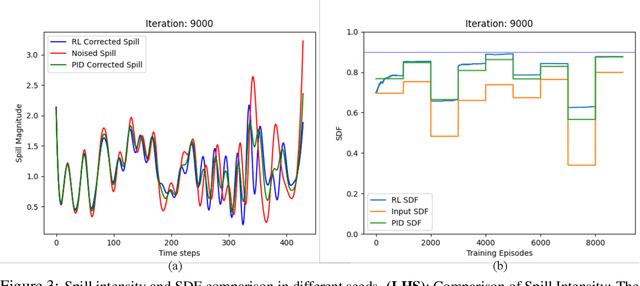
We introduce a novel Proximal Policy Optimization (PPO) algorithm aimed at addressing the challenge of maintaining a uniform proton beam intensity delivery in the Muon to Electron Conversion Experiment (Mu2e) at Fermi National Accelerator Laboratory (Fermilab). Our primary objective is to regulate the spill process to ensure a consistent intensity profile, with the ultimate goal of creating an automated controller capable of providing real-time feedback and calibration of the Spill Regulation System (SRS) parameters on a millisecond timescale. We treat the Mu2e accelerator system as a Markov Decision Process suitable for Reinforcement Learning (RL), utilizing PPO to reduce bias and enhance training stability. A key innovation in our approach is the integration of a neuralized Proportional-Integral-Derivative (PID) controller into the policy function, resulting in a significant improvement in the Spill Duty Factor (SDF) by 13.6%, surpassing the performance of the current PID controller baseline by an additional 1.6%. This paper presents the preliminary offline results based on a differentiable simulator of the Mu2e accelerator. It paves the groundwork for real-time implementations and applications, representing a crucial step towards automated proton beam intensity control for the Mu2e experiment.
The KiTS21 Challenge: Automatic segmentation of kidneys, renal tumors, and renal cysts in corticomedullary-phase CT
Jul 05, 2023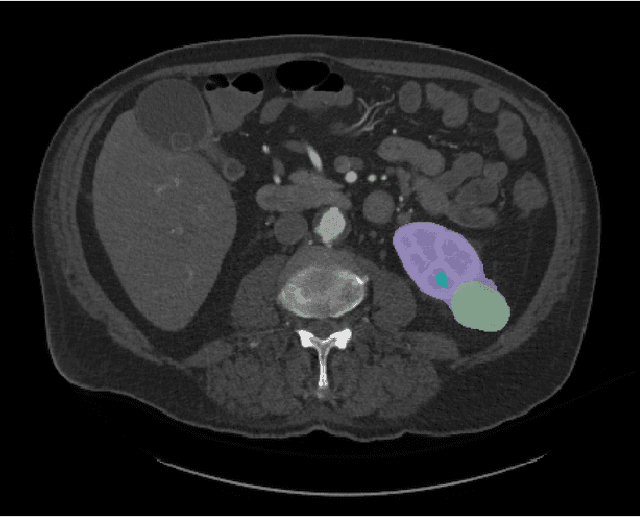
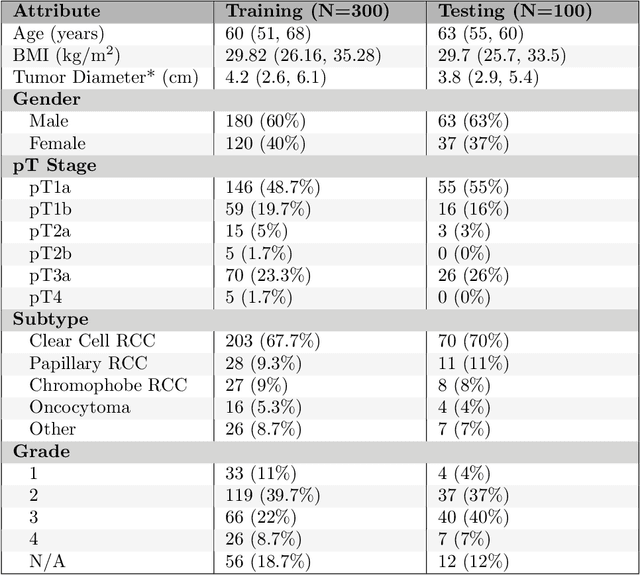
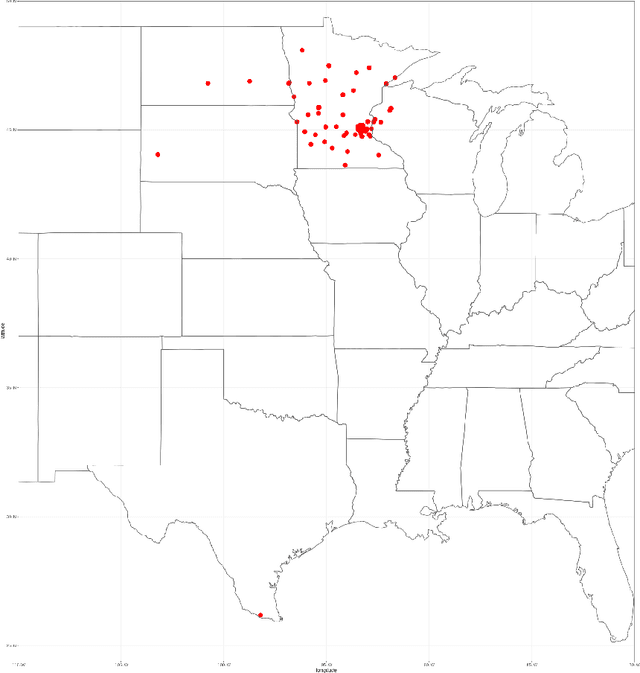

This paper presents the challenge report for the 2021 Kidney and Kidney Tumor Segmentation Challenge (KiTS21) held in conjunction with the 2021 international conference on Medical Image Computing and Computer Assisted Interventions (MICCAI). KiTS21 is a sequel to its first edition in 2019, and it features a variety of innovations in how the challenge was designed, in addition to a larger dataset. A novel annotation method was used to collect three separate annotations for each region of interest, and these annotations were performed in a fully transparent setting using a web-based annotation tool. Further, the KiTS21 test set was collected from an outside institution, challenging participants to develop methods that generalize well to new populations. Nonetheless, the top-performing teams achieved a significant improvement over the state of the art set in 2019, and this performance is shown to inch ever closer to human-level performance. An in-depth meta-analysis is presented describing which methods were used and how they faired on the leaderboard, as well as the characteristics of which cases generally saw good performance, and which did not. Overall KiTS21 facilitated a significant advancement in the state of the art in kidney tumor segmentation, and provides useful insights that are applicable to the field of semantic segmentation as a whole.