 Add to Chrome
 Add to Firefox
 Add to Edge
Modern Problems Require Modern Solutions: Hybrid Concepts for Industrial Intrusion Detection
May 16, 2019

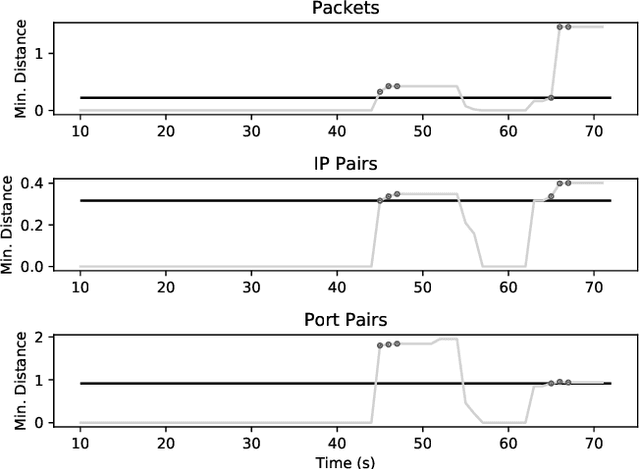


The concept of Industry 4.0 brings a disruption into the processing industry. It is characterised by a high degree of intercommunication, embedded computation, resulting in a decentralised and distributed handling of data. Additionally, cloud-storage and Software-as-a-Service (SaaS) approaches enhance a centralised storage and handling of data. This often takes place in third-party networks. Furthermore, Industry 4.0 is driven by novel business cases. Lot sizes of one, customer individual production, observation of process state and progress in real-time and remote maintenance, just to name a few. All of these new business cases make use of the novel technologies. However, cyber security has not been an issue in industry. Industrial networks have been considered physically separated from public networks. Additionally, the high level of uniqueness of any industrial network was said to prevent attackers from exploiting flaws. Those assumptions are inherently broken by the concept of Industry 4.0. As a result, an abundance of attack vectors is created. In the past, attackers have used those attack vectors in spectacular fashions. Especially Small and Mediumsized Enterprises (SMEs) in Germany struggle to adapt to these challenges. Reasons are the cost required for technical solutions and security professionals. In order to enable SMEs to cope with the growing threat in the cyberspace, the research project IUNO Insec aims at providing and improving security solutions that can be used without specialised security knowledge. The project IUNO Insec is briefly introduced in this work. Furthermore, contributions in the field of intrusion detection, especially machine learning-based solutions, for industrial environments provided by the authors are presented and set into context.

An AI-driven Malfunction Detection Concept for NFV Instances in 5G
Apr 16, 2018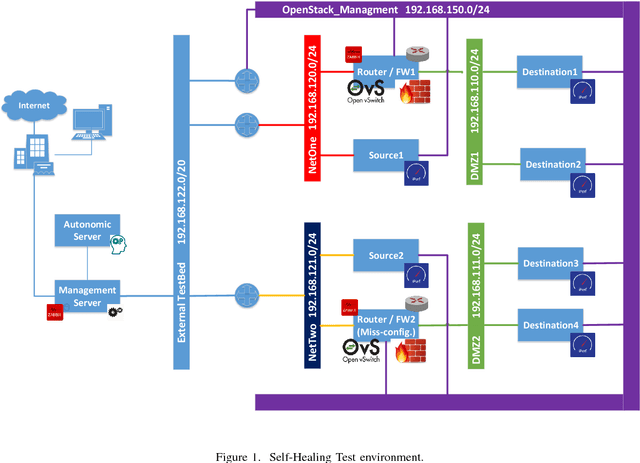
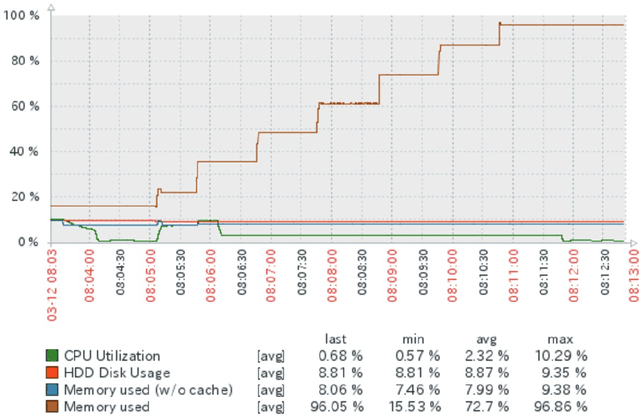
Efficient network management is one of the key challenges of the constantly growing and increasingly complex wide area networks (WAN). The paradigm shift towards virtualized (NFV) and software defined networks (SDN) in the next generation of mobile networks (5G), as well as the latest scientific insights in the field of Artificial Intelligence (AI) enable the transition from manually managed networks nowadays to fully autonomic and dynamic self-organized networks (SON). This helps to meet the KPIs and reduce at the same time operational costs (OPEX). In this paper, an AI driven concept is presented for the malfunction detection in NFV applications with the help of semi-supervised learning. For this purpose, a profile of the application under test is created. This profile then is used as a reference to detect abnormal behaviour. For example, if there is a bug in the updated version of the app, it is now possible to react autonomously and roll-back the NFV app to a previous version in order to avoid network outages.