 Add to Chrome
 Add to Firefox
 Add to Edge
Discussing the Feasibility of Acoustic Sensors for Side Channel-aided Industrial Intrusion Detection: An Essay
Sep 09, 2019
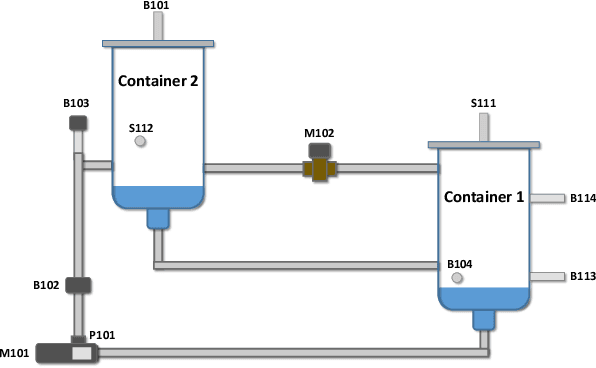


The fourth industrial revolution leads to an increased use of embedded computation and intercommunication in an industrial environment. While reducing cost and effort for set up, operation and maintenance, and increasing the time to operation or market respectively as well as the efficiency, this also increases the attack surface of enterprises. Industrial enterprises have become targets of cyber criminals in the last decade, reasons being espionage but also politically motivated. Infamous attack campaigns as well as easily available malware that hits industry in an unprepared state create a large threat landscape. As industrial systems often operate for many decades and are difficult or impossible to upgrade in terms of security, legacy-compatible industrial security solutions are necessary in order to create a security parameter. One plausible approach in industry is the implementation and employment of side-channel sensors. Combining readily available sensor data from different sources via different channels can provide an enhanced insight about the security state. In this work, a data set of an experimental industrial set up containing side channel sensors is discussed conceptually and insights are derived.

Devil in the Detail: Attack Scenarios in Industrial Applications
May 24, 2019


In the past years, industrial networks have become increasingly interconnected and opened to private or public networks. This leads to an increase in efficiency and manageability, but also increases the attack surface. Industrial networks often consist of legacy systems that have not been designed with security in mind. In the last decade, an increase in attacks on cyber-physical systems was observed, with drastic consequences on the physical work. In this work, attack vectors on industrial networks are categorised. A real-world process is simulated, attacks are then introduced. Finally, two machine learning-based methods for time series anomaly detection are employed to detect the attacks. Matrix Profiles are employed more successfully than a predictor Long Short-Term Memory network, a class of neural networks.
Modern Problems Require Modern Solutions: Hybrid Concepts for Industrial Intrusion Detection
May 16, 2019


The concept of Industry 4.0 brings a disruption into the processing industry. It is characterised by a high degree of intercommunication, embedded computation, resulting in a decentralised and distributed handling of data. Additionally, cloud-storage and Software-as-a-Service (SaaS) approaches enhance a centralised storage and handling of data. This often takes place in third-party networks. Furthermore, Industry 4.0 is driven by novel business cases. Lot sizes of one, customer individual production, observation of process state and progress in real-time and remote maintenance, just to name a few. All of these new business cases make use of the novel technologies. However, cyber security has not been an issue in industry. Industrial networks have been considered physically separated from public networks. Additionally, the high level of uniqueness of any industrial network was said to prevent attackers from exploiting flaws. Those assumptions are inherently broken by the concept of Industry 4.0. As a result, an abundance of attack vectors is created. In the past, attackers have used those attack vectors in spectacular fashions. Especially Small and Mediumsized Enterprises (SMEs) in Germany struggle to adapt to these challenges. Reasons are the cost required for technical solutions and security professionals. In order to enable SMEs to cope with the growing threat in the cyberspace, the research project IUNO Insec aims at providing and improving security solutions that can be used without specialised security knowledge. The project IUNO Insec is briefly introduced in this work. Furthermore, contributions in the field of intrusion detection, especially machine learning-based solutions, for industrial environments provided by the authors are presented and set into context.