 Add to Chrome
 Add to Firefox
 Add to Edge
Classical Machine Learning Baselines for Deepfake Audio Detection on the Fake-or-Real Dataset
Apr 15, 2026
Deep learning has enabled highly realistic synthetic speech, raising concerns about fraud, impersonation, and disinformation. Despite rapid progress in neural detectors, transparent baselines are needed to reveal which acoustic cues reliably separate real from synthetic speech. This paper presents an interpretable classical machine learning baseline for deepfake audio detection using the Fake-or-Real (FoR) dataset. We extract prosodic, voice-quality, and spectral features from two-second clips at 44.1 kHz (high-fidelity) and 16 kHz (telephone-quality) sampling rates. Statistical analysis (ANOVA, correlation heatmaps) identifies features that differ significantly between real and fake speech. We then train multiple classifiers -- Logistic Regression, LDA, QDA, Gaussian Naive Bayes, SVMs, and GMMs -- and evaluate performance using accuracy, ROC-AUC, EER, and DET curves. Pairwise McNemar's tests confirm statistically significant differences between models. The best model, an RBF SVM, achieves ~93% test accuracy and ~7% EER on both sampling rates, while linear models reach ~75% accuracy. Feature analysis reveals that pitch variability and spectral richness (spectral centroid, bandwidth) are key discriminative cues. These results provide a strong, interpretable baseline for future deepfake audio detectors.

Sensor-Based Natural Frequency Testing
Apr 13, 2026Everything that exists has a natural frequency; this material characteristic is something that must be known and fully understood. If we fail to predict, measure, and address potential natural frequency concerns, it could significantly reduce the life span of our equipment or cause it to fail immediately when put into service. There are a few methodologies used to study natural frequencies, one being computer simulations and the other being physical tests done on the equipment. In this paper, we will focus on testing natural frequencies and discuss how we measure our excitation, our form of excitation, the type of data we are able to export, as well as what we are able to do with that data. These principles can be applied to any type of machinery or object where vibration could be of concern. For our purposes, we will primarily focus on rotating machinery, such as generators, gearboxes, and motors.
User Authentication and Vital Signs Extraction from Low-Frame-Rate and Monochrome No-contact Fingerprint Captures
Dec 10, 2024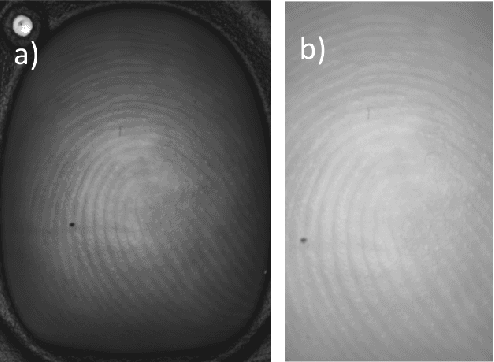

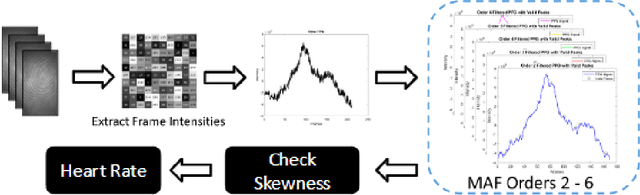
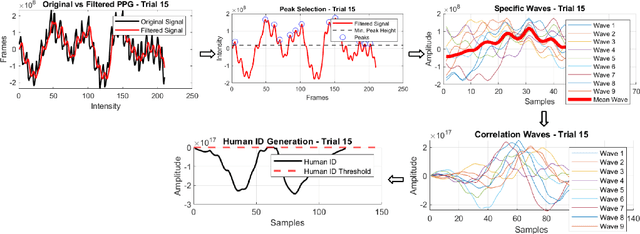
We present our work on leveraging low-frame-rate monochrome (blue light) videos of fingertips, captured with an off-the-shelf fingerprint capture device, to extract vital signs and identify users. These videos utilize photoplethysmography (PPG), commonly used to measure vital signs like heart rate. While prior research predominantly utilizes high-frame-rate, multi-wavelength PPG sensors (e.g., infrared, red, or RGB), our preliminary findings demonstrate that both user identification and vital sign extraction are achievable with the low-frame-rate data we collected. Preliminary results are promising, with low error rates for both heart rate estimation and user authentication. These results indicate promise for effective biometric systems. We anticipate further optimization will enhance accuracy and advance healthcare and security.