 Add to Chrome
 Add to Firefox
 Add to Edge
When AI Fails, What Works? A Data-Driven Taxonomy of Real-World AI Risk Mitigation Strategies
Mar 04, 2026
Large language models (LLMs) are increasingly embedded in high-stakes workflows, where failures propagate beyond isolated model errors into systemic breakdowns that can lead to legal exposure, reputational damage, and material financial losses. Building on this shift from model-centric risks to end-to-end system vulnerabilities, we analyze real-world AI incident reporting and mitigation actions to derive an empirically grounded taxonomy that links failure dynamics to actionable interventions. Using a unified corpus of 9,705 media-reported AI incident articles, we extract explicit mitigation actions from 6,893 texts via structured prompting and then systematically classify responses to extend MIT's AI Risk Mitigation Taxonomy. Our taxonomy introduces four new mitigation categories, including 1) Corrective and Restrictive Actions, 2) Legal/Regulatory and Enforcement Actions, 3) Financial, Economic, and Market Controls, and 4) Avoidance and Denial, capturing response patterns that are becoming increasingly prevalent as AI deployment and regulation evolve. Quantitatively, we label the mitigation dataset with 32 distinct labels, producing 23,994 label assignments; 9,629 of these reflect previously unseen mitigation patterns, yielding a 67% increase of the original subcategory coverage and substantially enhancing the taxonomy's applicability to emerging systemic failure modes. By structuring incident responses, the paper strengthens "diagnosis-to-prescription" guidance and advances continuous, taxonomy-aligned post-deployment monitoring to prevent cascading incidents and downstream impact.

Sentiment Analysis in Finance: From Transformers Back to eXplainable Lexicons (XLex)
Jun 06, 2023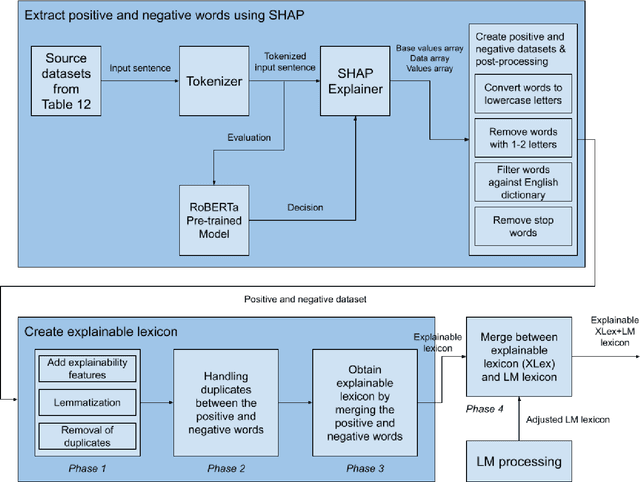
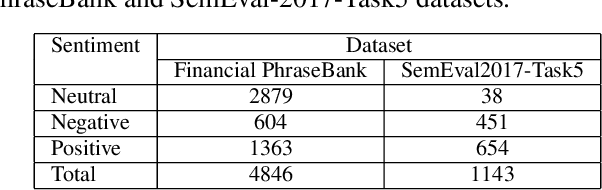
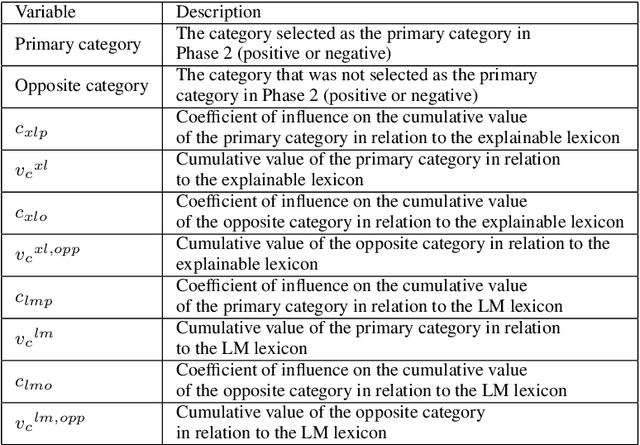
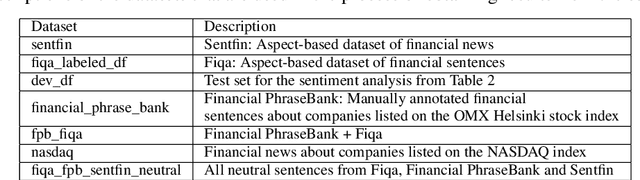
Lexicon-based sentiment analysis (SA) in finance leverages specialized, manually annotated lexicons created by human experts to extract sentiment from financial texts. Although lexicon-based methods are simple to implement and fast to operate on textual data, they require considerable manual annotation efforts to create, maintain, and update the lexicons. These methods are also considered inferior to the deep learning-based approaches, such as transformer models, which have become dominant in various NLP tasks due to their remarkable performance. However, transformers require extensive data and computational resources for both training and testing. Additionally, they involve significant prediction times, making them unsuitable for real-time production environments or systems with limited processing capabilities. In this paper, we introduce a novel methodology named eXplainable Lexicons (XLex) that combines the advantages of both lexicon-based methods and transformer models. We propose an approach that utilizes transformers and SHapley Additive exPlanations (SHAP) for explainability to learn financial lexicons. Our study presents four main contributions. Firstly, we demonstrate that transformer-aided explainable lexicons can enhance the vocabulary coverage of the benchmark Loughran-McDonald (LM) lexicon, reducing the human involvement in annotating, maintaining, and updating the lexicons. Secondly, we show that the resulting lexicon outperforms the standard LM lexicon in SA of financial datasets. Thirdly, we illustrate that the lexicon-based approach is significantly more efficient in terms of model speed and size compared to transformers. Lastly, the XLex approach is inherently more interpretable than transformer models as lexicon models rely on predefined rules, allowing for better insights into the results of SA and making the XLex approach a viable tool for financial decision-making.
Company classification using zero-shot learning
May 01, 2023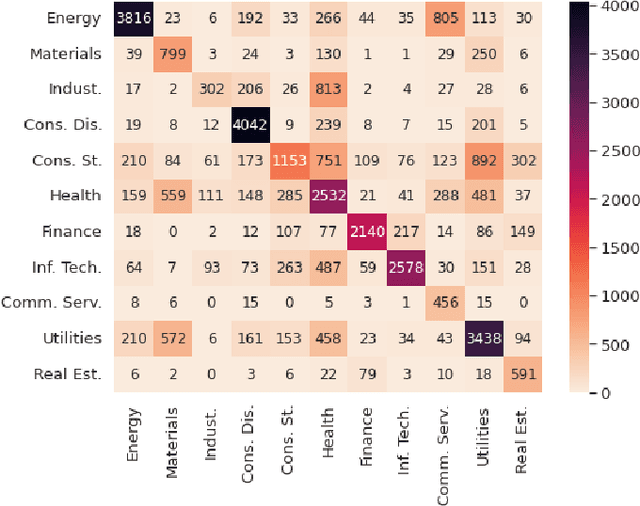
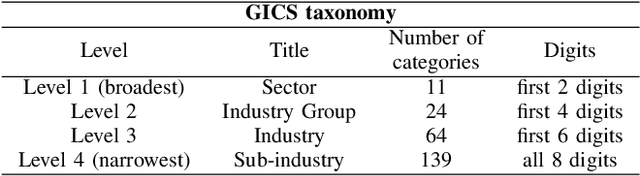
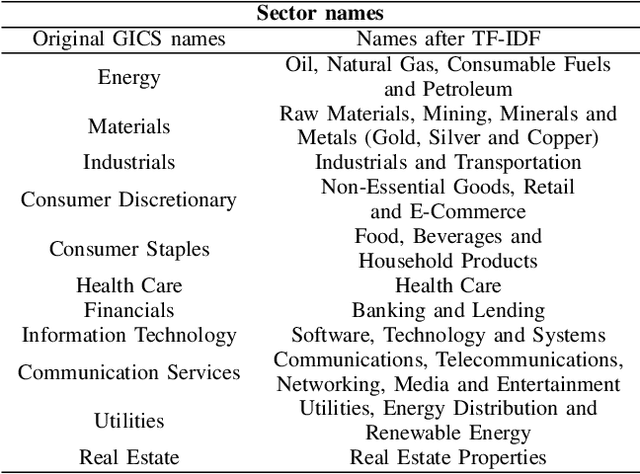
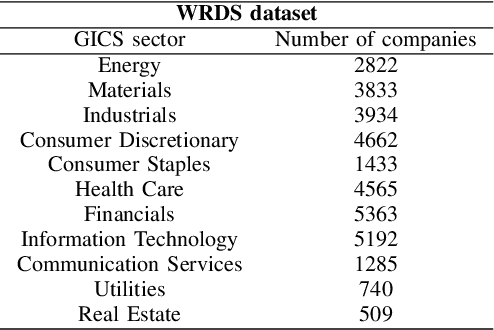
In recent years, natural language processing (NLP) has become increasingly important in a variety of business applications, including sentiment analysis, text classification, and named entity recognition. In this paper, we propose an approach for company classification using NLP and zero-shot learning. Our method utilizes pre-trained transformer models to extract features from company descriptions, and then applies zero-shot learning to classify companies into relevant categories without the need for specific training data for each category. We evaluate our approach on publicly available datasets of textual descriptions of companies, and demonstrate that it can streamline the process of company classification, thereby reducing the time and resources required in traditional approaches such as the Global Industry Classification Standard (GICS). The results show that this method has potential for automation of company classification, making it a promising avenue for future research in this area.