 Add to Chrome
 Add to Firefox
 Add to Edge
Decoding Naturalistic Emotion Dynamics from the Brain: An LLM-Enhanced Regression Framework
Jun 05, 2026
Decoding emotional states from neural signals has been typically framed as a discrete, single-label classification task based on emotionally stable stimuli, a formulation that oversimplifies the continuous, fluid, and co-occurring nature of human affect. This study reconceptualizes emotion decoding by adopting a multi-target regression framework to track multiple overlapping emotional dimensions as continuous trajectories over time. Leveraging the robust generalization capabilities of Large Language Models (LLMs), we extracted fine-grained, continuous sentiment profiles from a naturalistic auditory narrative, Alice in Wonderland, to serve as scalable proxies for subjective affect from human fMRI dataset. Departing from standard classification paradigms or mass-univariate subtractive contrasts that filter out network dynamics, we leverage regularized and kernel-based machine learning algorithms as continuous estimators to track the magnitude of macroscale neural state variations. We demonstrate that models trained on temporal snapshots of Dynamic Functional Connectivity (DFC) significantly outperform static region-of-interest (ROI) amplitude representations, effectively capturing continuous emotional trajectories under rapidly fluctuating narrative input. Furthermore, by implementing graph-theoretical Explainable AI (XAI) techniques, we deconstruct the underlying predictive features to reveal highly interpretable, emotion-specific topological configurations. Collectively, these results highlight the utility of LLM-automated annotation in affective neuroscience and provide compelling empirical evidence for psychological constructionist frameworks, demonstrating that dynamic, distributed network interactions offer superior explanatory power over strictly locationist accounts of emotion.

Self Punishment and Reward Backfill for Deep Q-Learning
Apr 10, 2020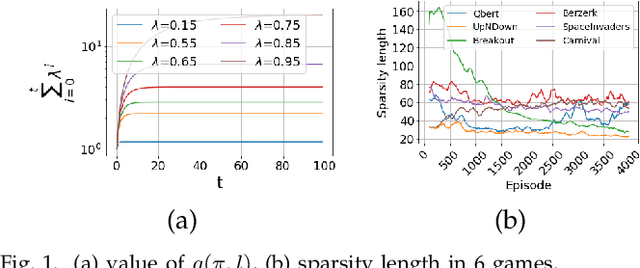
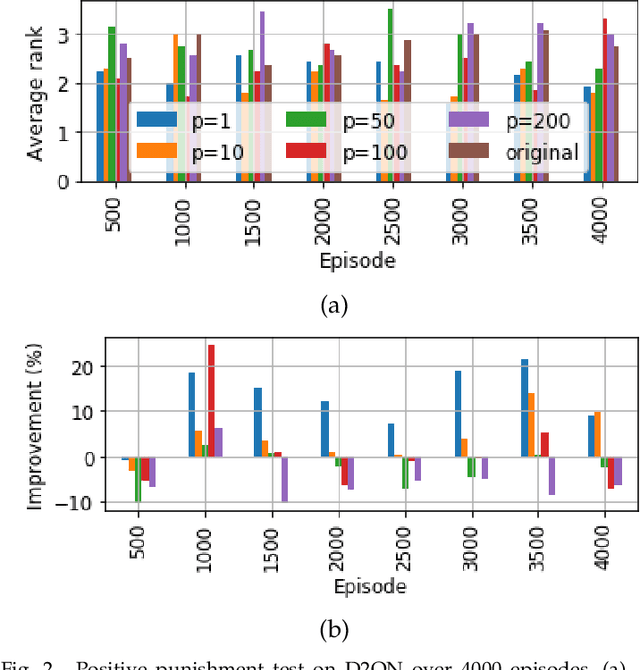
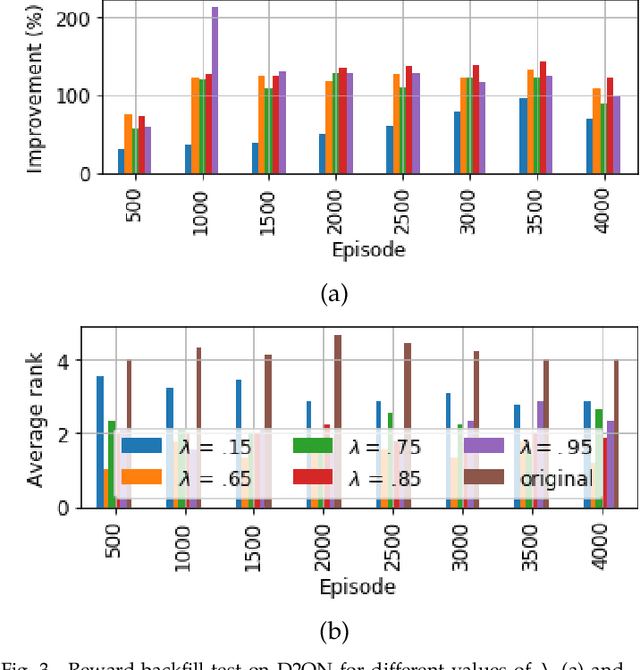
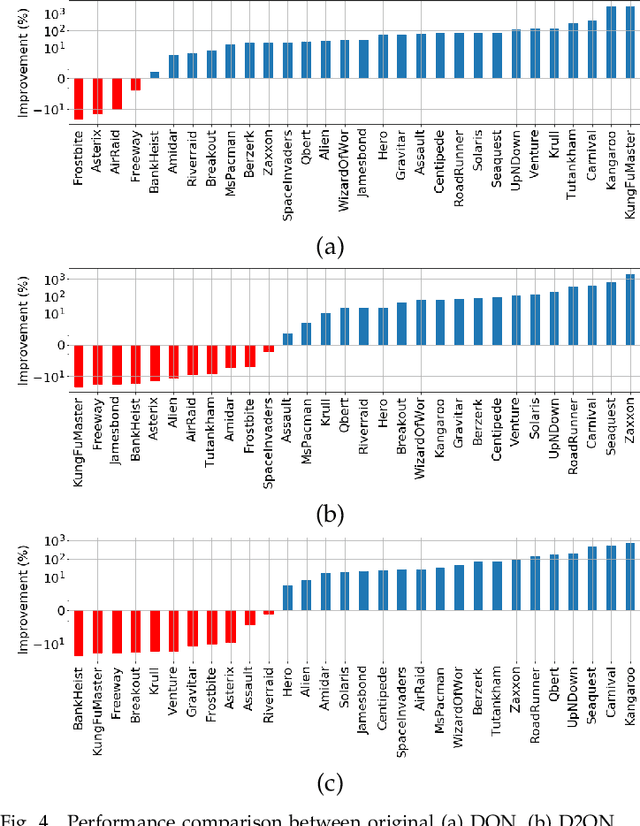
Reinforcement learning agents learn by encouraging behaviours which maximize their total reward, usually provided by the environment. In many environments, however, the reward is provided after a series of actions rather than each single action, causing the agent to experience ambiguity in terms of whether those actions are effective, an issue called the credit assignment problem. In this paper, we propose two strategies, inspired by behavioural psychology, to estimate a more informative reward value for actions with no reward. The first strategy, called self-punishment, discourages the agent to avoid making mistakes, i.e., actions which lead to a terminal state. The second strategy, called the rewards backfill, backpropagates the rewards between two rewarded actions. We prove that, under certain assumptions, these two strategies maintain the order of the policies in the space of all possible policies in terms of their total reward, and, by extension, maintain the optimal policy. We incorporated these two strategies into three popular deep reinforcement learning approaches and evaluated the results on thirty Atari games. After parameter tuning, our results indicate that the proposed strategies improve the tested methods in over 65 percent of tested games by up to over 25 times performance improvement.