 Add to Chrome
 Add to Firefox
 Add to Edge
AI-Generated Music Detection in Broadcast Monitoring
Feb 06, 2026
AI music generators have advanced to the point where their outputs are often indistinguishable from human compositions. While detection methods have emerged, they are typically designed and validated in music streaming contexts with clean, full-length tracks. Broadcast audio, however, poses a different challenge: music appears as short excerpts, often masked by dominant speech, conditions under which existing detectors fail. In this work, we introduce AI-OpenBMAT, the first dataset tailored to broadcast-style AI-music detection. It contains 3,294 one-minute audio excerpts (54.9 hours) that follow the duration patterns and loudness relations of real television audio, combining human-made production music with stylistically matched continuations generated with Suno v3.5. We benchmark a CNN baseline and state-of-the-art SpectTTTra models to assess SNR and duration robustness, and evaluate on a full broadcast scenario. Across all settings, models that excel in streaming scenarios suffer substantial degradation, with F1-scores dropping below 60% when music is in the background or has a short duration. These results highlight speech masking and short music length as critical open challenges for AI music detection, and position AI-OpenBMAT as a benchmark for developing detectors capable of meeting industrial broadcast requirements.

Music Proofreading with RefinPaint: Where and How to Modify Compositions given Context
Jul 12, 2024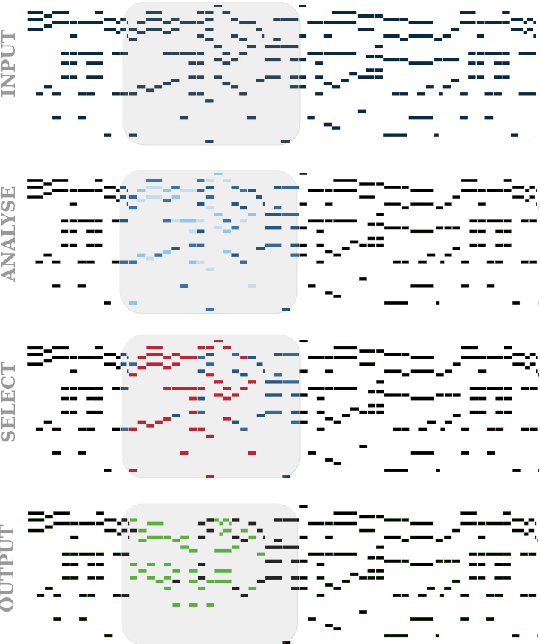
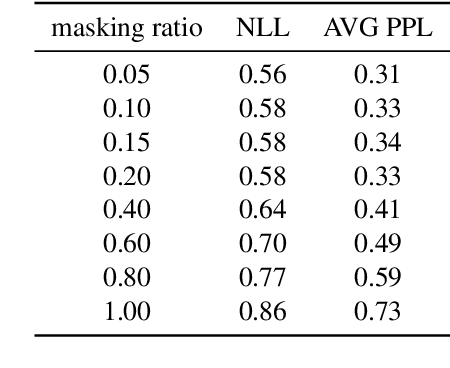
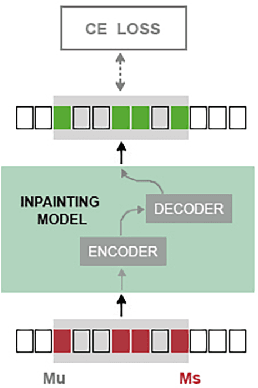
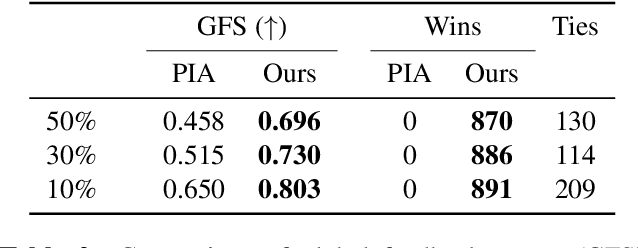
Autoregressive generative transformers are key in music generation, producing coherent compositions but facing challenges in human-machine collaboration. We propose RefinPaint, an iterative technique that improves the sampling process. It does this by identifying the weaker music elements using a feedback model, which then informs the choices for resampling by an inpainting model. This dual-focus methodology not only facilitates the machine's ability to improve its automatic inpainting generation through repeated cycles but also offers a valuable tool for humans seeking to refine their compositions with automatic proofreading. Experimental results suggest RefinPaint's effectiveness in inpainting and proofreading tasks, demonstrating its value for refining music created by both machines and humans. This approach not only facilitates creativity but also aids amateur composers in improving their work.