 Add to Chrome
 Add to Firefox
 Add to Edge
Towards Global AI-Driven Cervical Cancer Screening
Jun 12, 2026
The global elimination of cervical cancer is a key public health goal set by the World Health Organization (WHO), with screening programs reducing mortality by up to 80%. However, access to experts and biopsy services is limited in low- to middle-income countries (LMICs). Deep learning (DL)-based algorithms offer promising support for screening, but most existing approaches have been developed and validated on private datasets from single countries. We present the first DL-based approach to cervical cancer screening validated on data from multiple countries. Technically, we phrase the problem of detecting and classifying lesions in colposcopy images as a multi-task learning problem, in which we simultaneously perform image-level classification and lesion segmentation. Our model was trained on a private data set of acid stain colposcopy images with manually generated lesion segmentation masks and corresponding histopathological results, employing extensive data augmentation to address image variability. In an in-distribution validation with pathology results serving as ground truth, our algorithm outperformed medical experts (Balanced Accuracy: 0.68 vs 0.64) in CIN1- (Cervical intraepithelial neoplasia grade 1 or lower) versus CIN2+ (grade 2 or higher) classification. External validation on four colposcopy data sets from four countries featuring radical differences in prevalence and patient characteristics yielded superior performance of our method compared to baseline methods. Performance variability across countries was high with AUC values ranging from 0.54 - 0.80. Overall, algorithm performance varied with age, transformation zone (cervical area most prone to lesion development), presence of comorbidities and pathognomonic signs, with comorbidities having by far the largest negative effect. Future work should focus on improving model robustness and generalizability.

Studying Therapy Effects and Disease Outcomes in Silico using Artificial Counterfactual Tissue Samples
Feb 06, 2023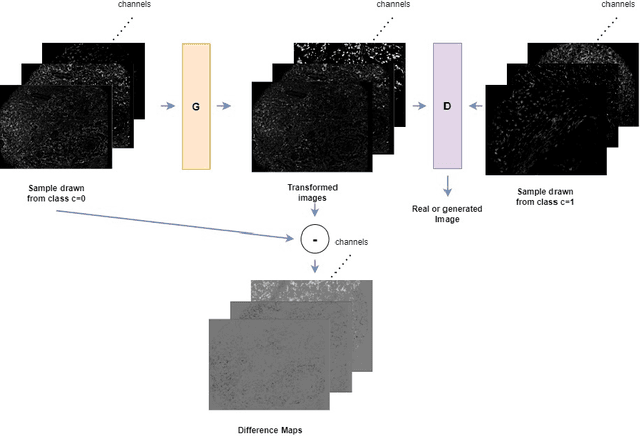
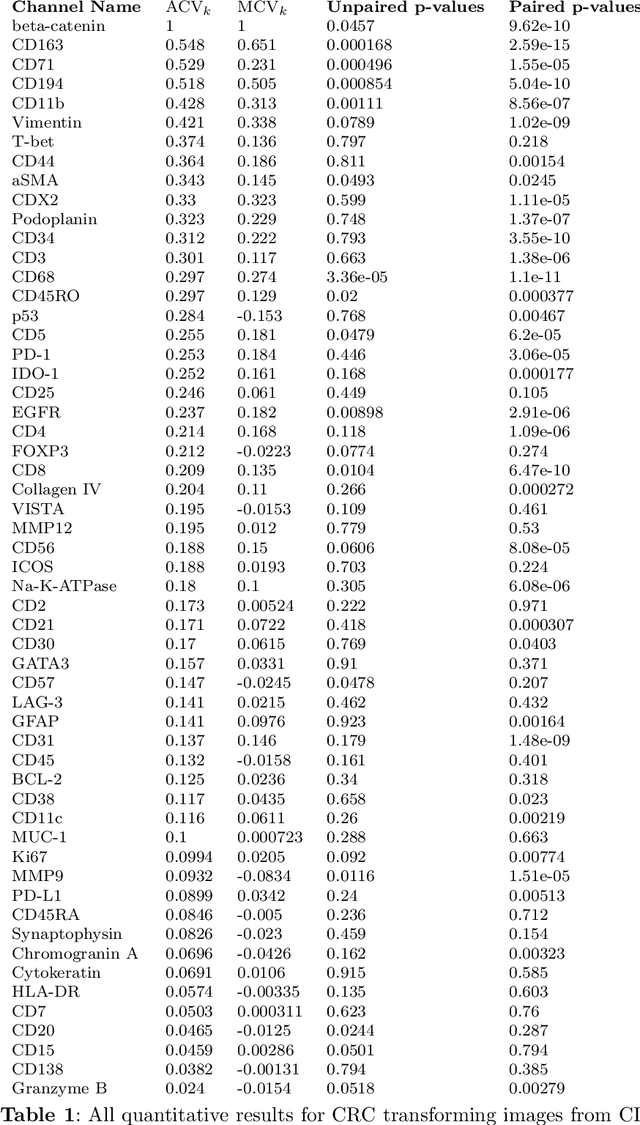
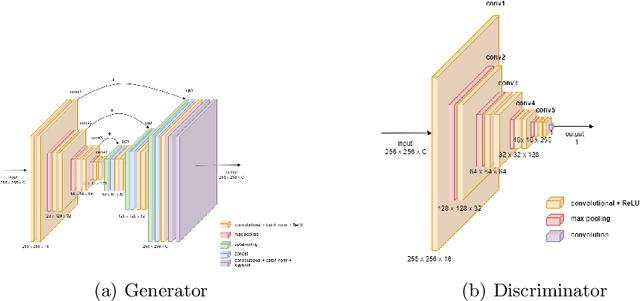
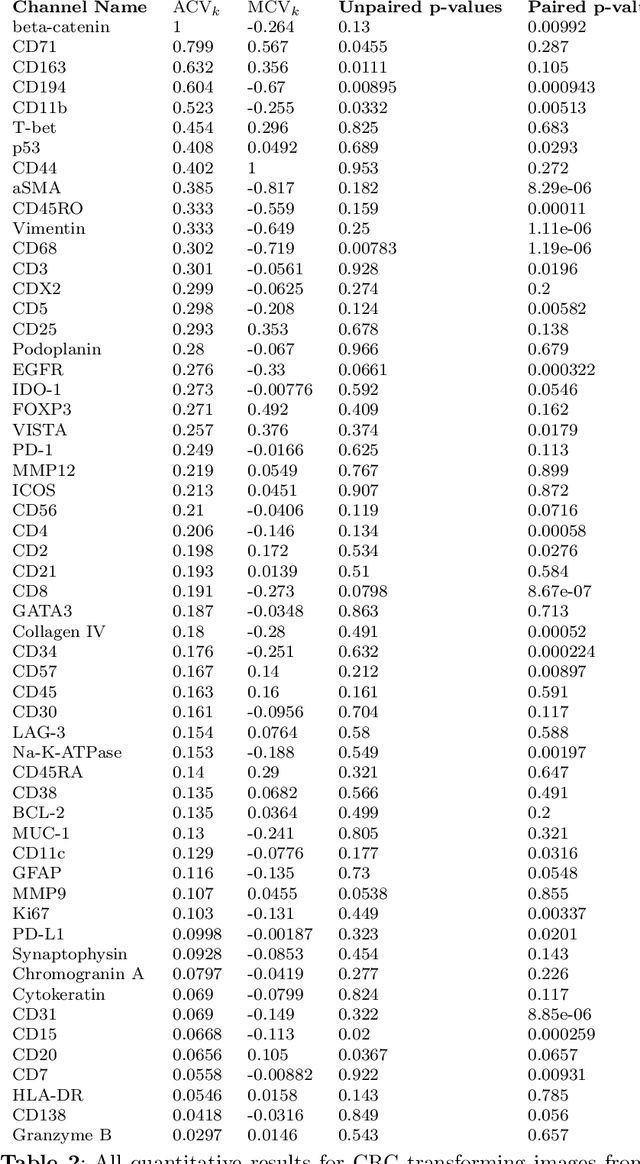
Understanding the interactions of different cell types inside the immune tumor microenvironment (iTME) is crucial for the development of immunotherapy treatments as well as for predicting their outcomes. Highly multiplexed tissue imaging (HMTI) technologies offer a tool which can capture cell properties of tissue samples by measuring expression of various proteins and storing them in separate image channels. HMTI technologies can be used to gain insights into the iTME and in particular how the iTME differs for different patient outcome groups of interest (e.g., treatment responders vs. non-responders). Understanding the systematic differences in the iTME of different patient outcome groups is crucial for developing better treatments and personalising existing treatments. However, such analyses are inherently limited by the fact that any two tissue samples vary due to a large number of factors unrelated to the outcome. Here, we present CF-HistoGAN, a machine learning framework that employs generative adversarial networks (GANs) to create artificial counterfactual tissue samples that resemble the original tissue samples as closely as possible but capture the characteristics of a different patient outcome group. Specifically, we learn to "translate" HMTI samples from one patient group to create artificial paired samples. We show that this approach allows to directly study the effects of different patient outcomes on the iTMEs of individual tissue samples. We demonstrate that CF-HistoGAN can be employed as an explorative tool for understanding iTME effects on the pixel level. Moreover, we show that our method can be used to identify statistically significant differences in the expression of different proteins between patient groups with greater sensitivity compared to conventional approaches.