 Add to Chrome
 Add to Firefox
 Add to Edge
On the sensitivity of machine-learned probabilistic weather forecast models to scale-aware scoring rules
Jul 21, 2026
Probabilistic forecast models can be machine-learned from data using loss functions based on scoring rules such as the Continuous Ranked Probability Score (CRPS). This note summarises a preliminary study comparing versions of AIFS-CRPS, a global weather forecast model, trained with different univariate and multivariate scoring rules that aim to explicitly represent scale-awareness in the loss function. In the first part, we compare the (almost) fair CRPS, a fair global energy score, and a graph energy score based on node neighbourhoods. Across standard verification metrics, forecast skill is broadly similar. In the extratropics we find only small differences, while in the tropics the graph energy score setup performs somewhat better and the global energy score shows some degradation. These results suggest that multivariate scores are a viable alternative to CRPS-based training for global machine-learned weather forecasting. In the second part of the study, we analyse how different scoring rules and scale-aware loss constraints shape the spectra of forecast fields. It is apparent that any form of explicit scale-awareness improves realism. Here, the largest differences are likely associated with different effective weights per scale.

A multi-scale loss formulation for learning a probabilistic model with proper score optimisation
Jun 12, 2025
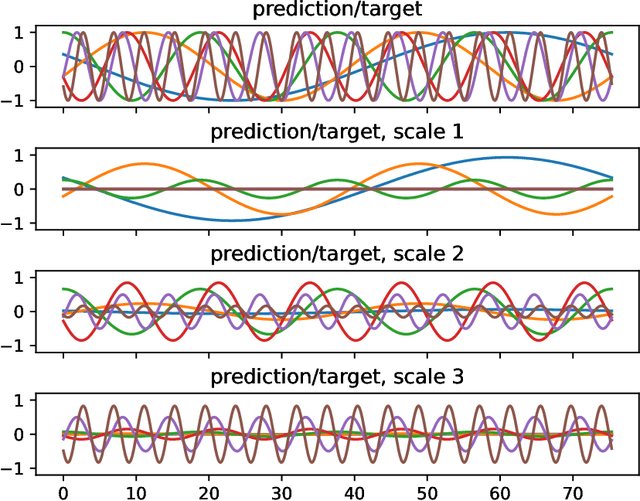
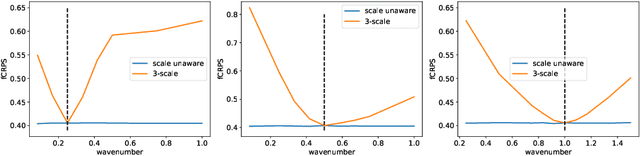
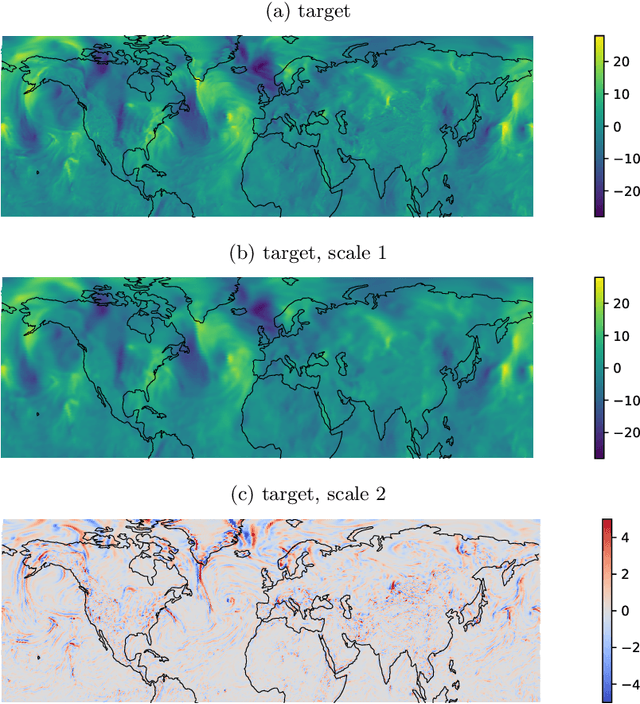
We assess the impact of a multi-scale loss formulation for training probabilistic machine-learned weather forecasting models. The multi-scale loss is tested in AIFS-CRPS, a machine-learned weather forecasting model developed at the European Centre for Medium-Range Weather Forecasts (ECMWF). AIFS-CRPS is trained by directly optimising the almost fair continuous ranked probability score (afCRPS). The multi-scale loss better constrains small scale variability without negatively impacting forecast skill. This opens up promising directions for future work in scale-aware model training.