 Add to Chrome
 Add to Firefox
 Add to Edge
Flowcean - Model Learning for Cyber-Physical Systems
Mar 12, 2026
Effective models of Cyber-Physical Systems (CPS) are crucial for their design and operation. Constructing such models is difficult and time-consuming due to the inherent complexity of CPS. As a result, data-driven model generation using machine learning methods is gaining popularity. In this paper, we present Flowcean, a novel framework designed to automate the generation of models through data-driven learning that focuses on modularity and usability. By offering various learning strategies, data processing methods, and evaluation metrics, our framework provides a comprehensive solution, tailored to CPS scenarios. Flowcean facilitates the integration of diverse learning libraries and tools within a modular and flexible architecture, ensuring adaptability to a wide range of modeling tasks. This streamlines the process of model generation and evaluation, making it more efficient and accessible.

Estimating the Pose of a Euro Pallet with an RGB Camera based on Synthetic Training Data
Oct 12, 2022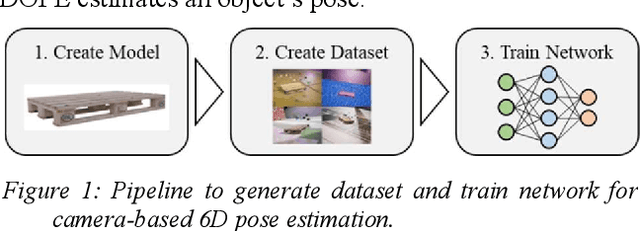
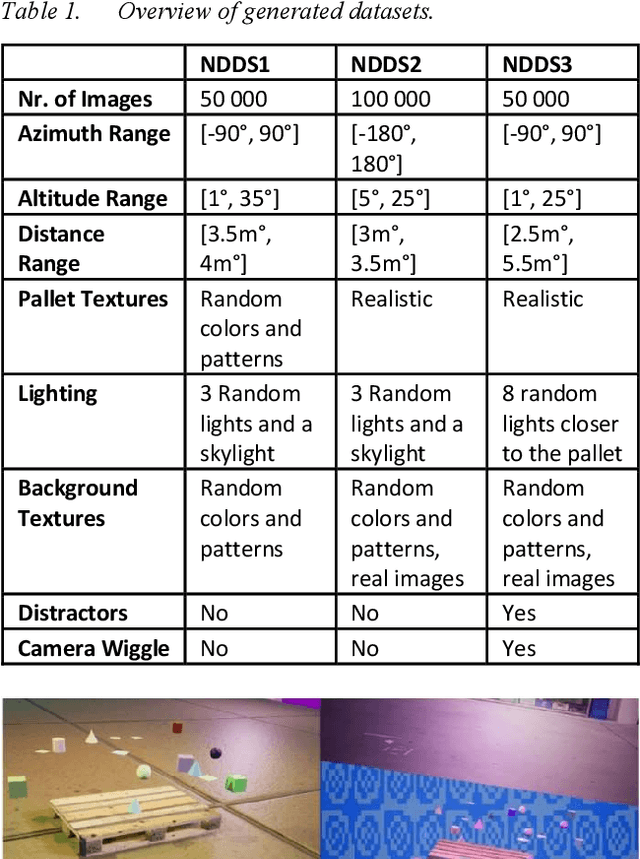
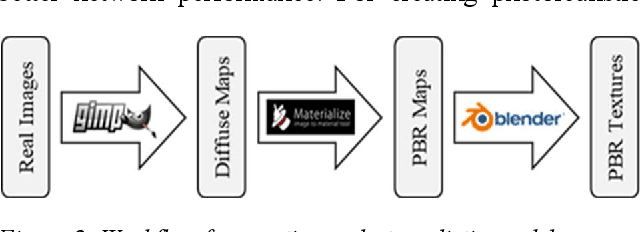
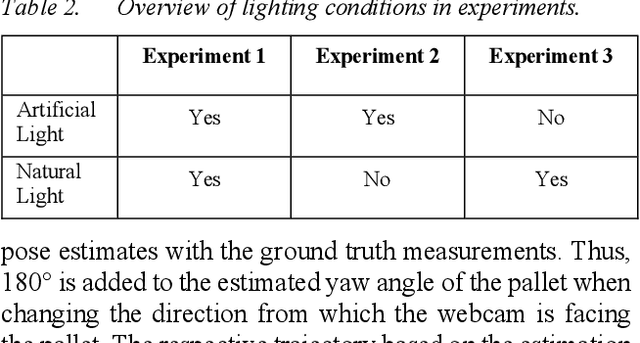
Estimating the pose of a pallet and other logistics objects is crucial for various use cases, such as automatized material handling or tracking. Innovations in computer vision, computing power, and machine learning open up new opportunities for device-free localization based on cameras and neural networks. Large image datasets with annotated poses are required for training the network. Manual annotation, especially of 6D poses, is an extremely labor-intensive process. Hence, newer approaches often leverage synthetic training data to automatize the process of generating annotated image datasets. In this work, the generation of synthetic training data for 6D pose estimation of pallets is presented. The data is then used to train the Deep Object Pose Estimation (DOPE) algorithm. The experimental validation of the algorithm proves that the 6D pose estimation of a standardized Euro pallet with a Red-Green-Blue (RGB) camera is feasible. The comparison of the results from three varying datasets under different lighting conditions shows the relevance of an appropriate dataset design to achieve an accurate and robust localization. The quantitative evaluation shows an average position error of less than 20 cm for the preferred dataset. The validated training dataset and a photorealistic model of a Euro pallet are publicly provided.