 Add to Chrome
 Add to Firefox
 Add to Edge
Toward a Gricean Retreat: Probing LLMs for Knowledge Boundaries and Referent Specificity
Aug 13, 2026
When asked about entities outside their knowledge boundary, LLMs routinely fabricate plausible-sounding details rather than backing off to safer, more general claims. We frame this failure through a Gricean lens: a cooperative speaker who is uncertain about a referent retreats up the specificity hierarchy, trading informativeness for truthfulness. We ask whether LLMs have the ingredients to perform this retreat. Using a T-REx-based benchmark that varies entity familiarity and referent specificity, we probe models to answer two questions: (i) do their activations encode whether a referent falls inside the knowledge boundary, and (ii) do they anticipate the specificity of the referent they are about to generate? We find that the answer to both is yes, but the two signals are not reconciled in generation. Models overwhelmingly prefer specific referents even when the entity is unknown to them, and do so even when offered correct generic alternatives. The substrate for a Gricean retreat is present, but the policy that would act on it is not. We position our findings as a first step toward Gricean alignment, training or steering objectives that couple knowledge-boundary awareness to referent-specificity during generation.

CLIX: Cross-Lingual Explanations of Idiomatic Expressions
Jan 06, 2025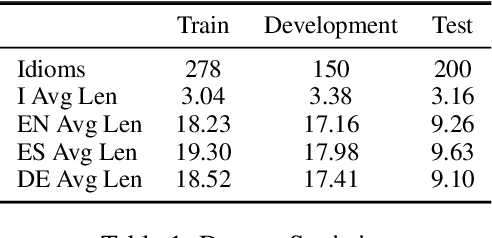
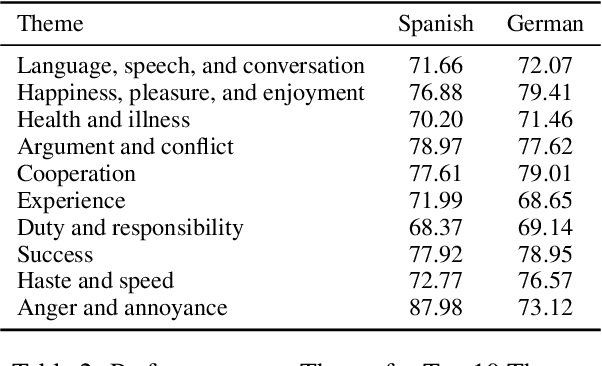
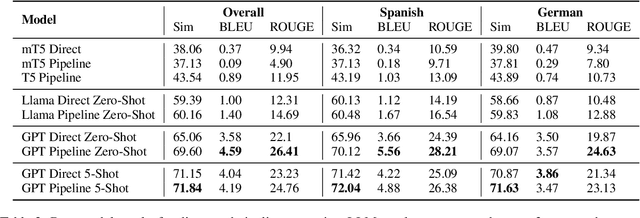
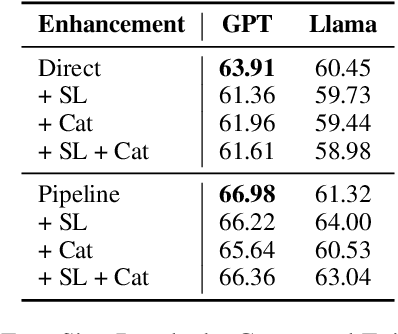
Automated definition generation systems have been proposed to support vocabulary expansion for language learners. The main barrier to the success of these systems is that learners often struggle to understand definitions due to the presence of potentially unfamiliar words and grammar, particularly when non-standard language is involved. To address these challenges, we propose CLIX, the task of Cross-Lingual explanations of Idiomatic eXpressions. We explore the capabilities of current NLP models for this task, and observe that while it remains challenging, large language models show promise. Finally, we perform a detailed error analysis to highlight the key challenges that need to be addressed before we can reliably incorporate these systems into educational tools.
Show, Don't Tell: Learning Reward Machines from Demonstrations for Reinforcement Learning-Based Cardiac Pacemaker Synthesis
Nov 04, 2024An (artificial cardiac) pacemaker is an implantable electronic device that sends electrical impulses to the heart to regulate the heartbeat. As the number of pacemaker users continues to rise, so does the demand for features with additional sensors, adaptability, and improved battery performance. Reinforcement learning (RL) has recently been proposed as a performant algorithm for creative design space exploration, adaptation, and statistical verification of cardiac pacemakers. The design of correct reward functions, expressed as a reward machine, is a key programming activity in this process. In 2007, Boston Scientific published a detailed description of their pacemaker specifications. This document has since formed the basis for several formal characterizations of pacemaker specifications using real-time automata and logic. However, because these translations are done manually, they are challenging to verify. Moreover, capturing requirements in automata or logic is notoriously difficult. We posit that it is significantly easier for domain experts, such as electrophysiologists, to observe and identify abnormalities in electrocardiograms that correspond to patient-pacemaker interactions. Therefore, we explore the possibility of learning correctness specifications from such labeled demonstrations in the form of a reward machine and training an RL agent to synthesize a cardiac pacemaker based on the resulting reward machine. We leverage advances in machine learning to extract signals from labeled demonstrations as reward machines using recurrent neural networks and transformer architectures. These reward machines are then used to design a simple pacemaker with RL. Finally, we validate the resulting pacemaker using properties extracted from the Boston Scientific document.