 Add to Chrome
 Add to Firefox
 Add to Edge
The Diversity Paradox revisited: Systemic Effects of Feedback Loops in Recommender Systems
Feb 18, 2026
Recommender systems shape individual choices through feedback loops in which user behavior and algorithmic recommendations coevolve over time. The systemic effects of these loops remain poorly understood, in part due to unrealistic assumptions in existing simulation studies. We propose a feedback-loop model that captures implicit feedback, periodic retraining, probabilistic adoption of recommendations, and heterogeneous recommender systems. We apply the framework on online retail and music streaming data and analyze systemic effects of the feedback loop. We find that increasing recommender adoption may lead to a progressive diversification of individual consumption, while collective demand is redistributed in model- and domain-dependent ways, often amplifying popularity concentration. Temporal analyses further reveal that apparent increases in individual diversity observed in static evaluations are illusory: when adoption is fixed and time unfolds, individual diversity consistently decreases across all models. Our results highlight the need to move beyond static evaluations and explicitly account for feedback-loop dynamics when designing recommender systems.

A survey on the impact of AI-based recommenders on human behaviours: methodologies, outcomes and future directions
Jun 29, 2024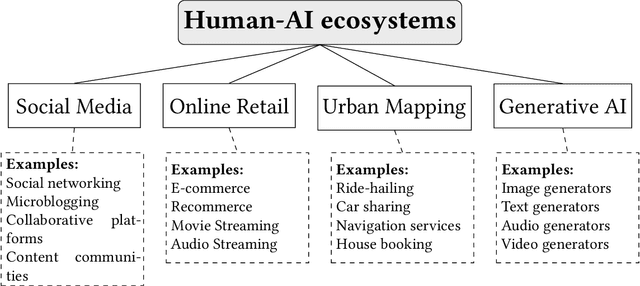

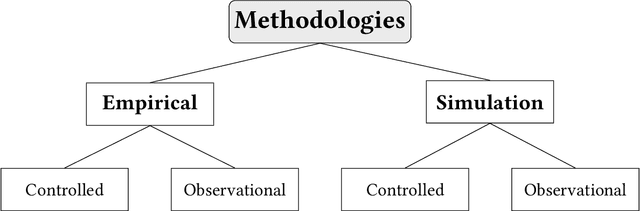

Recommendation systems and assistants (in short, recommenders) are ubiquitous in online platforms and influence most actions of our day-to-day lives, suggesting items or providing solutions based on users' preferences or requests. This survey analyses the impact of recommenders in four human-AI ecosystems: social media, online retail, urban mapping and generative AI ecosystems. Its scope is to systematise a fast-growing field in which terminologies employed to classify methodologies and outcomes are fragmented and unsystematic. We follow the customary steps of qualitative systematic review, gathering 144 articles from different disciplines to develop a parsimonious taxonomy of: methodologies employed (empirical, simulation, observational, controlled), outcomes observed (concentration, model collapse, diversity, echo chamber, filter bubble, inequality, polarisation, radicalisation, volume), and their level of analysis (individual, item, model, and systemic). We systematically discuss all findings of our survey substantively and methodologically, highlighting also potential avenues for future research. This survey is addressed to scholars and practitioners interested in different human-AI ecosystems, policymakers and institutional stakeholders who want to understand better the measurable outcomes of recommenders, and tech companies who wish to obtain a systematic view of the impact of their recommenders.