 Add to Chrome
 Add to Firefox
 Add to Edge
SHREC 2025: Protein surface shape retrieval including electrostatic potential
Sep 16, 2025
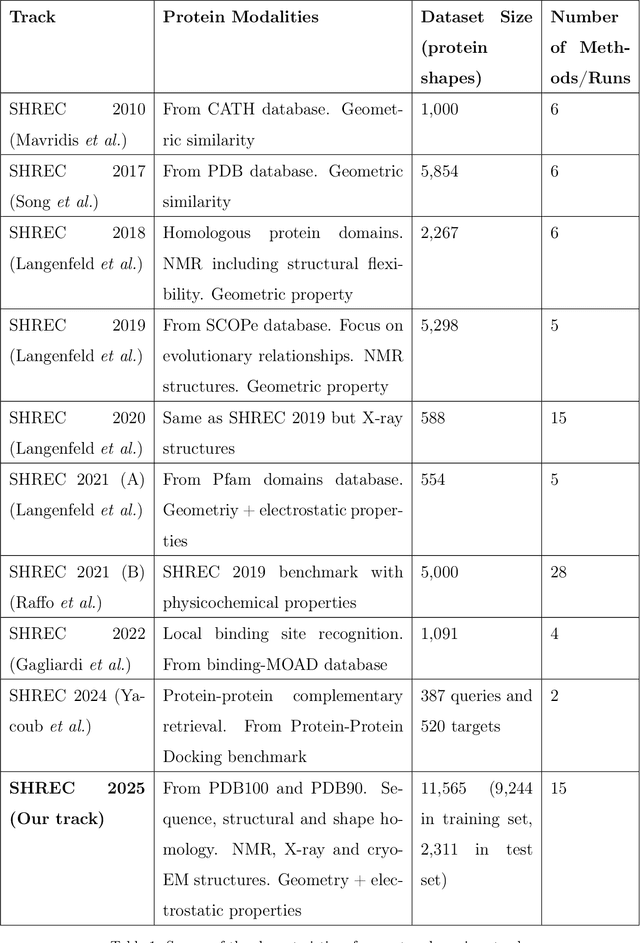
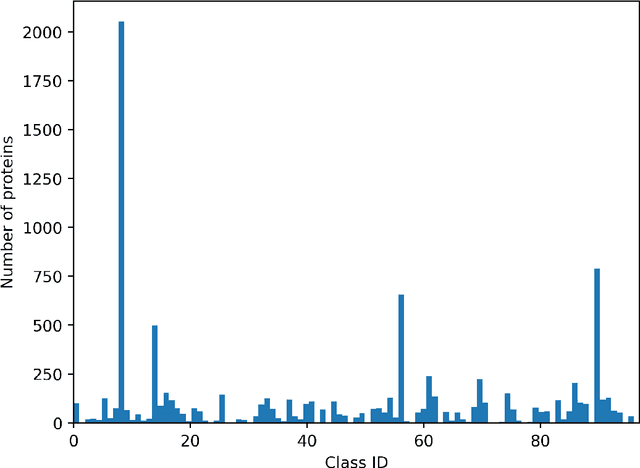
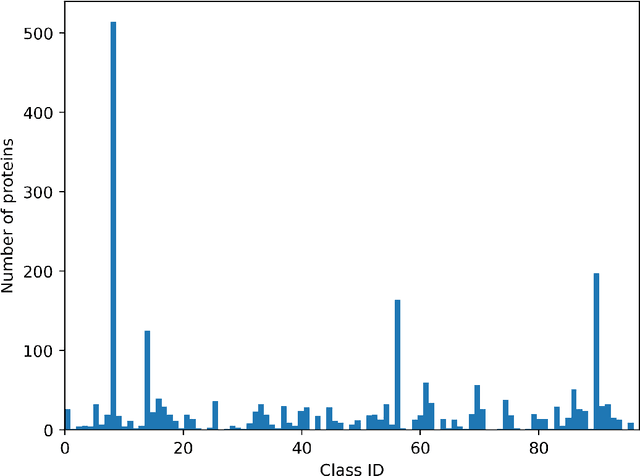
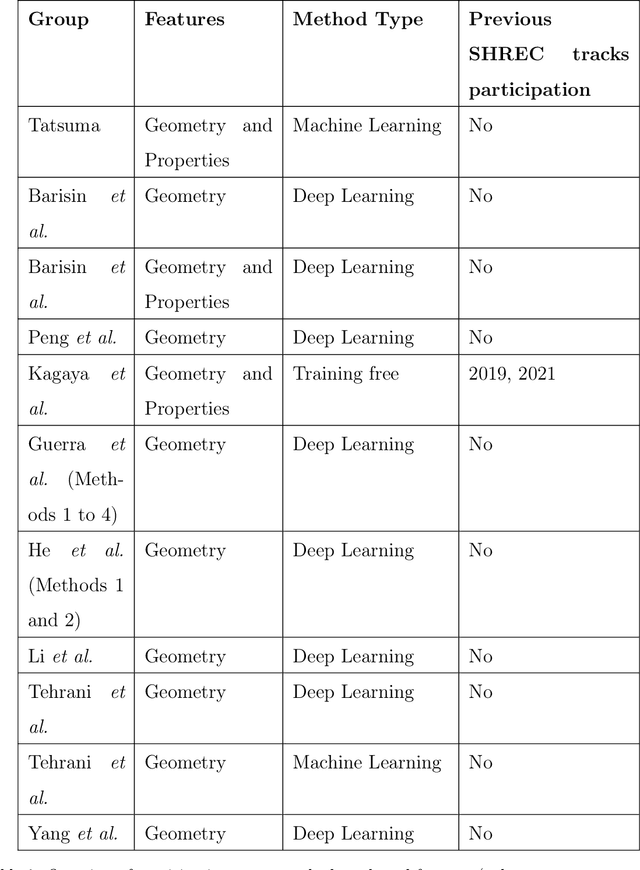
This SHREC 2025 track dedicated to protein surface shape retrieval involved 9 participating teams. We evaluated the performance in retrieval of 15 proposed methods on a large dataset of 11,555 protein surfaces with calculated electrostatic potential (a key molecular surface descriptor). The performance in retrieval of the proposed methods was evaluated through different metrics (Accuracy, Balanced accuracy, F1 score, Precision and Recall). The best retrieval performance was achieved by the proposed methods that used the electrostatic potential complementary to molecular surface shape. This observation was also valid for classes with limited data which highlights the importance of taking into account additional molecular surface descriptors.
* Published in Computers & Graphics, Elsevier. 59 pages, 12 figures

Scale-Free Image Keypoints Using Differentiable Persistent Homology
Jun 03, 2024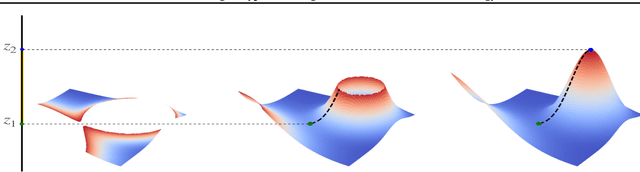
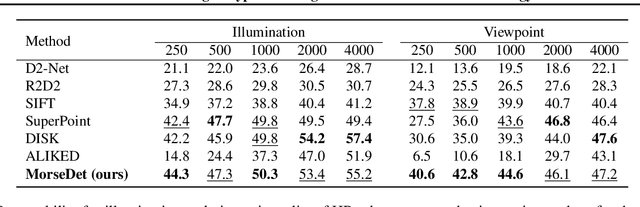
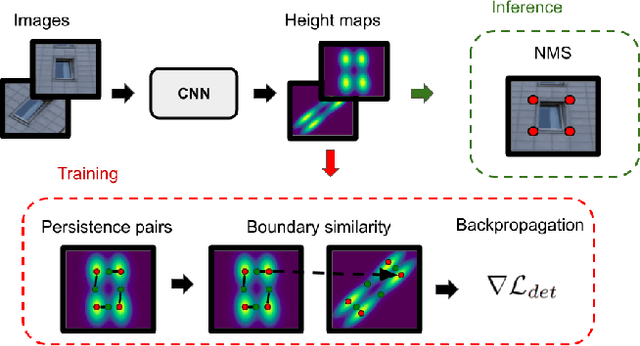
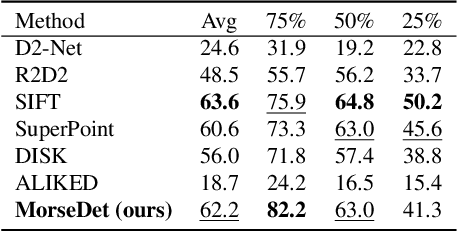
In computer vision, keypoint detection is a fundamental task, with applications spanning from robotics to image retrieval; however, existing learning-based methods suffer from scale dependency and lack flexibility. This paper introduces a novel approach that leverages Morse theory and persistent homology, powerful tools rooted in algebraic topology. We propose a novel loss function based on the recent introduction of a notion of subgradient in persistent homology, paving the way toward topological learning. Our detector, MorseDet, is the first topology-based learning model for feature detection, which achieves competitive performance in keypoint repeatability and introduces a principled and theoretically robust approach to the problem.