 Add to Chrome
 Add to Firefox
 Add to Edge
On Theoretically-Driven LLM Agents for Multi-Dimensional Discourse Analysis
Feb 14, 2026
Identifying the strategic uses of reformulation in discourse remains a key challenge for computational argumentation. While LLMs can detect surface-level similarity, they often fail to capture the pragmatic functions of rephrasing, such as its role within rhetorical discourse. This paper presents a comparative multi-agent framework designed to quantify the benefits of incorporating explicit theoretical knowledge for this task. We utilise an dataset of annotated political debates to establish a new standard encompassing four distinct rephrase functions: Deintensification, Intensification, Specification, Generalisation, and Other, which covers all remaining types (D-I-S-G-O). We then evaluate two parallel LLM-based agent systems: one enhanced by argumentation theory via Retrieval-Augmented Generation (RAG), and an identical zero-shot baseline. The results reveal a clear performance gap: the RAG-enhanced agents substantially outperform the baseline across the board, with particularly strong advantages in detecting Intensification and Generalisation context, yielding an overall Macro F1-score improvement of nearly 30\%. Our findings provide evidence that theoretical grounding is not only beneficial but essential for advancing beyond mere paraphrase detection towards function-aware analysis of argumentative discourse. This comparative multi-agent architecture represents a step towards scalable, theoretically informed computational tools capable of identifying rhetorical strategies in contemporary discourse.
* 8 pages, 4 figures, 3 tables. This is the accepted version of the paper presented at the 18th International Conference on Agents and Artificial Intelligence (ICAART 2026), Marbella, Spain

Ethos and Pathos in Online Group Discussions: Corpora for Polarisation Issues in Social Media
Apr 07, 2024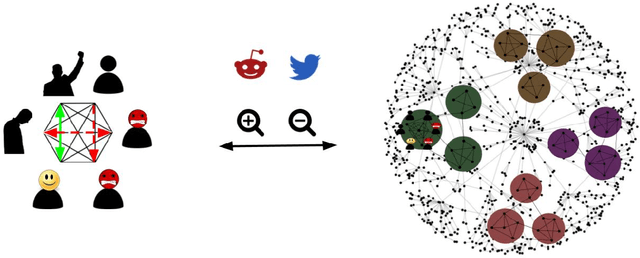
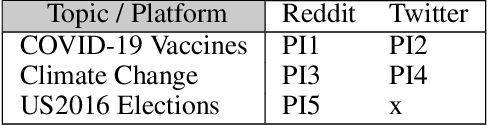
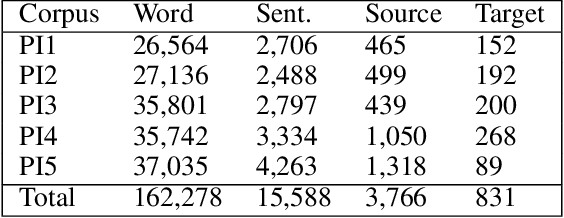

Growing polarisation in society caught the attention of the scientific community as well as news media, which devote special issues to this phenomenon. At the same time, digitalisation of social interactions requires to revise concepts from social science regarding establishment of trust, which is a key feature of all human interactions, and group polarisation, as well as new computational tools to process large quantities of available data. Existing methods seem insufficient to tackle the problem fully, thus, we propose to approach the problem by investigating rhetorical strategies employed by individuals in polarising discussions online. To this end, we develop multi-topic and multi-platform corpora with manual annotation of appeals to ethos and pathos, two modes of persuasion in Aristotelian rhetoric. It can be employed for training language models to advance the study of communication strategies online on a large scale. With the use of computational methods, our corpora allows an investigation of recurring patterns in polarising exchanges across topics of discussion and media platforms, and conduct both quantitative and qualitative analyses of language structures leading to and engaged in polarisation.