 Add to Chrome
 Add to Firefox
 Add to Edge
P-JEPA: Procedural Video Representation Learning via Joint Embedding Predictive Architecture
Jun 22, 2026
The increasing maturity of embodied AI platforms has driven a growing interest in procedural video representation learning to support intelligent assistance systems for complex, multi-step tasks. Leveraging large-scale latent predictive training, video foundation models capture video dynamics, enabling downstream tasks such as activity understanding, spatiotemporal localization, and predictive control. However, procedural videos include actions with long-range dependencies that these models do not support, due to the quadratic complexity of self-attention. Distinct actions, for example, may be visually similar despite appearing at different points in the procedure, such as turning the stove on versus off. Here, we propose a backbone-agnostic approach that learns long-duration video representations by reducing the problem to a dense, frame-aligned action space and predicting pooled masked latent vectors. This approach allows our Procedural Joint Embedding Predictive Architecture (P-JEPA) to ingest videos over 30 minutes long, enabling effective long-form understanding of procedural steps. We evaluate P-JEPA using features extracted with VJEPA2.1, TSM, and I3D over the EgoExo4D, EgoProceL, and Assembly101 datasets, finding that it consistently improves linear separability, streaming inference, and temporal action segmentation performance, achieving state-of-the-art results on EgoExo4D fine-grained action classification while using an order of magnitude fewer parameters than LLM-based methods and running in real time.

OR-Action: Multi-Role Video Understanding with Fine-Grained Actions
Jun 11, 2026Fine-grained understanding of operating room (OR) activity could enable workflow-aware assistance, yet remains difficult due to clutter, occlusions, and limited sensing. The prevailing approach to model this environment is scene graphs as an interpretable representation of OR interactions. Converting their frame-wise relational predictions into temporally extended, fine-grained actions however, is challenging without explicit temporal modeling. To enable a principled temporal evaluation of current OR understanding methods, we introduce the first action-centric benchmark built on a publicly available ego-exocentric OR dataset by defining a fine-grained, multi-role action taxonomy and generating dense action segments via distillation from ground-truth scene graph state changes. Experiments on this benchmark show that current scene graph prediction methods struggle to model temporal structure, even when adding explicit modeling through Graph Neural Networks. We therefore introduce a vision-only temporal model that outperforms graph-based methods significantly when using all available egocentric video as input. Building on this model we also introduce a novel multi- to single-view feature alignment strategy that improves single-view performance on multi-role action recognition, mitigating the need for extensive egocentric video capture. Benchmark and code will be released upon acceptance.
The PUEVA Inventory: A Toolkit to Evaluate the Personality, Usability and Enjoyability of Voice Agents
Dec 20, 2021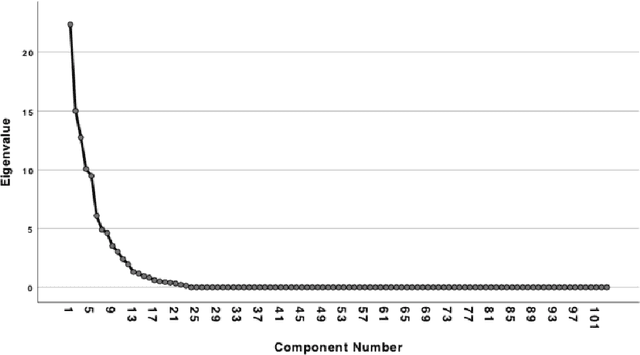
The proliferation of voice agents in consumer devices requires new tools for evaluating these systems beyond their technical functionality. This paper presents a toolkit for the evaluation of Voice User Interfaces (VUIs) with the intention of measuring the crucial factors of subjective enjoyment in the user experience. The PUEVA toolkit was constructed using a meta-analysis of existing literature, structured N=20 and semi-structured N=18 interviews and a within subjects lab study. The resulting questionnaire contains 35 items that represent 12 scales in three categories: (1) Personality (2) Usablity and (3) Enjoyability. The PUEVA Toolkit moves us towards the capacity to evaluate and compare subjective, joyful experiences in between-subject as well as within-subject research designs.