 Add to Chrome
 Add to Firefox
 Add to Edge
MinNav: Minimalist Navigation Using Optical Flow For Active Tiny Aerial Robots
Jun 05, 2026
Navigation using a monocular camera is pivotal for autonomous operation on tiny aerial robots due to their perfect balance of versatility, cost and accuracy. In this paper, we introduce MinNav, a navigation stack based on optical flow and its uncertainty to fly through a scene with static and dynamic obstacles and unknown-shaped gaps without any prior knowledge of the scene components and/or their locations/ordering. We further improve success rate by using the activeness of the robot to move around in an exploratory way to find obstacles and navigate. We successfully evaluate and demonstrate the proposed approach in many real-world experiments in various environments with static and dynamic obstacles and unknown-shaped gaps with an overall success rate of 70%. To the best of our knowledge, this is the first solution to tackle all the aforementioned navigation cases without prior knowledge using a monocular camera. Our approach is on par in performance with depth based methods with factors of magnitude less computation required and can readily run onboard tiny aerial robots. The accompanying video, supplementary material, code and dataset can be found at https://pear.wpi.edu/research/minnav.html

OpenAI GPT-5 System Card
Dec 19, 2025This is the system card published alongside the OpenAI GPT-5 launch, August 2025. GPT-5 is a unified system with a smart and fast model that answers most questions, a deeper reasoning model for harder problems, and a real-time router that quickly decides which model to use based on conversation type, complexity, tool needs, and explicit intent (for example, if you say 'think hard about this' in the prompt). The router is continuously trained on real signals, including when users switch models, preference rates for responses, and measured correctness, improving over time. Once usage limits are reached, a mini version of each model handles remaining queries. This system card focuses primarily on gpt-5-thinking and gpt-5-main, while evaluations for other models are available in the appendix. The GPT-5 system not only outperforms previous models on benchmarks and answers questions more quickly, but -- more importantly -- is more useful for real-world queries. We've made significant advances in reducing hallucinations, improving instruction following, and minimizing sycophancy, and have leveled up GPT-5's performance in three of ChatGPT's most common uses: writing, coding, and health. All of the GPT-5 models additionally feature safe-completions, our latest approach to safety training to prevent disallowed content. Similarly to ChatGPT agent, we have decided to treat gpt-5-thinking as High capability in the Biological and Chemical domain under our Preparedness Framework, activating the associated safeguards. While we do not have definitive evidence that this model could meaningfully help a novice to create severe biological harm -- our defined threshold for High capability -- we have chosen to take a precautionary approach.
Emotion Recognition in Audio and Video Using Deep Neural Networks
Jun 15, 2020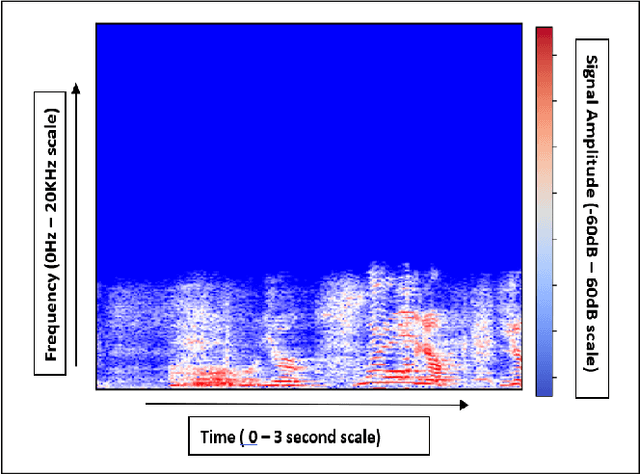
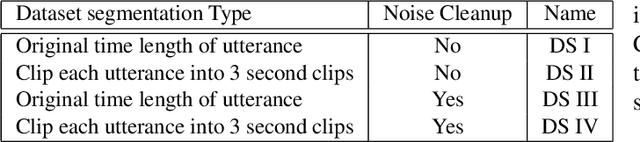
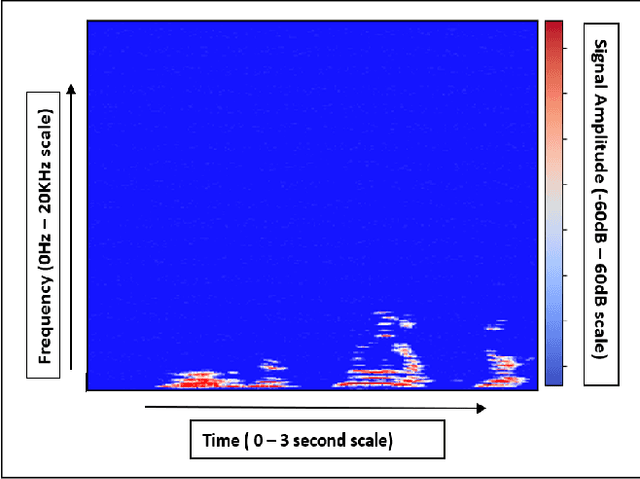
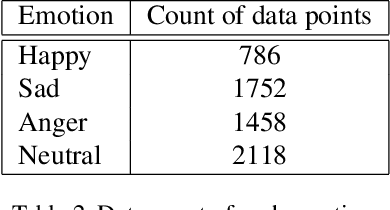
Humans are able to comprehend information from multiple domains for e.g. speech, text and visual. With advancement of deep learning technology there has been significant improvement of speech recognition. Recognizing emotion from speech is important aspect and with deep learning technology emotion recognition has improved in accuracy and latency. There are still many challenges to improve accuracy. In this work, we attempt to explore different neural networks to improve accuracy of emotion recognition. With different architectures explored, we find (CNN+RNN) + 3DCNN multi-model architecture which processes audio spectrograms and corresponding video frames giving emotion prediction accuracy of 54.0% among 4 emotions and 71.75% among 3 emotions using IEMOCAP[2] dataset.