 Add to Chrome
 Add to Firefox
 Add to Edge
Slide-Level Active Learning Reduces Annotation Burden in H&E images
Jul 10, 2026
Deep learning-based segmentation of histopathology whole-slide images (WSIs) requires large amounts of pixel-level annotations, which are costly and time-consuming to obtain. Active learning (AL) has been proposed to reduce this effort, but existing methods exhibit three key limitations. Uncertainty estimation is unreliable on partially annotated WSIs, patch-level acquisition is inconsistent with slide-level annotation workflows, and class imbalance in multi-class settings is not explicitly addressed. To address these challenges, we propose SHAL (Slide-level Hybrid Active Learning), a patient-level AL framework for annotation-efficient multi-class histopathology segmentation. SHAL integrates three complementary components: a foreground-aware strategy that suppresses bias from unlabeled background regions, a stage-adaptive mechanism that hybridizes predictive entropy and epistemic uncertainty across learning stages, and a class-aware strategy that prioritizes diagnostically relevant tissue classes. SHAL is evaluated on the TCGA colorectal cancer dataset. It achieves the highest Macro Dice at the full annotation budget (0.846) and reaches Dice greater than or equal to 0.80 using only 26 percent of the budget (50 of 190 slides), whereas competing methods reach this threshold only at 37 percent (70 slides). Across five independent external cohorts, SHAL attains the highest mean external Macro Dice (0.815) and the smallest internal-to-external generalization gap among all methods (0.025 at Round 3 and 0.026 at the full budget). The results indicate that patient-level hybrid uncertainty acquisition reduces annotation cost without sacrificing cross-domain generalization in computational pathology.

A High-Resolution Chest CT-Scan Image Dataset for COVID-19 Diagnosis and Differentiation
May 06, 2022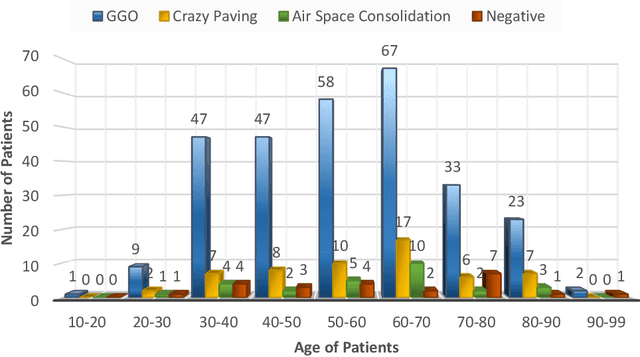
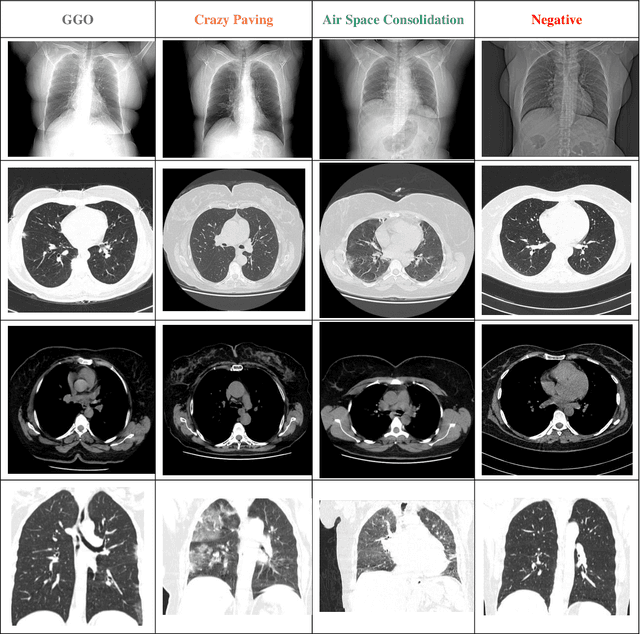
During the COVID-19 pandemic, computed tomography (CT) is a good way to diagnose COVID-19 patients. HRCT (High-Resolution Computed Tomography) is a form of computed tomography that uses advanced methods to improve image resolution. Publicly accessible COVID-19 CT image datasets are very difficult to come by due to privacy concerns, which impedes the study and development of AI-powered COVID-19 diagnostic algorithms based on CT images. To address this problem, we have introduced HRCTv1-COVID-19, a new COVID-19 high resolution chest CT Scan image dataset that includes not only COVID-19 cases of Ground Glass Opacity (GGO), Crazy Paving, and Air Space Consolidation, but also CT images of cases with negative COVID-19. The HRCTv1-COVID-19 dataset, which includes slice-level, and patient-level labels, has the potential to aid COVID-19 research, especially for diagnosis and differentiation using artificial intelligence algorithms, machine learning and deep learning methods. This dataset is accessible through web at: http://databiox.com and includes 181,106 chest HRCT images from 395 patients with four labels: GGO, Crazy Paving, Air Space Consolidation and Negative. Keywords- Dataset, COVID-19, CT-Scan, Computed Tomography, Medical Imaging, Chest Image.