 Add to Chrome
 Add to Firefox
 Add to Edge
To Remove or Not to Remove Clouds: A Comparative Analysis and Fusion of Raw SAR and Synthetic NDWI for Overcast Water Segmentation
Aug 18, 2026
Persistent clouds blind optical satellites during floods. While Synthetic Aperture Radar (SAR) penetrates clouds, its raw data is noisy and lacks clear contrast. To mitigate this, recent studies utilize deep learning models to translate SAR into cloud-free synthetic optical imagery for downstream tasks like water body segmentation. However, because raw SAR is the original source for both of these operations, a critical methodological dilemma arises: during complete overcast should segmentation models process the raw SAR directly, or rely on a translated synthetic Normalized Difference Water Index (NDWI) proxy? This study resolves the debate by demonstrating that synthetic NDWI yields better results, as the translation process acts as a powerful filter against radar noise. This raises a natural second question: what if we utilize both? Building on our findings, we introduce a Combined Framework that integrates both raw SAR and synthetic NDWI into a unified model. By fusing the sharp physical boundaries of raw SAR with the high contrast of synthetic NDWI, this hybrid approach consistently outperforms all standalone methods.

Counting the Cost of War Under Satellite Embargo: Zero-Shot Estimation of Impacted Infrastructure
Jul 31, 2026Rapid estimation of impacted structures - critical for conflict-zone humanitarian response - is frequently hindered by post-strike satellite data embargoes and imagery blackouts. We bypass this operational bottleneck by reframing impacted building mapping as a zero-shot geometric projection task on archival, pre-strike maps. Using coordinate and incident text from LiveUAMap and ArcGIS, Large Language Models extract weapon payloads (W) to project kinetic blast perimeters via Hopkinson-Cranz scaling (R_base = Z * W^(1/3)). To count exposed structures within these zones without post-strike imagery, we introduce two technical innovations: Adaptive Field-of-View to eliminate resolution (zoom) bias in 2D segmentation (SAMGeo), and 2.5D pseudo-height depth maps combined with segmentation masks to help Large Vision-Language Models (LVLMs) resolve overlapping, dense rooftops. Evaluated on 2026 Middle East conflict data, depth-augmented LVLMs dramatically outperform traditional segmentation in congested urban centers. This establishes a powerful hybrid paradigm for zero-shot crisis mapping: ultra-fast 2D segmentation for sparse rural zones, and depth-augmented LVLMs for dense urban environments.
Same Predictions, Different Reasons: The Effect of Quantization on Model Explanations
Jul 24, 2026Post-training quantization (PTQ) has become a practical solution for deploying deep learning models on resource-constrained edge devices by compressing high-precision floating-point weights into low-precision representations without requiring retraining. Past research has demonstrated that quantization largely preserves classification accuracy; however, whether it also preserves the model's internal reasoning remains an open question. This study presents a systematic evaluation on how static PTQ affects the interpretability / explainability of five widely used CNN architectures: VGG19, ResNet18, EfficientNet-B0, DenseNet161, and MobileNetV2 at INT8 and INT4 precision. We employ a dual interpretability framework that combines Grad-CAM for spatial attention analysis with LIME for input-level feature attribution, and systematically compare full-precision and quantized models on two binary classification datasets. Interpretability is evaluated using three complementary metrics: the Pearson correlation coefficient, structural similarity index, and top-20% IoU to capture distributional and structural variations in model explanations, supplemented by deletion/insertion faithfulness analysis. The results show that classification accuracy is not a reliable indicator of interpretability stability under reduced precision. DenseNet161 maintains strong feature consistency across both precision levels, whereas EfficientNet-B0, despite achieving competitive spatial attention and classification accuracy at INT8 precision, exhibits a substantial degradation in input-level feature attribution. These findings have direct implications for the trustworthy deployment of quantized models in applications with high interpretability requirements, demonstrating that architecture selection is as important as the quantization strategy.
Enlight: Fast Low-Light Image Enhancement via Multi-Objective Optimization and Shadow-Aware Refinement
Jun 19, 2026We present ENLIGHT, a fast and training free framework for low-light image enhancement based on direct optimization of a perceptual objective. Unlike deep learning approaches that require large scale training data and supervision, ENLIGHT operates in a zero-shot manner by optimizing image quality at inference time. The method employs a two stage global to local optimization strategy. In the first stage, ENLIGHT performs global illumination adjustment to improve visibility while maintaining structural consistency and avoiding excessive noise enhancement. In the second stage, a shadow aware refinement selectively improves low-intensity regions through masked local optimization, enhancing visibility without overexposure. To balance quality and efficiency, we introduce two modes: Fast, which uses a multi-objective formulation combining entropy, gradient preservation, and noise regularization, and Ultrafast, which reduces computational cost via a lightweight approximation of the same objective. The framework is optimizer agnostic and supports both evolutionary and lightweight local search methods. Experiments on BAID, Backlit300, LIME, MEF, NPE, and DICM demonstrate that ENLIGHT achieves competitive perceptual quality (MUSIQ, NIQE, BRISQUE) with significantly lower inference time. Qualitative results further show improved contrast, preserved structural details, and controlled noise amplification, making ENLIGHT a practical and interpretable alternative to learning based methods.
BrainRotViT: Transformer-ResNet Hybrid for Explainable Modeling of Brain Aging from 3D sMRI
Nov 19, 2025Accurate brain age estimation from structural MRI is a valuable biomarker for studying aging and neurodegeneration. Traditional regression and CNN-based methods face limitations such as manual feature engineering, limited receptive fields, and overfitting on heterogeneous data. Pure transformer models, while effective, require large datasets and high computational cost. We propose Brain ResNet over trained Vision Transformer (BrainRotViT), a hybrid architecture that combines the global context modeling of vision transformers (ViT) with the local refinement of residual CNNs. A ViT encoder is first trained on an auxiliary age and sex classification task to learn slice-level features. The frozen encoder is then applied to all sagittal slices to generate a 2D matrix of embedding vectors, which is fed into a residual CNN regressor that incorporates subject sex at the final fully-connected layer to estimate continuous brain age. Our method achieves an MAE of 3.34 years (Pearson $r=0.98$, Spearman $ρ=0.97$, $R^2=0.95$) on validation across 11 MRI datasets encompassing more than 130 acquisition sites, outperforming baseline and state-of-the-art models. It also generalizes well across 4 independent cohorts with MAEs between 3.77 and 5.04 years. Analyses on the brain age gap (the difference between the predicted age and actual age) show that aging patterns are associated with Alzheimer's disease, cognitive impairment, and autism spectrum disorder. Model attention maps highlight aging-associated regions of the brain, notably the cerebellar vermis, precentral and postcentral gyri, temporal lobes, and medial superior frontal gyrus. Our results demonstrate that this method provides an efficient, interpretable, and generalizable framework for brain-age prediction, bridging the gap between CNN- and transformer-based approaches while opening new avenues for aging and neurodegeneration research.
Entropy-Driven Genetic Optimization for Deep-Feature-Guided Low-Light Image Enhancement
May 16, 2025Image enhancement methods often prioritize pixel level information, overlooking the semantic features. We propose a novel, unsupervised, fuzzy-inspired image enhancement framework guided by NSGA-II algorithm that optimizes image brightness, contrast, and gamma parameters to achieve a balance between visual quality and semantic fidelity. Central to our proposed method is the use of a pre trained deep neural network as a feature extractor. To find the best enhancement settings, we use a GPU-accelerated NSGA-II algorithm that balances multiple objectives, namely, increasing image entropy, improving perceptual similarity, and maintaining appropriate brightness. We further improve the results by applying a local search phase to fine-tune the top candidates from the genetic algorithm. Our approach operates entirely without paired training data making it broadly applicable across domains with limited or noisy labels. Quantitatively, our model achieves excellent performance with average BRISQUE and NIQE scores of 19.82 and 3.652, respectively, in all unpaired datasets. Qualitatively, enhanced images by our model exhibit significantly improved visibility in shadowed regions, natural balance of contrast and also preserve the richer fine detail without introducing noticable artifacts. This work opens new directions for unsupervised image enhancement where semantic consistency is critical.
GroundHog: Revolutionizing GLDAS Groundwater Storage Downscaling for Enhanced Recharge Estimation in Bangladesh
Mar 28, 2025Long-term groundwater level (GWL) measurement is vital for effective policymaking and recharge estimation using annual maxima and minima. However, current methods prioritize short-term predictions and lack multi-year applicability, limiting their utility. Moreover, sparse in-situ measurements lead to reliance on low-resolution satellite data like GLDAS as the ground truth for Machine Learning models, further constraining accuracy. To overcome these challenges, we first develop an ML model to mitigate data gaps, achieving $R^2$ scores of 0.855 and 0.963 for maximum and minimum GWL predictions, respectively. Subsequently, using these predictions and well observations as ground truth, we train an Upsampling Model that uses low-resolution (25 km) GLDAS data as input to produce high-resolution (2 km) GWLs, achieving an excellent $R^2$ score of 0.96. Our approach successfully upscales GLDAS data for 2003-2024, allowing high-resolution recharge estimations and revealing critical trends for proactive resource management. Our method allows upsampling of groundwater storage (GWS) from GLDAS to high-resolution GWLs for any points independently of officially curated piezometer data, making it a valuable tool for decision-making.
Ophthalmic Biomarker Detection Using Ensembled Vision Transformers -- Winning Solution to IEEE SPS VIP Cup 2023
Oct 21, 2023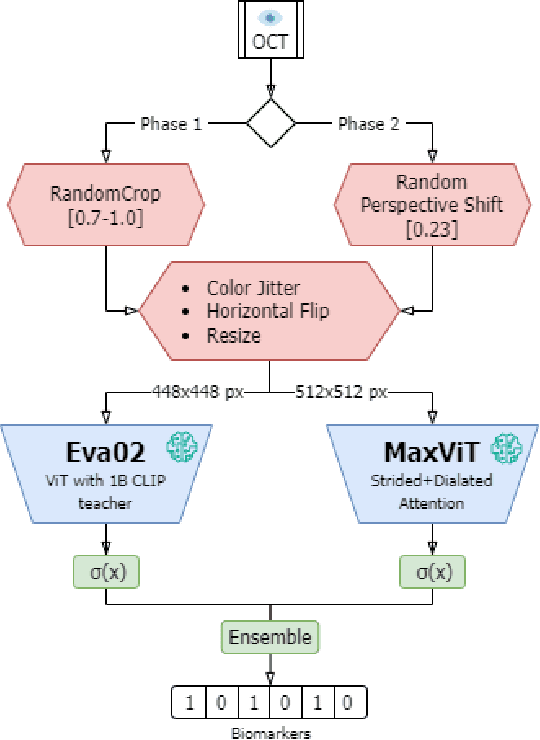


This report outlines our approach in the IEEE SPS VIP Cup 2023: Ophthalmic Biomarker Detection competition. Our primary objective in this competition was to identify biomarkers from Optical Coherence Tomography (OCT) images obtained from a diverse range of patients. Using robust augmentations and 5-fold cross-validation, we trained two vision transformer-based models: MaxViT and EVA-02, and ensembled them at inference time. We find MaxViT's use of convolution layers followed by strided attention to be better suited for the detection of local features while EVA-02's use of normal attention mechanism and knowledge distillation is better for detecting global features. Ours was the best-performing solution in the competition, achieving a patient-wise F1 score of 0.814 in the first phase and 0.8527 in the second and final phase of VIP Cup 2023, scoring 3.8% higher than the next-best solution.
Image Contrast Enhancement using Fuzzy Technique with Parameter Determination using Metaheuristics
Jan 30, 2023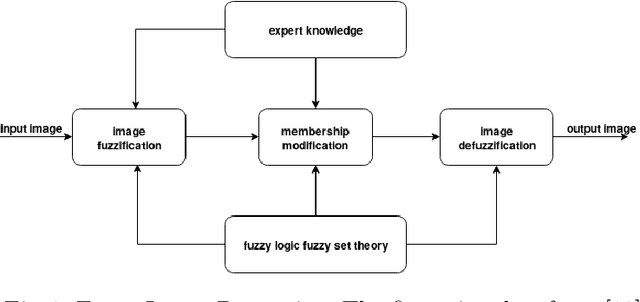
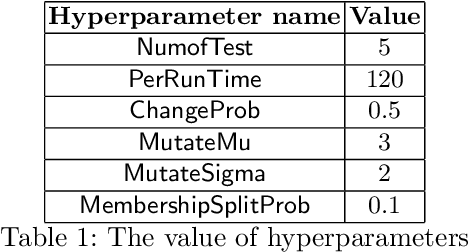
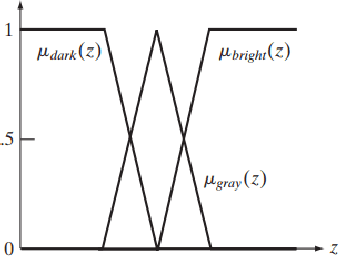
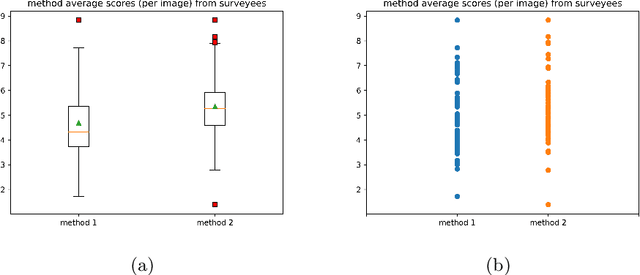
In this work, we have presented a way to increase the contrast of an image. Our target is to find a transformation that will be image specific. We have used a fuzzy system as our transformation function. To tune the system according to an image, we have used Genetic Algorithm and Hill Climbing in multiple ways to evolve the fuzzy system and conducted several experiments. Different variants of the method are tested on several images and two variants that are superior to others in terms of fitness are selected. We have also conducted a survey to assess the visual improvement of the enhancements made by the two variants. The survey indicates that one of the methods can enhance the contrast of the images visually.
RamanNet: A generalized neural network architecture for Raman Spectrum Analysis
Jan 20, 2022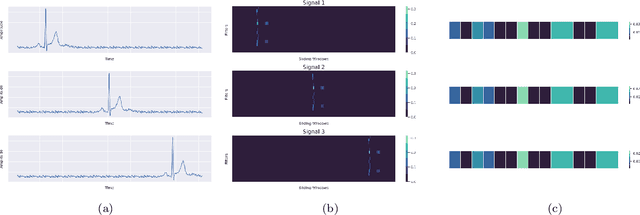
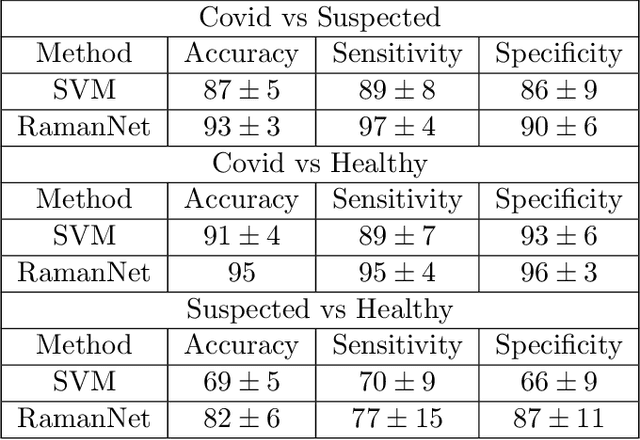
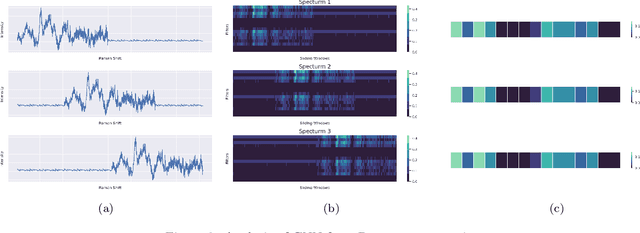

Raman spectroscopy provides a vibrational profile of the molecules and thus can be used to uniquely identify different kind of materials. This sort of fingerprinting molecules has thus led to widespread application of Raman spectrum in various fields like medical dignostics, forensics, mineralogy, bacteriology and virology etc. Despite the recent rise in Raman spectra data volume, there has not been any significant effort in developing generalized machine learning methods for Raman spectra analysis. We examine, experiment and evaluate existing methods and conjecture that neither current sequential models nor traditional machine learning models are satisfactorily sufficient to analyze Raman spectra. Both has their perks and pitfalls, therefore we attempt to mix the best of both worlds and propose a novel network architecture RamanNet. RamanNet is immune to invariance property in CNN and at the same time better than traditional machine learning models for the inclusion of sparse connectivity. Our experiments on 4 public datasets demonstrate superior performance over the much complex state-of-the-art methods and thus RamanNet has the potential to become the defacto standard in Raman spectra data analysis