 Add to Chrome
 Add to Firefox
 Add to Edge
Position: Why a Dynamical Systems Perspective is Needed to Advance Time Series Modeling
Feb 18, 2026
Time series (TS) modeling has come a long way from early statistical, mainly linear, approaches to the current trend in TS foundation models. With a lot of hype and industrial demand in this field, it is not always clear how much progress there really is. To advance TS forecasting and analysis to the next level, here we argue that the field needs a dynamical systems (DS) perspective. TS of observations from natural or engineered systems almost always originate from some underlying DS, and arguably access to its governing equations would yield theoretically optimal forecasts. This is the promise of DS reconstruction (DSR), a class of ML/AI approaches that aim to infer surrogate models of the underlying DS from data. But models based on DS principles offer other profound advantages: Beyond short-term forecasts, they enable to predict the long-term statistics of an observed system, which in many practical scenarios may be the more relevant quantities. DS theory furthermore provides domain-independent theoretical insight into mechanisms underlying TS generation, and thereby will inform us, e.g., about upper bounds on performance of any TS model, generalization into unseen regimes as in tipping points, or potential control strategies. After reviewing some of the central concepts, methods, measures, and models in DS theory and DSR, we will discuss how insights from this field can advance TS modeling in crucial ways, enabling better forecasting with much lower computational and memory footprints. We conclude with a number of specific suggestions for translating insights from DSR into TS modeling.

Continuous-Time Piecewise-Linear Recurrent Neural Networks
Feb 17, 2026In dynamical systems reconstruction (DSR) we aim to recover the dynamical system (DS) underlying observed time series. Specifically, we aim to learn a generative surrogate model which approximates the underlying, data-generating DS, and recreates its long-term properties (`climate statistics'). In scientific and medical areas, in particular, these models need to be mechanistically tractable -- through their mathematical analysis we would like to obtain insight into the recovered system's workings. Piecewise-linear (PL), ReLU-based RNNs (PLRNNs) have a strong track-record in this regard, representing SOTA DSR models while allowing mathematical insight by virtue of their PL design. However, all current PLRNN variants are discrete-time maps. This is in disaccord with the assumed continuous-time nature of most physical and biological processes, and makes it hard to accommodate data arriving at irregular temporal intervals. Neural ODEs are one solution, but they do not reach the DSR performance of PLRNNs and often lack their tractability. Here we develop theory for continuous-time PLRNNs (cPLRNNs): We present a novel algorithm for training and simulating such models, bypassing numerical integration by efficiently exploiting their PL structure. We further demonstrate how important topological objects like equilibria or limit cycles can be determined semi-analytically in trained models. We compare cPLRNNs to both their discrete-time cousins as well as Neural ODEs on DSR benchmarks, including systems with discontinuities which come with hard thresholds.
Bifurcations and loss jumps in RNN training
Oct 26, 2023
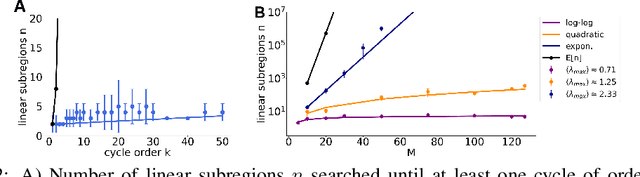


Recurrent neural networks (RNNs) are popular machine learning tools for modeling and forecasting sequential data and for inferring dynamical systems (DS) from observed time series. Concepts from DS theory (DST) have variously been used to further our understanding of both, how trained RNNs solve complex tasks, and the training process itself. Bifurcations are particularly important phenomena in DS, including RNNs, that refer to topological (qualitative) changes in a system's dynamical behavior as one or more of its parameters are varied. Knowing the bifurcation structure of an RNN will thus allow to deduce many of its computational and dynamical properties, like its sensitivity to parameter variations or its behavior during training. In particular, bifurcations may account for sudden loss jumps observed in RNN training that could severely impede the training process. Here we first mathematically prove for a particular class of ReLU-based RNNs that certain bifurcations are indeed associated with loss gradients tending toward infinity or zero. We then introduce a novel heuristic algorithm for detecting all fixed points and k-cycles in ReLU-based RNNs and their existence and stability regions, hence bifurcation manifolds in parameter space. In contrast to previous numerical algorithms for finding fixed points and common continuation methods, our algorithm provides exact results and returns fixed points and cycles up to high orders with surprisingly good scaling behavior. We exemplify the algorithm on the analysis of the training process of RNNs, and find that the recently introduced technique of generalized teacher forcing completely avoids certain types of bifurcations in training. Thus, besides facilitating the DST analysis of trained RNNs, our algorithm provides a powerful instrument for analyzing the training process itself.