 Add to Chrome
 Add to Firefox
 Add to Edge
An Augmented Reality Brain-Robot Interface for Generalist Robot Arm Manipulation
Jun 15, 2026
The integration of augmented reality (AR) and EEG-based brain-computer interfaces (BCIs) offers a promising path for enabling intuitive control of robots for assistive purposes. However, existing AR brain-robot interface (BRI) systems are often constrained to task-specific structures, limiting their utility in real-world environments. We present an AR BRI designed for generalist robot arm manipulation that combines gaze-based object selection with motor imagery action control. Our system uses eye-tracking for intuitive object targeting and context-aware visual overlays ("Place" and "Use") to guide the user through tasks within a shared autonomy framework. We evaluated the interface through a feasibility study with 18 healthy participants performing three multi-step activities of daily living: drinking, using a drawer, and operating an oven. Our results demonstrate that this interaction paradigm enables effective sequential task execution and high user engagement, achieving a "Good" usability rating (SUS > 70). These findings support the feasibility of the proposed interaction paradigm for complex BCI-driven robotic assistance, and motivate future evaluation with the intended target population. Project website: https://ar-bri-manip.github.io/.

Improving Low-Cost Teleoperation: Augmenting GELLO with Force
Jul 18, 2025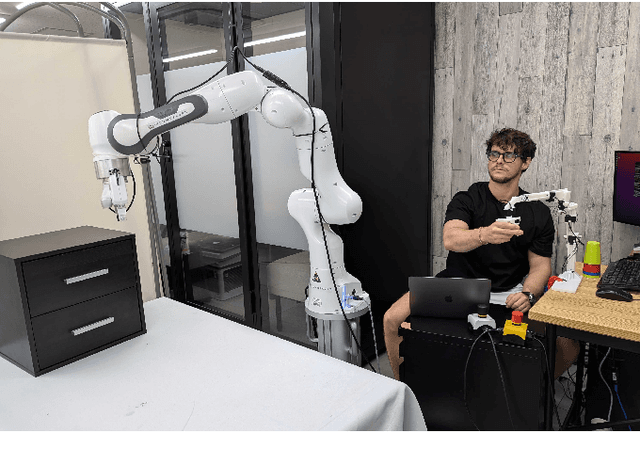
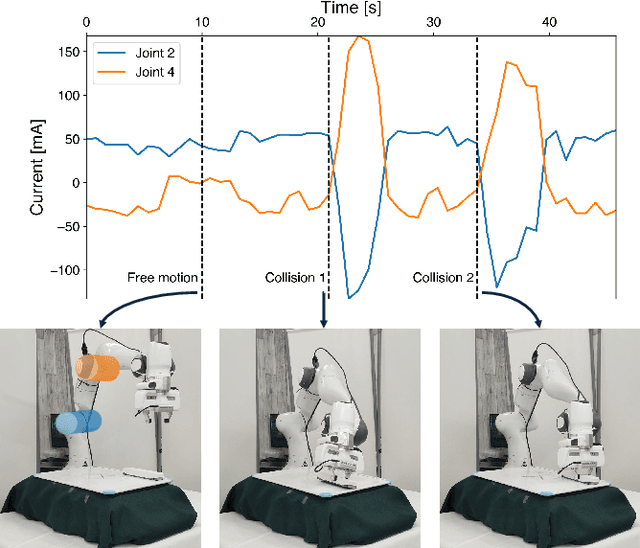
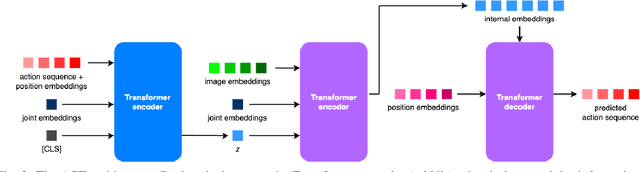
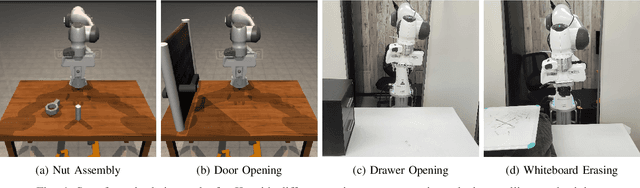
In this work we extend the low-cost GELLO teleoperation system, initially designed for joint position control, with additional force information. Our first extension is to implement force feedback, allowing users to feel resistance when interacting with the environment. Our second extension is to add force information into the data collection process and training of imitation learning models. We validate our additions by implementing these on a GELLO system with a Franka Panda arm as the follower robot, performing a user study, and comparing the performance of policies trained with and without force information on a range of simulated and real dexterous manipulation tasks. Qualitatively, users with robotics experience preferred our controller, and the addition of force inputs improved task success on the majority of tasks.