 Add to Chrome
 Add to Firefox
 Add to Edge
CRESTomics: Analyzing Carotid Plaques in the CREST-2 Trial with a New Additive Classification Model
Mar 04, 2026
Accurate characterization of carotid plaques is critical for stroke prevention in patients with carotid stenosis. We analyze 500 plaques from CREST-2, a multi-center clinical trial, to identify radiomics-based markers from B-mode ultrasound images linked with high-risk. We propose a new kernel-based additive model, combining coherence loss with group-sparse regularization for nonlinear classification. Group-wise additive effects of each feature group are visualized using partial dependence plots. Results indicate our method accurately and interpretably assesses plaques, revealing a strong association between plaque texture and clinical risk.

Analysis of EEG data using complex geometric structurization
Feb 17, 2021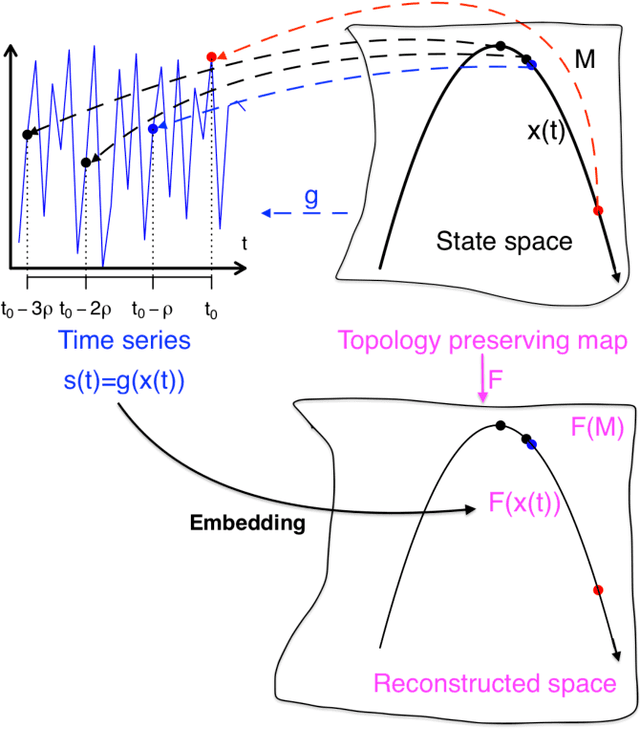
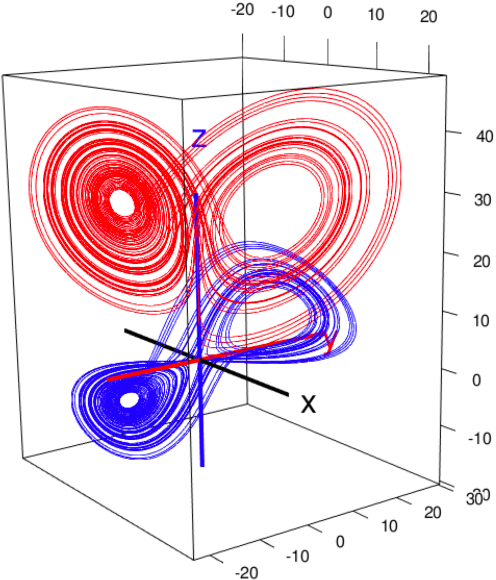

Electroencephalogram (EEG) is a common tool used to understand brain activities. The data are typically obtained by placing electrodes at the surface of the scalp and recording the oscillations of currents passing through the electrodes. These oscillations can sometimes lead to various interpretations, depending on the subject's health condition, the experiment carried out, the sensitivity of the tools used, human manipulations etc. The data obtained over time can be considered a time series. There is evidence in the literature that epilepsy EEG data may be chaotic. Either way, the embedding theory in dynamical systems suggests that time series from a complex system could be used to reconstruct its phase space under proper conditions. In this paper, we propose an analysis of epilepsy electroencephalogram time series data based on a novel approach dubbed complex geometric structurization. Complex geometric structurization stems from the construction of strange attractors using embedding theory from dynamical systems. The complex geometric structures are themselves obtained using a geometry tool, namely the $\alpha$-shapes from shape analysis. Initial analyses show a proof of concept in that these complex structures capture the expected changes brain in lobes under consideration. Further, a deeper analysis suggests that these complex structures can be used as biomarkers for seizure changes.