 Add to Chrome
 Add to Firefox
 Add to Edge
Deep Learning-assisted AMD Staging based on OCT and OCT Angiography
Jun 03, 2026
To develop and evaluate deep learning models for automated grading of age-related macular degeneration (AMD) severity using optical coherence tomography (OCT) and OCT angiography (OCTA) data. Two hundred seventy-one participants aged >= 50 years with varying AMD severities. Central macular 6 x 6 mm OCT/OCTA volumes were acquired using a swept-source OCTA system (SOLIX; Visionix/Optovue Inc., CA). AMD severity was graded into four stages (No AMD, Early AMD, Intermediate AMD, and Advanced AMD) according to the AREDS simplified severity scale. Three deep learning models were developed using different input modalities: (1) biomarker maps derived from segmented pathological features, including retinal fluid, drusen, geographic atrophy (GA), and macular neovascularization (MNV); (2) two-dimensional (2D) en face OCT and OCTA projections; and (3) three-dimensional (3D) OCT/OCTA volumes. EfficientNet-based architectures were trained using normalized inputs, data augmentation, and five-fold cross-validation. A total of 2,030 OCT/OCTA volumes from 351 eyes of 271 participants were analyzed. All models demonstrated strong AMD staging performance with substantial agreement with the reference standard (QWK >= 0.83). The biomarker-based model achieved the highest overall performance (QWK = 0.85 +/- 0.03, mean +/- standard deviation) and the best detection of early AMD (F1-score = 0.59 +/- 0.14). The 3D model achieved performance comparable to the 2D OCT/OCTA model (QWK = 0.83 +/- 0.04 vs. 0.83 +/- 0.09), while the 2D OCT/OCTA model showed the highest precision (0.79 +/- 0.06) and most accurately identified eyes without AMD. Deep learning models using OCT/OCTA data can accurately and automatically grade AMD severity. Among the evaluated approaches, the biomarker-based model provided the most balanced performance and showed particular value for early AMD detection.

DcardNet: Diabetic Retinopathy Classification at Multiple Depths Based on Structural and Angiographic Optical Coherence Tomography
Jun 09, 2020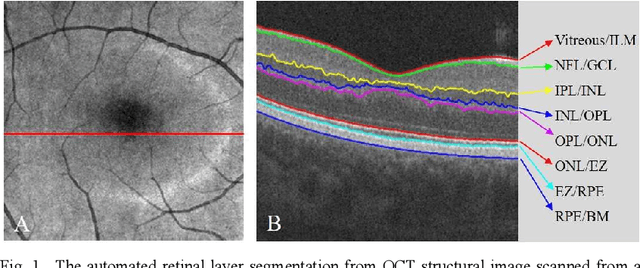
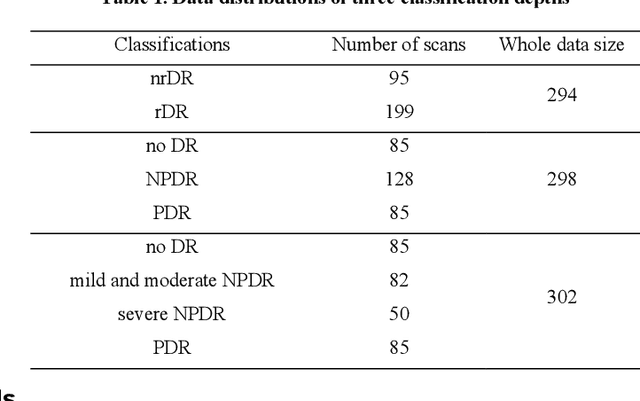
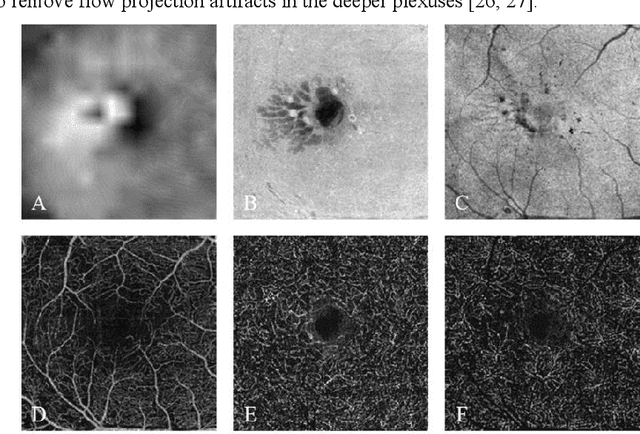
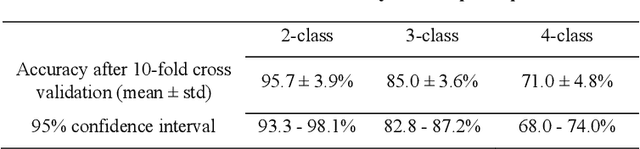
Optical coherence tomography (OCT) and its angiography (OCTA) have several advantages for the early detection and diagnosis of diabetic retinopathy (DR). However, automated, complete DR classification frameworks based on both OCT and OCTA data have not been proposed. In this study, a densely and continuously connected neural network with adaptive rate dropout (DcardNet) is proposed to fulfill a DR classification framework using en face OCT and OCTA. The proposed network outputs three separate classification depths on each case based on the International Clinical Diabetic Retinopathy scale. At the highest level the network classifies scans as referable or non-referable for DR. The second depth classifies the eye as non-DR, non-proliferative DR (NPDR), or proliferative DR (PDR). The last depth classifies the case as no DR, mild and moderate NPDR, severe NPDR, and PDR. We used 10-fold cross-validation with 10% of the data to assess the performance of our network. The overall classification accuracies of the three depths were 95.7%, 85.0%, and 71.0% respectively.