 Add to Chrome
 Add to Firefox
 Add to Edge
Digital Revival: Acoustic Documentation and Digital Reactivation of Historical Woodwind Instruments
Jun 23, 2026
Historical woodwind instruments exhibit complex acoustic behaviors that are central to their musical, organological, and cultural significance. However, due to material fragility, aging, and strict conservation requirements, many original instruments held in museum collections can no longer be played. As a result, their acoustic identity remains insufficiently documented, limiting both acoustical research and historically informed performance practice. Digital Revival is an ongoing research project developed in close collaboration with the Rijksmuseum (Amsterdam) and the Kunstmuseum Den Haag. The project investigates how controlled, non-invasive acoustic sampling and digital sound modeling can be used to document, preserve, and reactivate the sonic characteristics of historical woodwind instruments while fully respecting conservation constraints. Recording sessions are designed in consultation with conservators and instrument specialists and combine performance-informed excitation, high-resolution audio capture, and spectral analysis to document timbral, dynamic, and articulatory features. The resulting datasets function both as analytical resources and as playable digital instruments, enabling comparative study of spectral envelopes, transient behavior, and response characteristics across registers and playing techniques. Performer interaction is explored through electronic wind instruments (EWI), allowing real-time control of historically derived sound material. By integrating musical acoustics, conservation science, and artistic research, Digital Revival proposes a sustainable framework for extending the acoustic presence of historical instruments beyond the museum context, supporting research, education, and contemporary performance without compromising the physical integrity of the original artifacts.

On HRTF Notch Frequency Prediction Using Anthropometric Features and Neural Networks
Mar 12, 2024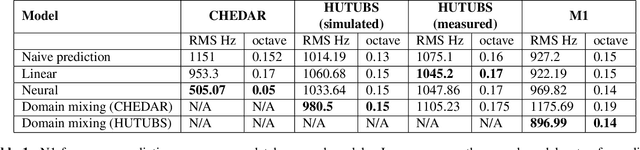
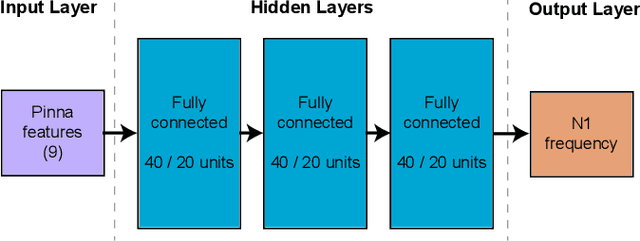
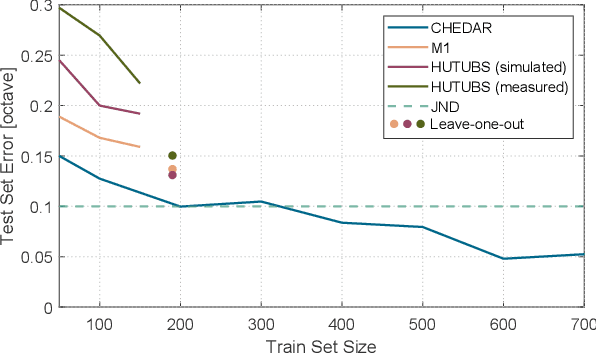
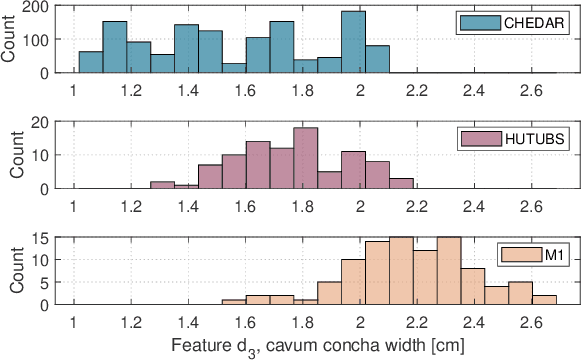
High fidelity spatial audio often performs better when produced using a personalized head-related transfer function (HRTF). However, the direct acquisition of HRTFs is cumbersome and requires specialized equipment. Thus, many personalization methods estimate HRTF features from easily obtained anthropometric features of the pinna, head, and torso. The first HRTF notch frequency (N1) is known to be a dominant feature in elevation localization, and thus a useful feature for HRTF personalization. This paper describes the prediction of N1 frequency from pinna anthropometry using a neural model. Prediction is performed separately on three databases, both simulated and measured, and then by domain mixing in-between the databases. The model successfully predicts N1 frequency for individual databases and by domain mixing between some databases. Prediction errors are better or comparable to those previously reported, showing significant improvement when acquired over a large database and with a larger output range.