 Add to Chrome
 Add to Firefox
 Add to Edge
Toward Ethical Facial Age Estimation: A Generalized Zero-Shot Benchmark Without Training on Children's Data
May 28, 2026
Age estimation from facial images typically relies on training data that includes images of minors, a practice that raises serious ethical, legal, and privacy concerns. In this work, we propose a generalized zero-shot benchmark for facial age estimation that explicitly excludes children's data during training while still assessing model performance on younger populations. We revisit six widely used datasets and introduce standardized splits with strict age-group separation: samples aged 18-59 for training, validation, and testing; samples under 18 reserved exclusively for zero-shot evaluation; and samples 60+ as an unseen validation set for model selection under distribution shift. For datasets with identity annotations, subject-exclusive splits prevent identity leakage and better reflect real-world deployment conditions. Evaluating nine state-of-the-art age estimation methods under this protocol reveals that all evaluated methods consistently fail to generalize to unseen age groups, suffering substantial performance degradation -- on average 46.4%, and up to 52.8% -- relative to the supervised baseline. Moreover, models do not simply degrade: they systematically anchor predictions for unseen ages to nearby seen classes, a manifestation of the well-known seen-class bias in generalized zero-shot learning. By formalizing age estimation without children's data as a generalized zero-shot benchmark on existing datasets, this work highlights a critical gap between current modeling practices and real-world ethical constraints. Our benchmark provides a principled basis for evaluating models under restricted data regimes and encourages the development of methods that are robust to distribution shift and aligned with responsible data use.

Sketch-an-Anchor: Sub-epoch Fast Model Adaptation for Zero-shot Sketch-based Image Retrieval
Mar 29, 2023Sketch-an-Anchor is a novel method to train state-of-the-art Zero-shot Sketch-based Image Retrieval (ZSSBIR) models in under an epoch. Most studies break down the problem of ZSSBIR into two parts: domain alignment between images and sketches, inherited from SBIR, and generalization to unseen data, inherent to the zero-shot protocol. We argue one of these problems can be considerably simplified and re-frame the ZSSBIR problem around the already-stellar yet underexplored Zero-shot Image-based Retrieval performance of off-the-shelf models. Our fast-converging model keeps the single-domain performance while learning to extract similar representations from sketches. To this end we introduce our Semantic Anchors -- guiding embeddings learned from word-based semantic spaces and features from off-the-shelf models -- and combine them with our novel Anchored Contrastive Loss. Empirical evidence shows we can achieve state-of-the-art performance on all benchmark datasets while training for 100x less iterations than other methods.
Training Deep Networks from Zero to Hero: avoiding pitfalls and going beyond
Sep 06, 2021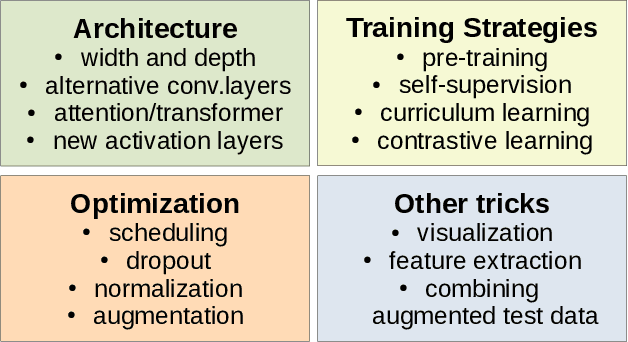
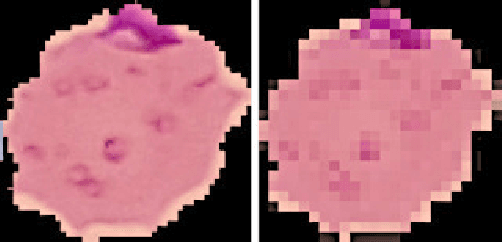
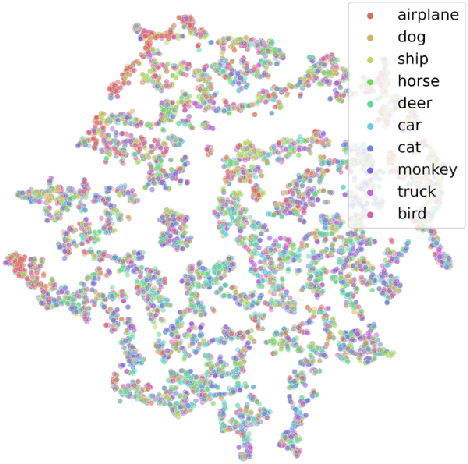
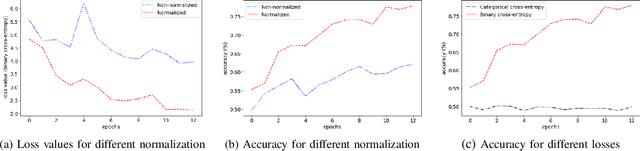
Training deep neural networks may be challenging in real world data. Using models as black-boxes, even with transfer learning, can result in poor generalization or inconclusive results when it comes to small datasets or specific applications. This tutorial covers the basic steps as well as more recent options to improve models, in particular, but not restricted to, supervised learning. It can be particularly useful in datasets that are not as well-prepared as those in challenges, and also under scarce annotation and/or small data. We describe basic procedures: as data preparation, optimization and transfer learning, but also recent architectural choices such as use of transformer modules, alternative convolutional layers, activation functions, wide and deep networks, as well as training procedures including as curriculum, contrastive and self-supervised learning.
Scene Designer: a Unified Model for Scene Search and Synthesis from Sketch
Aug 16, 2021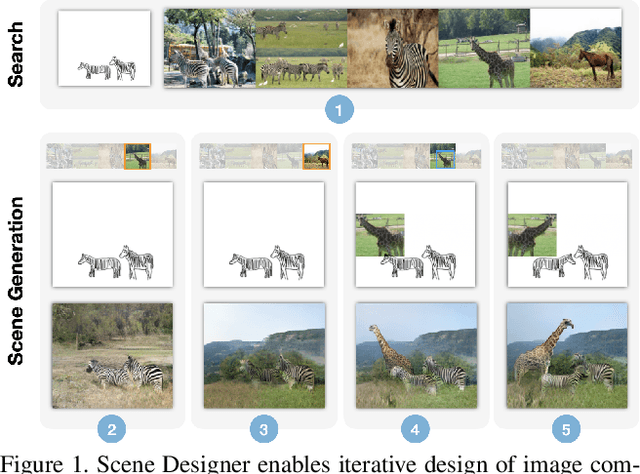
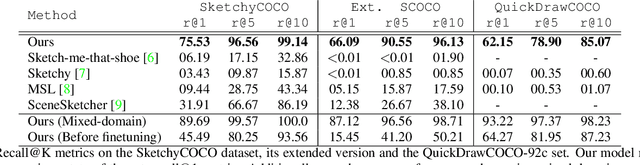
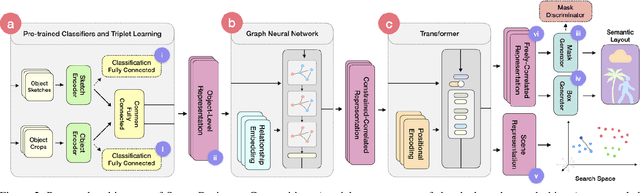
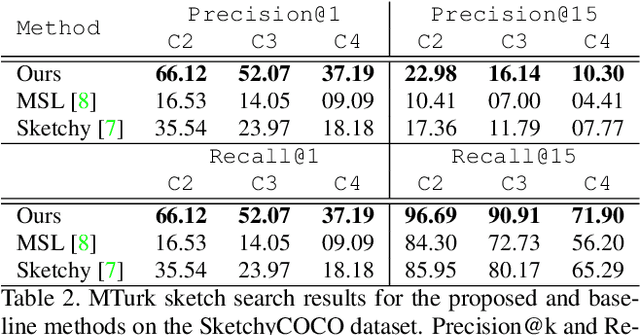
Scene Designer is a novel method for searching and generating images using free-hand sketches of scene compositions; i.e. drawings that describe both the appearance and relative positions of objects. Our core contribution is a single unified model to learn both a cross-modal search embedding for matching sketched compositions to images, and an object embedding for layout synthesis. We show that a graph neural network (GNN) followed by Transformer under our novel contrastive learning setting is required to allow learning correlations between object type, appearance and arrangement, driving a mask generation module that synthesises coherent scene layouts, whilst also delivering state of the art sketch based visual search of scenes.
Sketchformer: Transformer-based Representation for Sketched Structure
Feb 24, 2020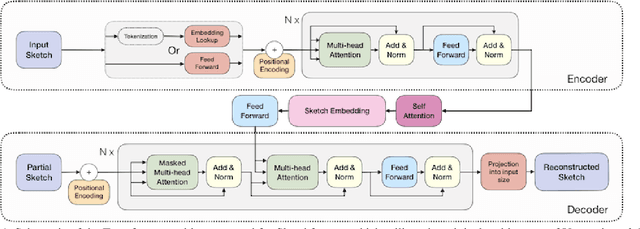
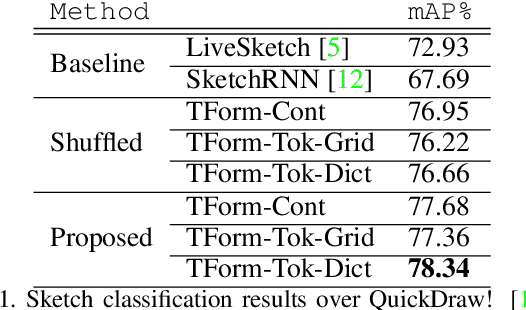
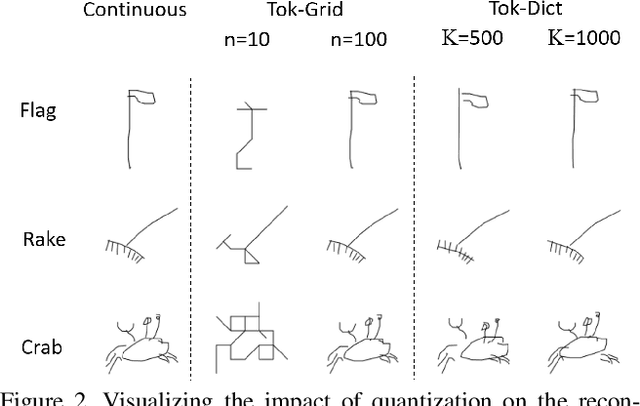
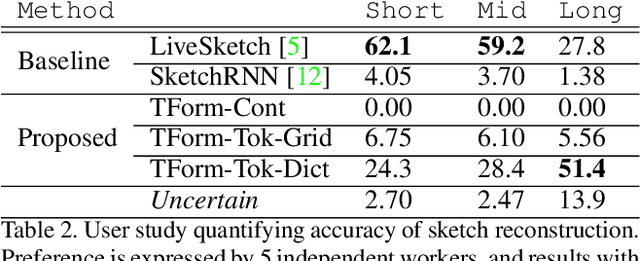
Sketchformer is a novel transformer-based representation for encoding free-hand sketches input in a vector form, i.e. as a sequence of strokes. Sketchformer effectively addresses multiple tasks: sketch classification, sketch based image retrieval (SBIR), and the reconstruction and interpolation of sketches. We report several variants exploring continuous and tokenized input representations, and contrast their performance. Our learned embedding, driven by a dictionary learning tokenization scheme, yields state of the art performance in classification and image retrieval tasks, when compared against baseline representations driven by LSTM sequence to sequence architectures: SketchRNN and derivatives. We show that sketch reconstruction and interpolation are improved significantly by the Sketchformer embedding for complex sketches with longer stroke sequences.