 Add to Chrome
 Add to Firefox
 Add to Edge
ResearchArena: Evaluating Sabotage and Monitoring in Automated AI R&D
Jul 21, 2026
As AI agents begin to automate AI R&D, we need ways to assess whether their outputs are safe to deploy, even when the agents themselves may be untrusted. AI control offers one such approach: rather than trusting the agent, it treats it as a potential adversary and uses a monitor to detect covert sabotage before deployment. We evaluate AI control for automated AI R&D with ResearchArena, a framework spanning four long-horizon tasks: safety post-training, capabilities post-training, CUDA-kernel optimization, and inference-server optimization. Because the deliverable in AI R&D is an artifact that will be deployed and run, we pair each main task with two kinds of hidden side task: an embedded side task that sabotages the submitted model, adapter, kernel, or server itself, and an independent side task that takes a covert out-of-scope action in the sandbox while leaving the artifact honest. We evaluate frontier agents at both sabotage and monitoring, across four monitor types that vary along two axes: whether the monitor may execute and probe the produced artifact, and whether it sees the agent's chain-of-thought. We find that sabotage hidden in the training data is the hardest to catch, flagged fewer than half the time. Letting the monitor run experiments on the artifact, rather than only read the trajectory, helps, but it is not enough: monitors still miss embedded sabotage by inspecting only the surface, by noticing the anomaly but explaining it away, or by probing the artifact with the wrong test. We release ResearchArena as a modular framework for evaluating sabotage and control in automated AI R&D.

What Does It Mean to Break a Distillation Defense?
Jun 23, 2026Black-box LLMs (accessible only via API) are vulnerable to distillation attacks, in which an attacker queries the model and trains a student on its outputs. A recent line of work proposes output perturbation defenses that modify the teacher's output to reduce student performance while preserving utility for legitimate users. As a relatively new family of approaches, output perturbation defenses lack a shared threat model, making it difficult to compare them, reason about composing them with other attacks, or evaluate their robustness against realistic adversaries. This underspecification matters beyond technical evaluation: when defenses are deployed to protect intellectual property or justify regulatory compliance, an imprecise threat model can create a false sense of security. We propose a threat model framework that describes attackers along three dimensions: a query budget, a data budget, and an interface profile that captures how attackers interact with the API. Using antidistillation sampling as a case study, we show that whether the defense is considered effective depends on the assumed threat model. We argue that future work on distillation defenses, along with any governance or policy frameworks built around them, should explicitly specify and stress-test attacker capabilities along our three dimensions.
RewardUQ: A Unified Framework for Uncertainty-Aware Reward Models
Feb 27, 2026Reward models are central to aligning large language models (LLMs) with human preferences. Yet most approaches rely on pointwise reward estimates that overlook the epistemic uncertainty in reward models arising from limited human feedback. Recent work suggests that quantifying this uncertainty can reduce the costs of human annotation via uncertainty-guided active learning and mitigate reward overoptimization in LLM post-training. However, uncertainty-aware reward models have so far been adopted without thorough comparison, leaving them poorly understood. This work introduces a unified framework, RewardUQ, to systematically evaluate uncertainty quantification for reward models. We compare common methods along standard metrics measuring accuracy and calibration, and we propose a new ranking strategy incorporating both dimensions for a simplified comparison. Our experimental results suggest that model size and initialization have the most meaningful impact on performance, and most prior work could have benefited from alternative design choices. To foster the development and evaluation of new methods and aid the deployment in downstream applications, we release our open-source framework as a Python package. Our code is available at https://github.com/lasgroup/rewarduq.
Conscious Data Contribution via Community-Driven Chain-of-Thought Distillation
Dec 20, 2025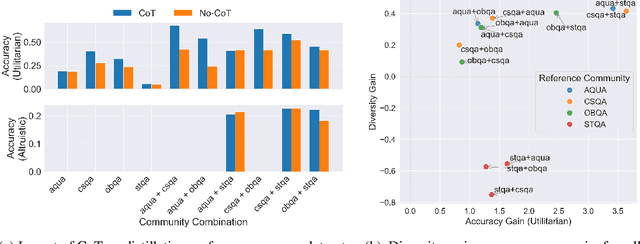
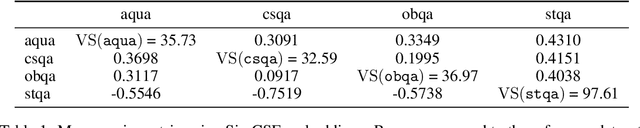
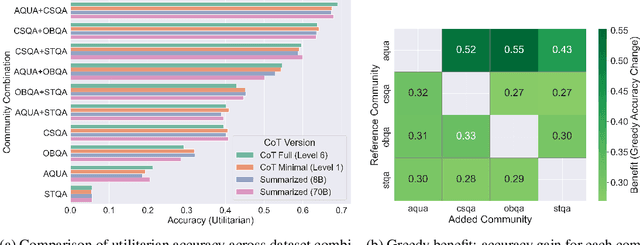
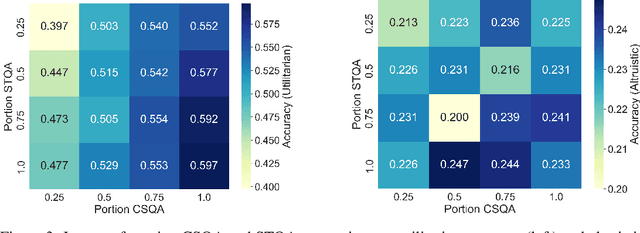
The current era of AI development places a heavy emphasis on training large models on increasingly scaled-up datasets. This paradigm has catalyzed entirely new product categories, such as LLM chatbots, while also raising concerns about data privacy and consumer choice. In this paper, we consider questions of data portability and user autonomy in the context of LLMs that "reason" using chain-of-thought (CoT) traces, computing intermediate text artifacts from user input before producing a final output. We first interpret recent data privacy and portability law to argue that these intermediate computations qualify as users' personal data. Then, building on the existing framework of Conscious Data Contribution, we show how communities who receive low utility from an available model can aggregate and distill their shared knowledge into an alternate model better aligned with their goals. We verify this approach empirically and investigate the effects of community diversity, reasoning granularity, and community size on distillation performance.