 Add to Chrome
 Add to Firefox
 Add to Edge
Agentic Federated Learning: The Future of Distributed Training Orchestration
Apr 06, 2026
Although Federated Learning (FL) promises privacy and distributed collaboration, its effectiveness in real-world scenarios is often hampered by the stochastic heterogeneity of clients and unpredictable system dynamics. Existing static optimization approaches fail to adapt to these fluctuations, resulting in resource underutilization and systemic bias. In this work, we propose a paradigm shift towards Agentic-FL, a framework where Language Model-based Agents (LMagents) assume autonomous orchestration roles. Unlike rigid protocols, we demonstrate how server-side agents can mitigate selection bias through contextual reasoning, while client-side agents act as local guardians, dynamically managing privacy budgets and adapting model complexity to hardware constraints. More than just resolving technical inefficiencies, this integration signals the evolution of FL towards decentralized ecosystems, where collaboration is negotiated autonomously, paving the way for future markets of incentive-based models and algorithmic justice. We discuss the reliability (hallucinations) and security challenges of this approach, outlining a roadmap for resilient multi-agent systems in federated environments.

Automatic Extraction of Urban Outdoor Perception from Geolocated Free-Texts
Oct 13, 2020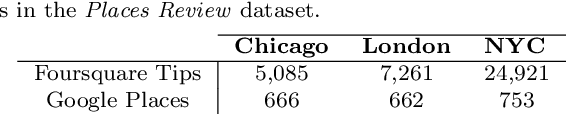
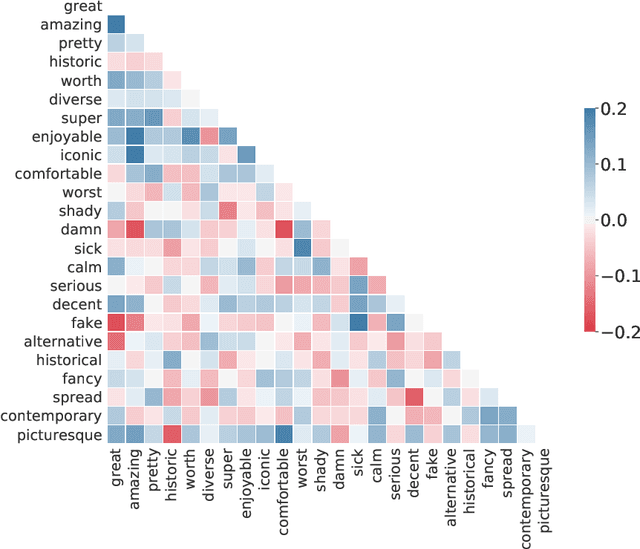
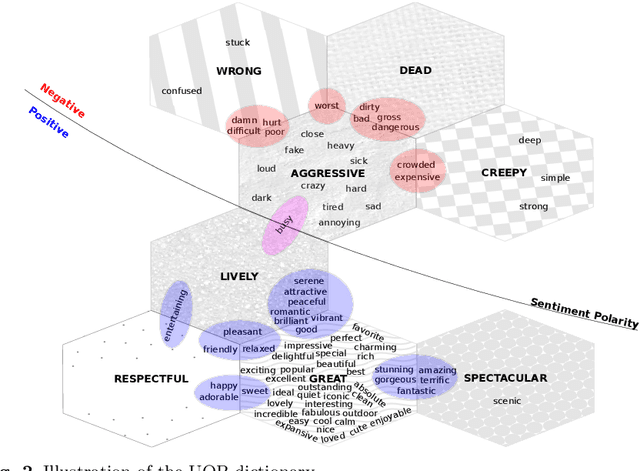
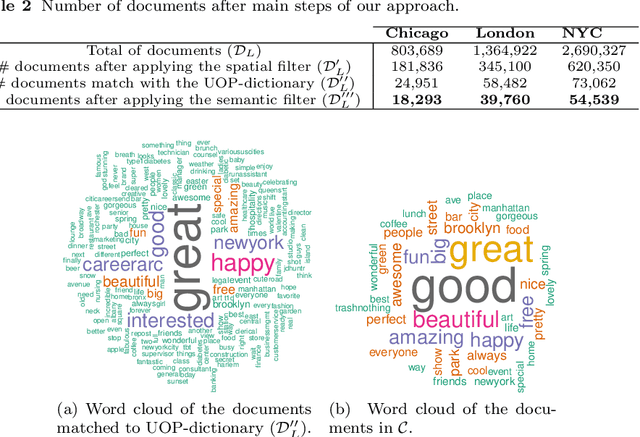
The automatic extraction of urban perception shared by people on location-based social networks (LBSNs) is an important multidisciplinary research goal. One of the reasons is because it facilitates the understanding of the intrinsic characteristics of urban areas in a scalable way, helping to leverage new services. However, content shared on LBSNs is diverse, encompassing several topics, such as politics, sports, culture, religion, and urban perceptions, making the task of content extraction regarding a particular topic very challenging. Considering free-text messages shared on LBSNs, we propose an automatic and generic approach to extract people's perceptions. For that, our approach explores opinions that are spatial-temporal and semantically similar. We exemplify our approach in the context of urban outdoor areas in Chicago, New York City and London. Studying those areas, we found evidence that LBSN data brings valuable information about urban regions. To analyze and validate our outcomes, we conducted a temporal analysis to measure the results' robustness over time. We show that our approach can be helpful to better understand urban areas considering different perspectives. We also conducted a comparative analysis based on a public dataset, which contains volunteers' perceptions regarding urban areas expressed in a controlled experiment. We observe that both results yield a very similar level of agreement.