 Add to Chrome
 Add to Firefox
 Add to Edge
The Role of Emotional Stimuli and Intensity in Shaping Large Language Model Behavior
Apr 07, 2026
Emotional prompting - the use of specific emotional diction in prompt engineering - has shown increasing promise in improving large language model (LLM) performance, truthfulness, and responsibility. However these studies have been limited to single types of positive emotional stimuli and have not considered varying degrees of emotion intensity in their analyses. In this paper, we explore the effects of four distinct emotions - joy, encouragement, anger, and insecurity - in emotional prompting and evaluate them on accuracy, sycophancy, and toxicity. We develop a prompt-generation pipeline with GPT-4o mini to create a suite of LLM and human-generated prompts with varying intensities across the four emotions. Then, we compile a "Gold Dataset" of prompts where human and model labels align. Our empirical evaluation on LLM behavior suggests that positive emotional stimuli lead to more accurate and less toxic results, but also increase sycophantic behavior.

Deep learning enhanced mobile-phone microscopy
Dec 12, 2017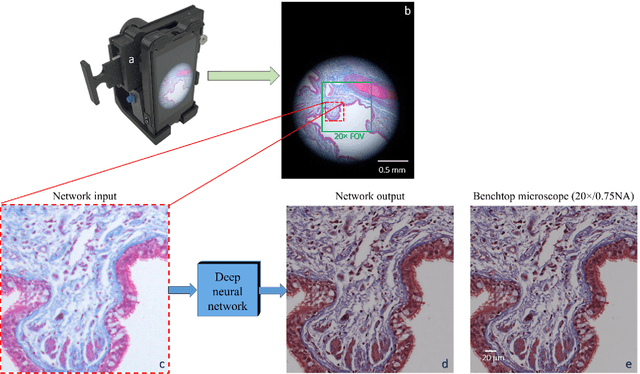
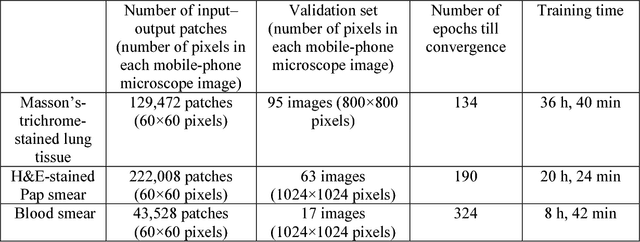
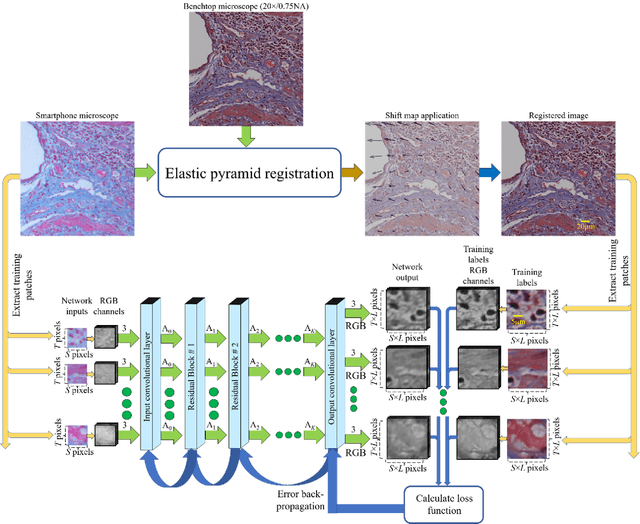
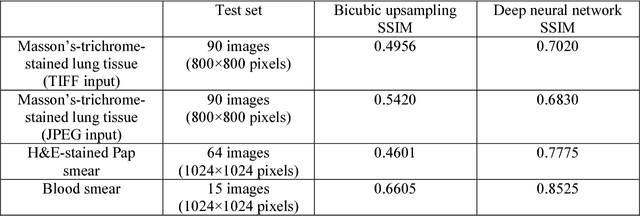
Mobile-phones have facilitated the creation of field-portable, cost-effective imaging and sensing technologies that approach laboratory-grade instrument performance. However, the optical imaging interfaces of mobile-phones are not designed for microscopy and produce spatial and spectral distortions in imaging microscopic specimens. Here, we report on the use of deep learning to correct such distortions introduced by mobile-phone-based microscopes, facilitating the production of high-resolution, denoised and colour-corrected images, matching the performance of benchtop microscopes with high-end objective lenses, also extending their limited depth-of-field. After training a convolutional neural network, we successfully imaged various samples, including blood smears, histopathology tissue sections, and parasites, where the recorded images were highly compressed to ease storage and transmission for telemedicine applications. This method is applicable to other low-cost, aberrated imaging systems, and could offer alternatives for costly and bulky microscopes, while also providing a framework for standardization of optical images for clinical and biomedical applications.