 Add to Chrome
 Add to Firefox
 Add to Edge
From Visual to Multimodal: Systematic Ablation of Encoders and Fusion Strategies in Animal Identification
Feb 28, 2026
Automated animal identification is a practical task for reuniting lost pets with their owners, yet current systems often struggle due to limited dataset scale and reliance on unimodal visual cues. This study introduces a multimodal verification framework that enhances visual features with semantic identity priors derived from synthetic textual descriptions. We constructed a massive training corpus of 1.9 million photographs covering 695,091~unique animals to support this investigation. Through systematic ablation studies, we identified SigLIP2-Giant and E5-Small-v2 as the optimal vision and text backbones. We further evaluated fusion strategies ranging from simple concatenation to adaptive gating to determine the best method for integrating these modalities. Our proposed approach utilizes a gated fusion mechanism and achieved a Top-1 accuracy of 84.28\% and an Equal Error Rate of 0.0422 on a comprehensive test protocol. These results represent an 11\% improvement over leading unimodal baselines and demonstrate that integrating synthesized semantic descriptions significantly refines decision boundaries in large-scale pet re-identification.
* Published at MDPI Journal of Imaging (see at https://www.mdpi.com/2313-433X/12/1/30)

DeepFolio: Convolutional Neural Networks for Portfolios with Limit Order Book Data
Aug 27, 2020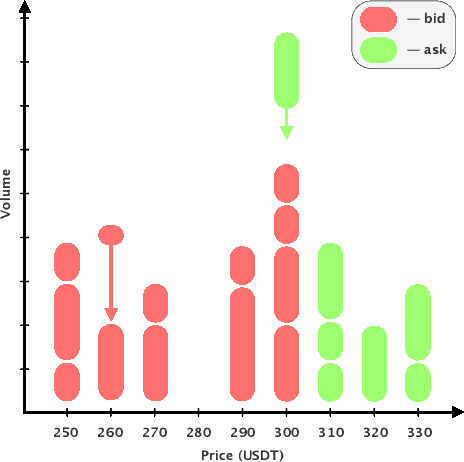
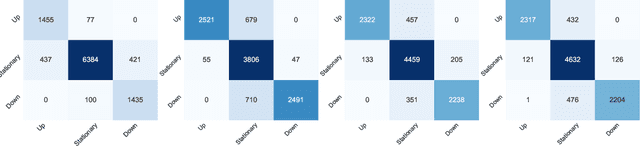
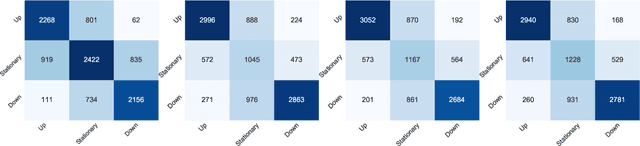
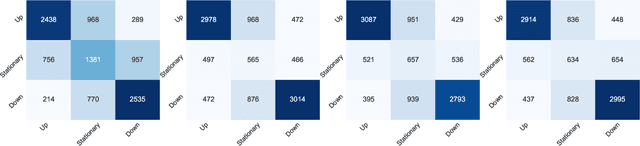
This work proposes DeepFolio, a new model for deep portfolio management based on data from limit order books (LOB). DeepFolio solves problems found in the state-of-the-art for LOB data to predict price movements. Our evaluation consists of two scenarios using a large dataset of millions of time series. The improvements deliver superior results both in cases of abundant as well as scarce data. The experiments show that DeepFolio outperforms the state-of-the-art on the benchmark FI-2010 LOB. Further, we use DeepFolio for optimal portfolio allocation of crypto-assets with rebalancing. For this purpose, we use two loss-functions - Sharpe ratio loss and minimum volatility risk. We show that DeepFolio outperforms widely used portfolio allocation techniques in the literature.