 Add to Chrome
 Add to Firefox
 Add to Edge
PaReGTA: An LLM-based EHR Data Encoding Approach to Capture Temporal Information
Feb 23, 2026
Temporal information in structured electronic health records (EHRs) is often lost in sparse one-hot or count-based representations, while sequence models can be costly and data-hungry. We propose PaReGTA, an LLM-based encoding framework that (i) converts longitudinal EHR events into visit-level templated text with explicit temporal cues, (ii) learns domain-adapted visit embeddings via lightweight contrastive fine-tuning of a sentence-embedding model, and (iii) aggregates visit embeddings into a fixed-dimensional patient representation using hybrid temporal pooling that captures both recency and globally informative visits. Because PaReGTA does not require training from scratch but instead utilizes a pre-trained LLM, it can perform well even in data-limited cohorts. Furthermore, PaReGTA is model-agnostic and can benefit from future EHR-specialized sentence-embedding models. For interpretability, we introduce PaReGTA-RSS (Representation Shift Score), which quantifies clinically defined factor importance by recomputing representations after targeted factor removal and projecting representation shifts through a machine learning model. On 39,088 migraine patients from the All of Us Research Program, PaReGTA outperforms sparse baselines for migraine type classification while deep sequential models were unstable in our cohort.

Layer-level activation mechanism
Jul 03, 2023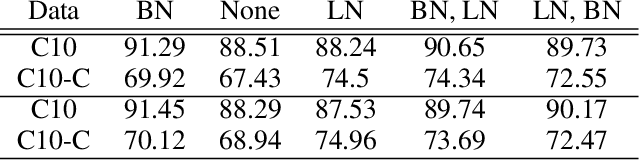
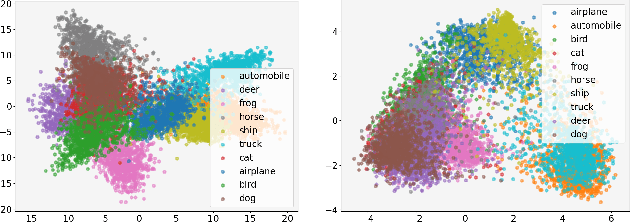
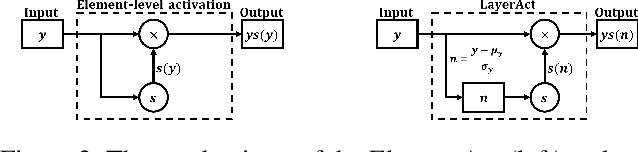
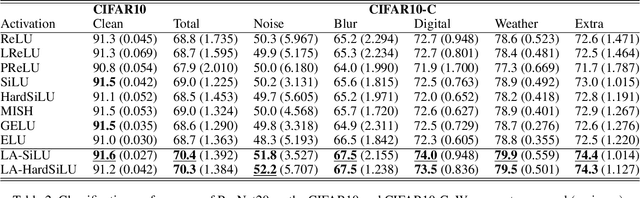
In this work, we propose a novel activation mechanism aimed at establishing layer-level activation (LayerAct) functions. These functions are designed to be more noise-robust compared to traditional element-level activation functions by reducing the layer-level fluctuation of the activation outputs due to shift in inputs. Moreover, the LayerAct functions achieve a zero-like mean activation output without restricting the activation output space. We present an analysis and experiments demonstrating that LayerAct functions exhibit superior noise-robustness compared to element-level activation functions, and empirically show that these functions have a zero-like mean activation. Experimental results on three benchmark image classification tasks show that LayerAct functions excel in handling noisy image datasets, outperforming element-level activation functions, while the performance on clean datasets is also superior in most cases.