 Add to Chrome
 Add to Firefox
 Add to Edge
LLM-guided phase diagram construction through high-throughput experimentation
Apr 22, 2026
Constructing phase diagrams for multicomponent alloys requires extensive experimental measurements and is a time-consuming task. Here we investigate whether large language models (LLMs) can guide experimental planning for phase diagram construction. In our framework, a general-purpose LLM serves as the experimental planner, suggesting compositions for measurement at each cycle in a closed loop with high-throughput synthesis and X-ray diffraction phase identification. Using this framework, we experimentally constructed the ternary phase diagram of the Co-Al-Ge system at 900 degree C through iterative synthesis and characterization. We compared two strategies that differ in how the initial compositions are selected: one uses predictions from a domain-specific LLM trained on phase diagram data (aLLoyM), while the other relies solely on the general-purpose LLM. The two strategies exhibited complementary strengths. aLLoyM directed the initial measurements toward compositionally complex regions in the interior of the ternary diagram, enabling the earliest discovery of all three novel phases that form only in the ternary system. In contrast, the general-purpose LLM adopted a textbook-like approach which efficiently identified a larger number of phases in fewer cycles. In addition, a simulated benchmark comparing the LLM against conventional machine learning confirmed that the LLM achieves more efficient exploration. The results demonstrate that LLMs have high potential as experimental planners for phase diagram construction.

Extracting effective solutions hidden in large language models via generated comprehensive specialists: case studies in developing electronic devices
Dec 31, 2024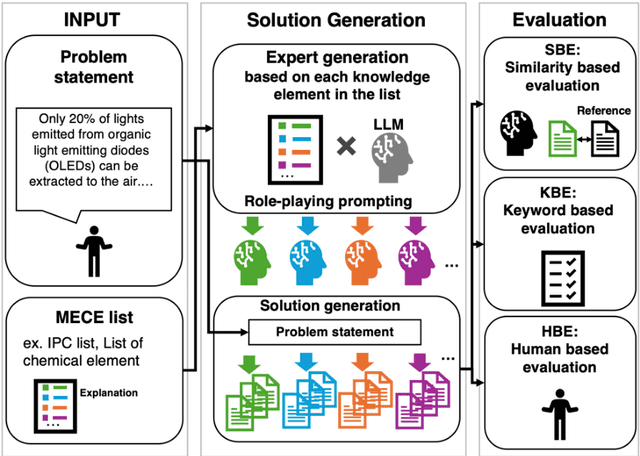

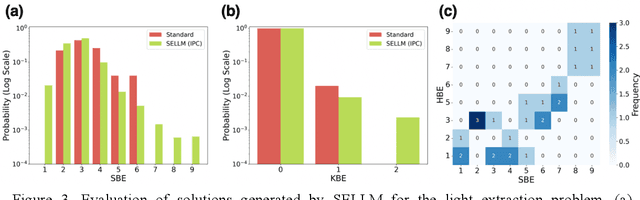
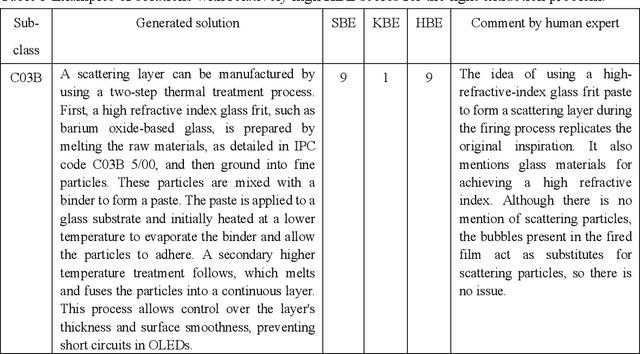
Recently, many studies have increasingly explored the use of large language models (LLMs) to generate research ideas and scientific hypotheses. However, real-world research and development often require solving complex, interdisciplinary challenges where solutions may not be readily found through existing knowledge related to the problem. Therefore, it is desirable to leverage the vast, comprehensive knowledge of LLMs to generate effective, breakthrough solutions by integrating various perspectives from other disciplines. Here, we propose SELLM (Solution Enumeration via comprehensive List and LLM), a framework leveraging LLMs and structured guidance using MECE (Mutually Exclusive, Collectively Exhaustive) principles, such as International Patent Classification (IPC) and the periodic table of elements. SELLM systematically constructs comprehensive expert agents from the list to generate cross-disciplinary and effective solutions. To evaluate SELLM's practicality, we applied it to two challenges: improving light extraction in organic light-emitting diode (OLED) lighting and developing electrodes for next-generation memory materials. The results demonstrate that SELLM significantly facilitates the generation of effective solutions compared to cases without specific customization or effort, showcasing the potential of SELLM to enable LLMs to generate effective solutions even for challenging problems.
Individual health-disease phase diagrams for disease prevention based on machine learning
May 31, 2022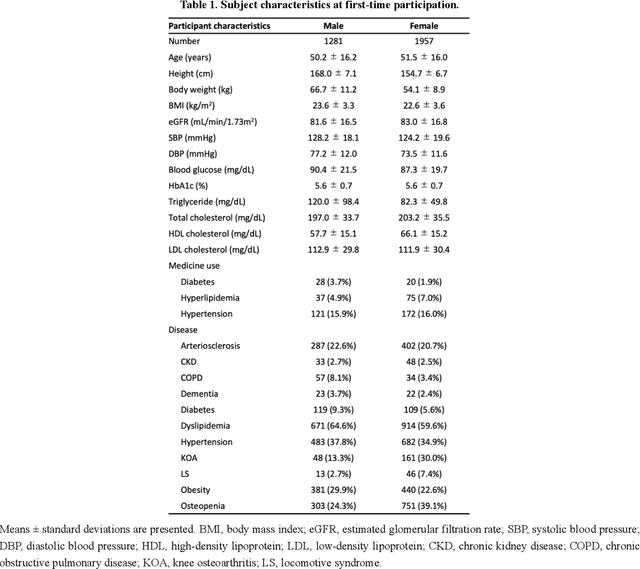
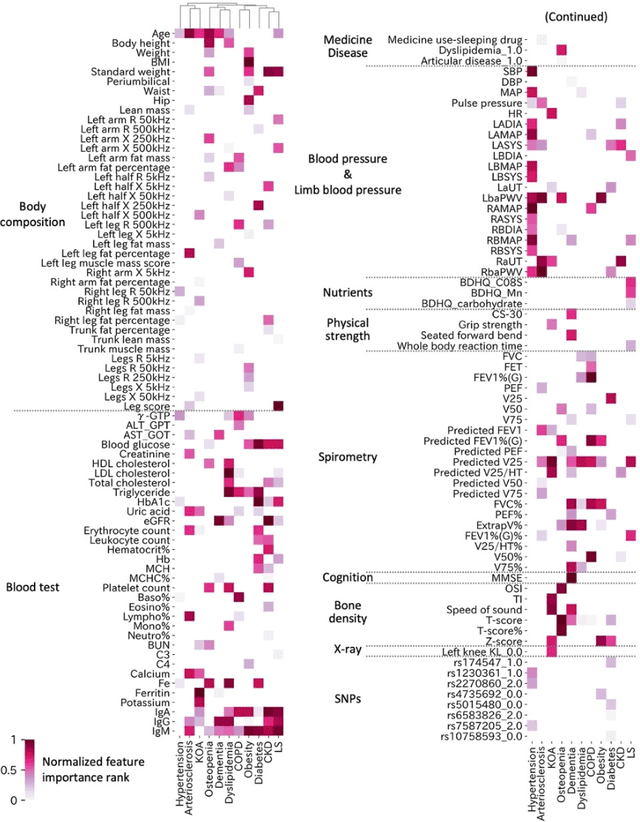
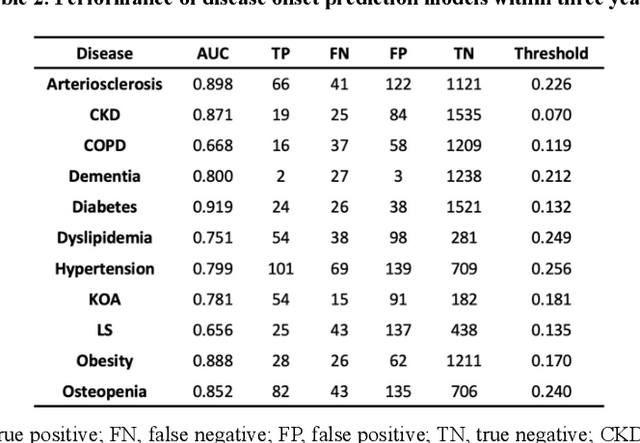
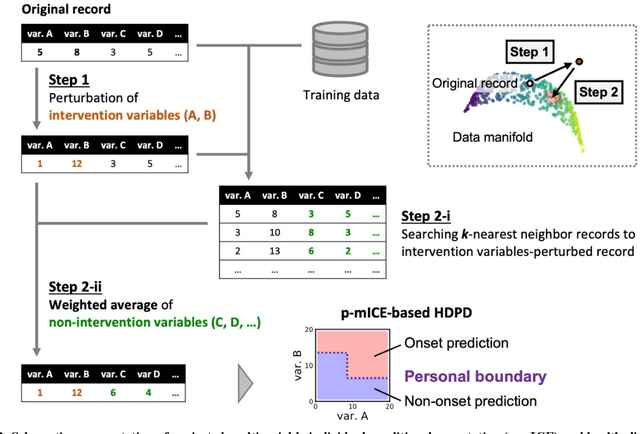
Early disease detection and prevention methods based on effective interventions are gaining attention. Machine learning technology has enabled precise disease prediction by capturing individual differences in multivariate data. Progress in precision medicine has revealed that substantial heterogeneity exists in health data at the individual level and that complex health factors are involved in the development of chronic diseases. However, it remains a challenge to identify individual physiological state changes in cross-disease onset processes because of the complex relationships among multiple biomarkers. Here, we present the health-disease phase diagram (HDPD), which represents a personal health state by visualizing the boundary values of multiple biomarkers that fluctuate early in the disease progression process. In HDPDs, future onset predictions are represented by perturbing multiple biomarker values while accounting for dependencies among variables. We constructed HDPDs for 11 non-communicable diseases (NCDs) from a longitudinal health checkup cohort of 3,238 individuals, comprising 3,215 measurement items and genetic data. Improvement of biomarker values to the non-onset region in HDPD significantly prevented future disease onset in 7 out of 11 NCDs. Our results demonstrate that HDPDs can represent individual physiological states in the onset process and be used as intervention goals for disease prevention.