 Add to Chrome
 Add to Firefox
 Add to Edge
Beyond Heavy Log Curation: Perplexity-Based APT Detection via Unsupervised, Context-Augmented Language Models
Jul 23, 2026
Advanced Persistent Threats (APTs) remain difficult to detect because only a small fraction of events in large-scale logs are attack-related, and investigation is expensive and hard to scale. Prior machine-learning approaches can reduce analyst workload, but they often rely on heavily curated training data and sophisticated preprocessing pipelines. Building and maintaining such pipelines require substantial domain expertise and engineering cost. Motivated by insights from a study of a strong APT detection baseline, we propose CAPTAIN (Context-Augmented Perplexity-based Threat Activity log detectIoN), a perplexity-based detector that leverages general, pre-trained language models with minimal, domain-agnostic preprocessing, enabling robust scoring of long, minimally processed log entries. CAPTAIN encodes recent history with an encoder model and a Q-Former-style bridge, then injects the compact context tokens into the decoder input so that perplexity reflects temporal context. To improve stability, CAPTAIN additionally applies smoothing filters to the perplexity time series. Across APT-oriented benchmarks, CAPTAIN competes with strong existing baselines and remains robust under substantially less curated inputs, that reduces the development and operational cost of advanced log preprocessing.

ReCoVLA: VLM-Guided Reward Compilation for Failure Recovery in Vision-Language-Action Policies
Jun 08, 2026Vision-language-action (VLA) policies provide strong priors for language-conditioned manipulation, but remain brittle in off-nominal states requiring targeted recovery. We propose ReCoVLA -- a failure-conditioned residual recovery framework that keeps a pretrained VLA policy frozen, uses an external vision-language model (VLM) to infer the failure mode and recovery stage, and compiles a structured reward from task-relevant components. Rather than using the VLM to generate actions or rewards directly, ReCoVLA uses it as a semantic reward selector: it predicts a recovery descriptor and reward mask for in-simulation residual-policy training, followed by zero-shot sim-to-real deployment of the trained recovery policies. This decouples high-level failure understanding from low-level corrective control to support different VLAs. Experiments across short-horizon, long-horizon, and contact-rich manipulation tasks show that ReCoVLA outperforms the tested baselines on average. In simulation, our reward compiler improves average success from 36.7% for the fine-tuned $π_{0.5}$ baseline to 66.7%. In physical zero-shot sim-to-real experiments, ReCoVLA achieves the best average performance, with 61.7% success.
Compressing Sign Information in DCT-based Image Coding via Deep Sign Retrieval
Sep 21, 2022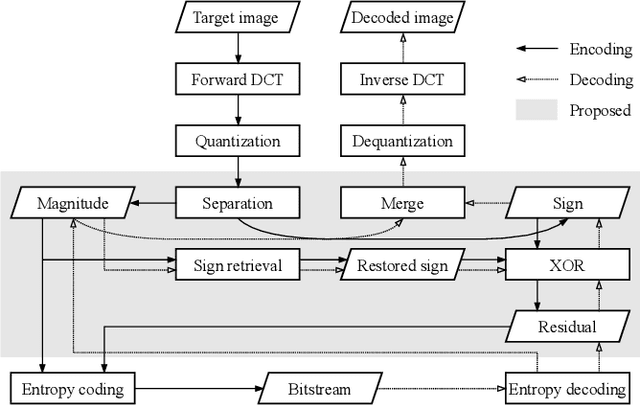

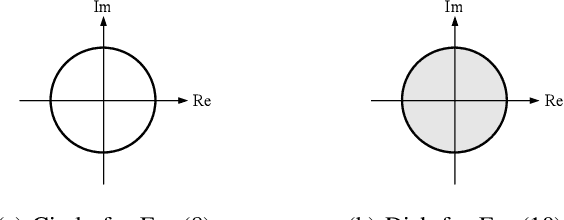
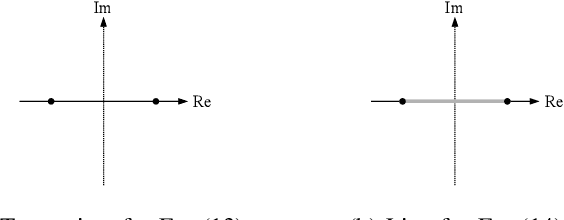
Compressing the sign information of discrete cosine transform (DCT) coefficients is an intractable problem in image coding schemes due to the equiprobable characteristics of the signs. To overcome this difficulty, we propose an efficient compression method for the sign information called "sign retrieval." This method is inspired by phase retrieval, which is a classical signal restoration problem of finding the phase information of discrete Fourier transform coefficients from their magnitudes. The sign information of all DCT coefficients is excluded from a bitstream at the encoder and is complemented at the decoder through our sign retrieval method. We show through experiments that our method outperforms previous ones in terms of the bit amount for the signs and computation cost. Our method, implemented in Python language, is available from https://github.com/ctsutake/dsr.