 Add to Chrome
 Add to Firefox
 Add to Edge
Frontier AI performance across the business disciplines: a case-grounded benchmark of knowledge work and analytical reasoning
Jul 21, 2026
Large language models (LLMs) are improving rapidly as reflected in benchmark scores, yet these AI benchmarks largely test capabilities such as factual recall, narrow question answering, mathematical problem-solving, and coding and agentic tool-use. What remains poorly measured is AI progress on the analytical knowledge work white-collar professionals perform daily, including synthesizing complex information, exercising judgment under uncertainty and incomplete information, applying strategic and adversarial thinking in multi-stakeholder settings, weighing trade-offs, and producing defensible, structured analyses. This gap is even more pronounced for subjective components of such work, where success can be challenging to define. The "case method" form of education practiced by top business schools provides a natural foundation for addressing this measurement gap, and we construct BusinessCaseBench, a benchmark spanning hundreds of questions drawn from business cases across eighteen disciplines, each paired with a grading rubric derived from the expert-written instructor case solution. On BusinessCaseBench, frontier AI models already score highly against instructor rubrics, and capability within one model family improves substantially over two years. These results provide strong evidence that AI performance on this class of work is already high and rapidly improving, with implications for business schools, where case pedagogy trains undergraduates and MBAs in this kind of analytical reasoning, and for entry-level professional roles, where such skills have historically anchored early-career work.

Oil & Water? Diffusion of AI Within and Across Scientific Fields
May 24, 2024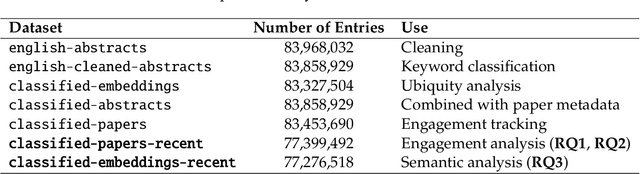
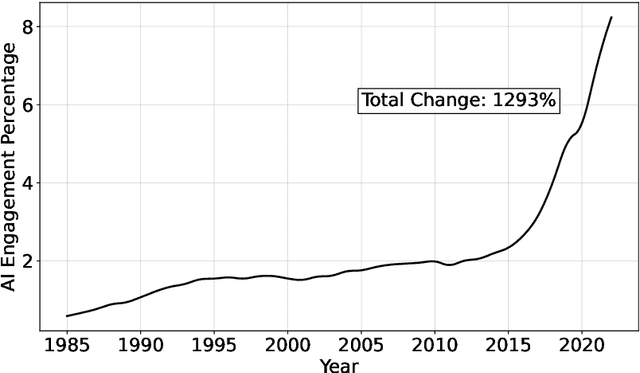

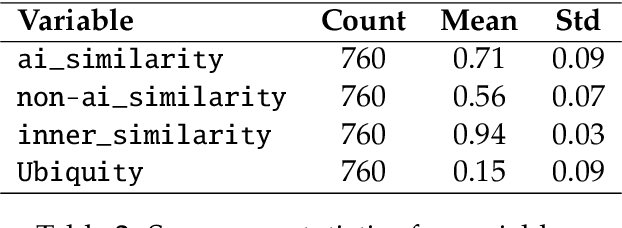
This study empirically investigates claims of the increasing ubiquity of artificial intelligence (AI) within roughly 80 million research publications across 20 diverse scientific fields, by examining the change in scholarly engagement with AI from 1985 through 2022. We observe exponential growth, with AI-engaged publications increasing approximately thirteenfold (13x) across all fields, suggesting a dramatic shift from niche to mainstream. Moreover, we provide the first empirical examination of the distribution of AI-engaged publications across publication venues within individual fields, with results that reveal a broadening of AI engagement within disciplines. While this broadening engagement suggests a move toward greater disciplinary integration in every field, increased ubiquity is associated with a semantic tension between AI-engaged research and more traditional disciplinary research. Through an analysis of tens of millions of document embeddings, we observe a complex interplay between AI-engaged and non-AI-engaged research within and across fields, suggesting that increasing ubiquity is something of an oil-and-water phenomenon -- AI-engaged work is spreading out over fields, but not mixing well with non-AI-engaged work.