 Add to Chrome
 Add to Firefox
 Add to Edge
Weather-R1: Logically Consistent Reinforcement Fine-Tuning for Multimodal Reasoning in Meteorology
Jan 20, 2026
While Vision Language Models (VLMs) show advancing reasoning capabilities, their application in meteorology is constrained by a domain gap and a reasoning faithfulness gap. Specifically, mainstream Reinforcement Fine-Tuning (RFT) can induce Self-Contradictory Reasoning (Self-Contra), where the model's reasoning contradicts its final answer, which is unacceptable in such a high-stakes domain. To address these challenges, we construct WeatherQA, a novel multimodal reasoning benchmark in meteorology. We also propose Logically Consistent Reinforcement Fine-Tuning (LoCo-RFT), which resolves Self-Contra by introducing a logical consistency reward. Furthermore, we introduce Weather-R1, the first reasoning VLM with logical faithfulness in meteorology, to the best of our knowledge. Experiments demonstrate that Weather-R1 improves performance on WeatherQA by 9.8 percentage points over the baseline, outperforming Supervised Fine-Tuning and RFT, and even surpassing the original Qwen2.5-VL-32B. These results highlight the effectiveness of our LoCo-RFT and the superiority of Weather-R1. Our benchmark and code are available at https://github.com/Marcowky/Weather-R1.

Enhancing Visual Programming for Visual Reasoning via Probabilistic Graphs
Dec 16, 2025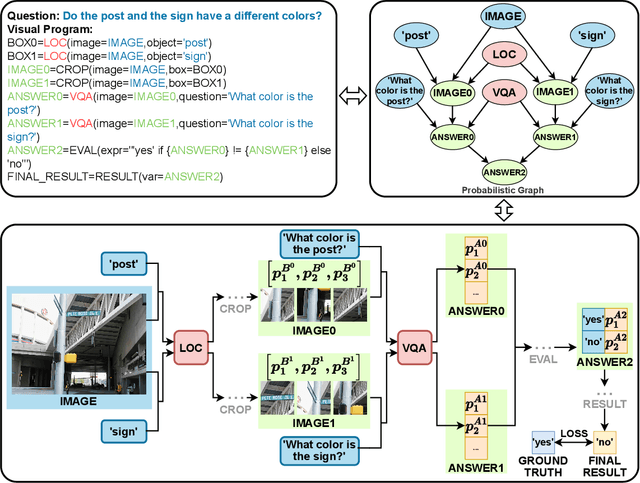
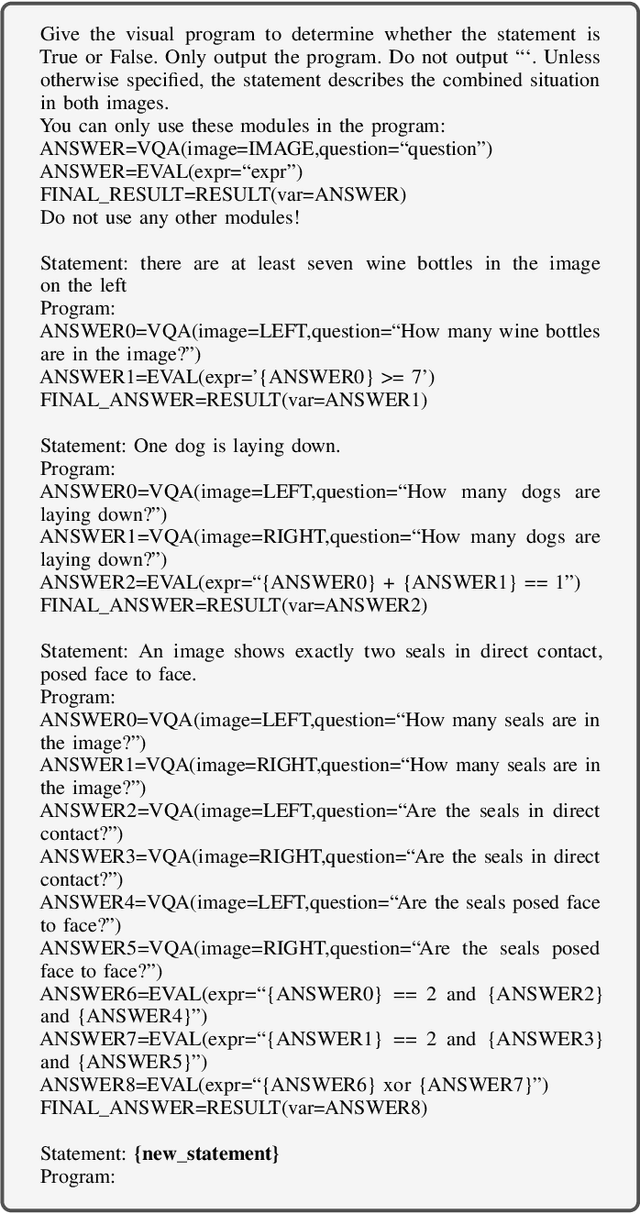
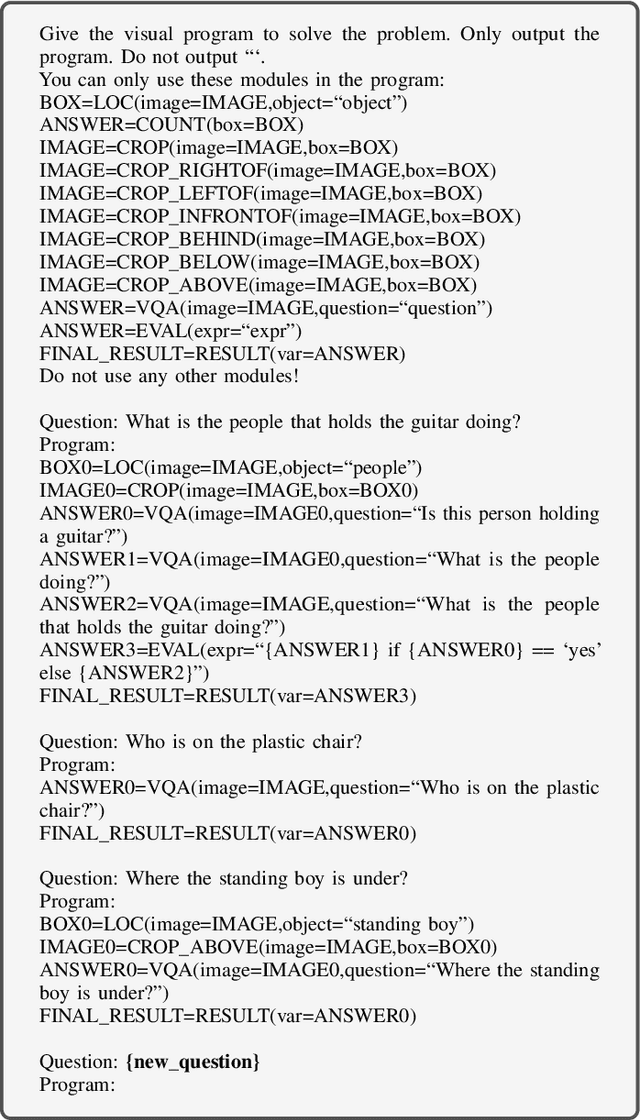
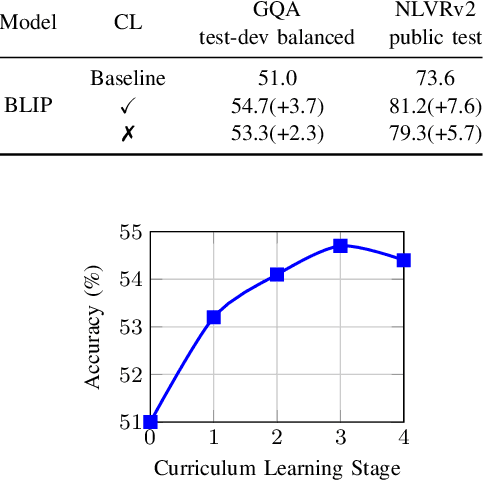
Recently, Visual Programming (VP) based on large language models (LLMs) has rapidly developed and demonstrated significant potential in complex Visual Reasoning (VR) tasks. Previous works to enhance VP have primarily focused on improving the quality of LLM-generated visual programs. However, they have neglected to optimize the VP-invoked pre-trained models, which serve as modules for the visual sub-tasks decomposed from the targeted tasks by VP. The difficulty is that there are only final labels of targeted VR tasks rather than labels of sub-tasks. Besides, the non-differentiable nature of VP impedes the direct use of efficient gradient-based optimization methods to leverage final labels for end-to-end learning of the entire VP framework. To overcome these issues, we propose EVPG, a method to Enhance Visual Programming for visual reasoning via Probabilistic Graphs. Specifically, we creatively build a directed probabilistic graph according to the variable dependency relationships during the VP executing process, which reconstructs the non-differentiable VP executing process into a differentiable exact probability inference process on this directed probabilistic graph. As a result, this enables the VP framework to utilize the final labels for efficient, gradient-based optimization in end-to-end supervised learning on targeted VR tasks. Extensive and comprehensive experiments demonstrate the effectiveness and advantages of our EVPG, showing significant performance improvements for VP on three classical complex VR tasks: GQA, NLVRv2, and Open Images.