 Add to Chrome
 Add to Firefox
 Add to Edge
Agentic Wireless Communication for 6G: Intent-Aware and Continuously Evolving Physical-Layer Intelligence
Feb 19, 2026
As 6G wireless systems evolve, growing functional complexity and diverse service demands are driving a shift from rule-based control to intent-driven autonomous intelligence. User requirements are no longer captured by a single metric (e.g., throughput or reliability), but by multi-dimensional objectives such as latency sensitivity, energy preference, computational constraints, and service-level requirements. These objectives may also change over time due to environmental dynamics and user-network interactions. Therefore, accurate understanding of both the communication environment and user intent is critical for autonomous and sustainably evolving 6G communications. Large language models (LLMs), with strong contextual understanding and cross-modal reasoning, provide a promising foundation for intent-aware network agents. Compared with rule-driven or centrally optimized designs, LLM-based agents can integrate heterogeneous information and translate natural-language intents into executable control and configuration decisions. Focusing on a closed-loop pipeline of intent perception, autonomous decision making, and network execution, this paper investigates agentic AI for the 6G physical layer and its realization pathways. We review representative physical-layer tasks and their limitations in supporting intent awareness and autonomy, identify application scenarios where agentic AI is advantageous, and discuss key challenges and enabling technologies in multimodal perception, cross-layer decision making, and sustainable optimization. Finally, we present a case study of an intent-driven link decision agent, termed AgenCom, which adaptively constructs communication links under diverse user preferences and channel conditions.

Deep Refinement-Based Joint Source Channel Coding over Time-Varying Channels
Nov 26, 2023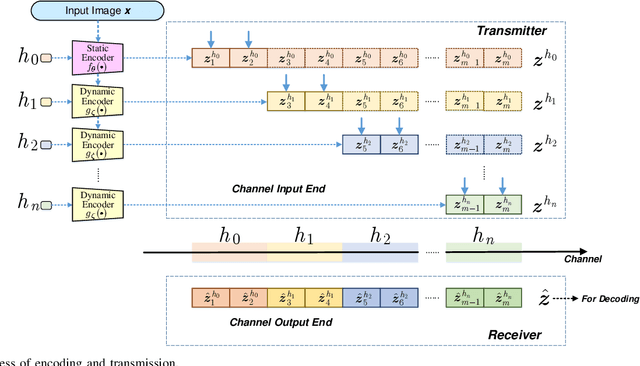
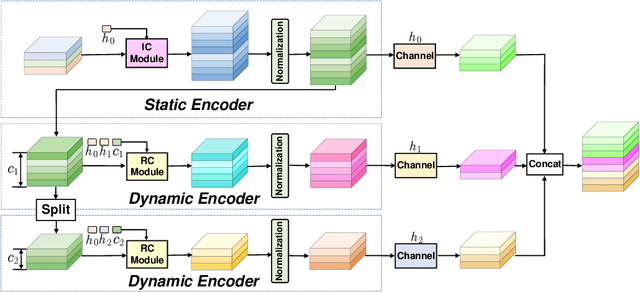


In recent developments, deep learning (DL)-based joint source-channel coding (JSCC) for wireless image transmission has made significant strides in performance enhancement. Nonetheless, the majority of existing DL-based JSCC methods are tailored for scenarios featuring stable channel conditions, notably a fixed signal-to-noise ratio (SNR). This specialization poses a limitation, as their performance tends to wane in practical scenarios marked by highly dynamic channels, given that a fixed SNR inadequately represents the dynamic nature of such channels. In response to this challenge, we introduce a novel solution, namely deep refinement-based JSCC (DRJSCC). This innovative method is designed to seamlessly adapt to channels exhibiting temporal variations. By leveraging instantaneous channel state information (CSI), we dynamically optimize the encoding strategy through re-encoding the channel symbols. This dynamic adjustment ensures that the encoding strategy consistently aligns with the varying channel conditions during the transmission process. Specifically, our approach begins with the division of encoded symbols into multiple blocks, which are transmitted progressively to the receiver. In the event of changing channel conditions, we propose a mechanism to re-encode the remaining blocks, allowing them to adapt to the current channel conditions. Experimental results show that the DRJSCC scheme achieves comparable performance to the other mainstream DL-based JSCC models in stable channel conditions, and also exhibits great robustness against time-varying channels.