 Add to Chrome
 Add to Firefox
 Add to Edge
Beyond Single-Source Cognitive Taskonomy:Multi-Source Task Relations through fMRI Transfer Learning
Jun 24, 2026
Cognitive tasks are organized by shared and specialized neural processes. Masked fMRI reconstruction provides a common self-supervised objective for quantifying transfer relations among task states, but existing reconstruction-based taskonomies mainly study one-to-one transfer from a single source task to a target. Here, we extend an fMRI cognitive taskonomy from single-source to multi-source transfer across 23 Human Connectome Project task states and use Boolean Integer Programming (BIP) to analyze budget-constrained task allocation. We train 1,127 task-specific and transfer models. Single-source transfer is directional and paradigm structured: motor states transfer well within the motor paradigm but provide limited support to most non-motor targets, consistent with a shared sensorimotor execution system and effector-specific representations. Multi-source transfer depends on the composition of the source set, suggesting that many-to-one task relations are not fully captured by pairwise taskonomy alone. Across supervision budgets, BIP repeatedly allocates direct supervision to several 0-back and 2-back working-memory states, although these states are not consistently the strongest individual sources. This pattern may reflect the integration of perceptual, attentional, and executive processes in working-memory tasks. Together, these findings reveal a cross-paradigm-limited motor cluster and working-memory states with high priority under the specified global allocation objective. Our study extends reconstruction-based fMRI taskonomy from one-to-one transfer to many-to-one task relations and budget-constrained task dependencies.

BrainWorld: A Structural-Prior-Conditioned Generative Model for Whole-Brain 4D fMRI Dynamics
Jun 16, 2026Whole-brain 4D fMRI generation is valuable for modeling functional brain dynamics, yet existing fMRI foundation models mainly target representation learning and downstream prediction rather than conditional predictive generation. We introduce BrainWorld, a structural-prior-conditioned generative model for whole-brain 4D fMRI dynamics. BrainWorld uses sMRI as subject-level anatomical context to guide future fMRI generation, integrating structural information into the denoising process rather than treating it as a parallel modality. Evaluated on 22 datasets spanning diverse cohorts and brain states, BrainWorld generates stable 4D fMRI trajectories up to 400 frames, improves downstream performance through generated-example augmentation, and learns transferable multimodal representations that outperform baselines. Together, these results establish BrainWorld as a condition-aware generative framework for long-horizon brain dynamics modeling and multimodal representation learning.
FlexiBrain: Resolution-Agnostic Voxel-Level Encoding for Native fMRI
Jun 09, 2026The success of large-scale deep learning models in neuroscience is fundamentally constrained by severe data heterogeneity. Native fMRI data aggregated from diverse sources exhibit substantial variation in both spatial and temporal resolutions. Consequently, most existing frameworks rely on lengthy, rigid preprocessing pipelines that enforce uniformity across datasets. This practice introduces two critical limitations: (1) potential degradation of subject-specific anatomical information; (2) significant computational overhead, often requiring hours of processing per subject. Here, we propose FlexiBrain, a resolution-agnostic voxel-level encoding framework for native fMRI based on Mamba-JEPA. FlexiBrain defines patch sizes in real-world physical units and employs a dynamic patch resizing, thereby bypassing destructive spatial standardization while enabling direct ingestion of data in native space. We instantiate the framework using an efficient Mamba-JEPA backbone to model high-dimensional 4D fMRI signals. Across five diverse downstream neuroscience tasks, FlexiBrain consistently outperforms recent state-of-the-art methods, achieving gains of up to 12 percentage points without external data augmentation. Importantly, FlexiBrain functions as a seamless plug-in module, substantially reducing preprocessing costs and accelerating the development of robust voxel-level fMRI foundation models. Code is available at https://github.com/OneMore1/FlexiBrain.
Brain-DiT: A Universal Multi-state fMRI Foundation Model with Metadata-Conditioned Pretraining
Apr 14, 2026Current fMRI foundation models primarily rely on a limited range of brain states and mismatched pretraining tasks, restricting their ability to learn generalized representations across diverse brain states. We present \textit{Brain-DiT}, a universal multi-state fMRI foundation model pretrained on 349,898 sessions from 24 datasets spanning resting, task, naturalistic, disease, and sleep states. Unlike prior fMRI foundation models that rely on masked reconstruction in the raw-signal space or a latent space, \textit{Brain-DiT} adopts metadata-conditioned diffusion pretraining with a Diffusion Transformer (DiT), enabling the model to learn multi-scale representations that capture both fine-grained functional structure and global semantics. Across extensive evaluations and ablations on 7 downstream tasks, we find consistent evidence that diffusion-based generative pretraining is a stronger proxy than reconstruction or alignment, with metadata-conditioned pretraining further improving downstream performance by disentangling intrinsic neural dynamics from population-level variability. We also observe that downstream tasks exhibit distinct preferences for representational scale: ADNI classification benefits more from global semantic representations, whereas age/sex prediction comparatively relies more on fine-grained local structure. Code and parameters of Brain-DiT are available at \href{https://github.com/REDMAO4869/Brain-DiT}{Link}.
SLIM-Brain: A Data- and Training-Efficient Foundation Model for fMRI Data Analysis
Dec 26, 2025Foundation models are emerging as a powerful paradigm for fMRI analysis, but current approaches face a dual bottleneck of data- and training-efficiency. Atlas-based methods aggregate voxel signals into fixed regions of interest, reducing data dimensionality but discarding fine-grained spatial details, and requiring extremely large cohorts to train effectively as general-purpose foundation models. Atlas-free methods, on the other hand, operate directly on voxel-level information - preserving spatial fidelity but are prohibitively memory- and compute-intensive, making large-scale pre-training infeasible. We introduce SLIM-Brain (Sample-efficient, Low-memory fMRI Foundation Model for Human Brain), a new atlas-free foundation model that simultaneously improves both data- and training-efficiency. SLIM-Brain adopts a two-stage adaptive design: (i) a lightweight temporal extractor captures global context across full sequences and ranks data windows by saliency, and (ii) a 4D hierarchical encoder (Hiera-JEPA) learns fine-grained voxel-level representations only from the top-$k$ selected windows, while deleting about 70% masked patches. Extensive experiments across seven public benchmarks show that SLIM-Brain establishes new state-of-the-art performance on diverse tasks, while requiring only 4 thousand pre-training sessions and approximately 30% of GPU memory comparing to traditional voxel-level methods.
DRExplainer: Quantifiable Interpretability in Drug Response Prediction with Directed Graph Convolutional Network
Aug 22, 2024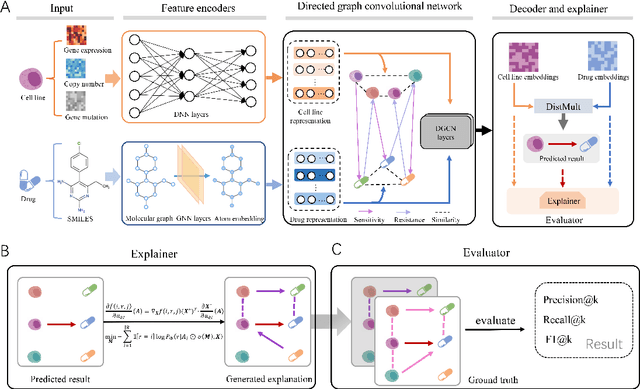
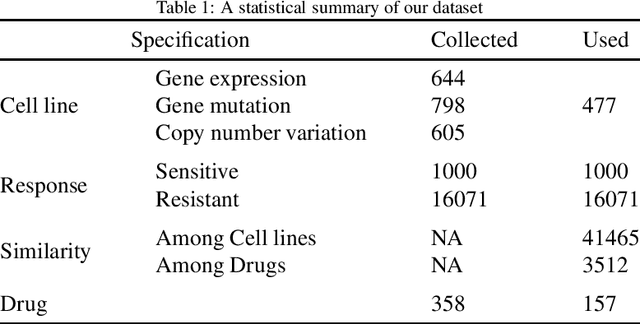
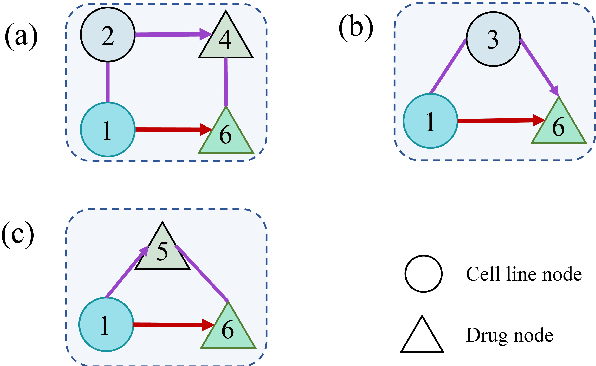
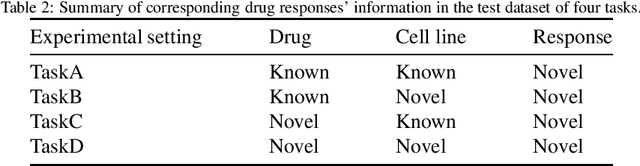
Predicting the response of a cancer cell line to a therapeutic drug is pivotal for personalized medicine. Despite numerous deep learning methods that have been developed for drug response prediction, integrating diverse information about biological entities and predicting the directional response remain major challenges. Here, we propose a novel interpretable predictive model, DRExplainer, which leverages a directed graph convolutional network to enhance the prediction in a directed bipartite network framework. DRExplainer constructs a directed bipartite network integrating multi-omics profiles of cell lines, the chemical structure of drugs and known drug response to achieve directed prediction. Then, DRExplainer identifies the most relevant subgraph to each prediction in this directed bipartite network by learning a mask, facilitating critical medical decision-making. Additionally, we introduce a quantifiable method for model interpretability that leverages a ground truth benchmark dataset curated from biological features. In computational experiments, DRExplainer outperforms state-of-the-art predictive methods and another graph-based explanation method under the same experimental setting. Finally, the case studies further validate the interpretability and the effectiveness of DRExplainer in predictive novel drug response. Our code is available at: https://github.com/vshy-dream/DRExplainer.