 Add to Chrome
 Add to Firefox
 Add to Edge
Fully Scalable Polarization-Reconfigurable S/X-Band Shared-Aperture Phased Array for Ultra-Low Axial-Ratio Scanning
Jun 18, 2026
This paper presents a modular S-/X-band shared-aperture phased-array antenna (SAPAA) for satellite-communication ground-station reception. The proposed architecture uses a repeatable unit cell that supports independent S- and X-band operation within the same physical aperture and enables arbitrary aperture scaling. Dual-polarized radiators are combined with calibrated complex receive coefficients to synthesize linear polarization (LP), right-hand circular polarization (RHCP), and left-hand circular polarization (LHCP). The design burden of the electrically large shared aperture is reduced by using theoretical estimates for scan matching and inter-band isolation before full shared-aperture verification. Simulated and measured results demonstrate axial ratios below 0.1 dB in the target S- and X-band receiving bands over a +/-50 deg scan range. The prototypes are validated using two approaches: passive measurements, where the element responses are measured individually, and RF system-on-chip-based active measurements, where all available receive channels are measured simultaneously. The results confirm that the proposed SAPAA provides wide-angle scanning, very high polarization purity, and polarization-reconfigurable operation for multi-mission SATCOM ground terminals.

Permittivity Characterization of Human Skin Based on a Quasi-optical System at Sub-THz
May 20, 2024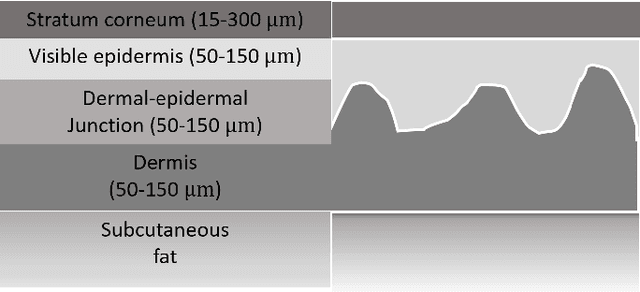
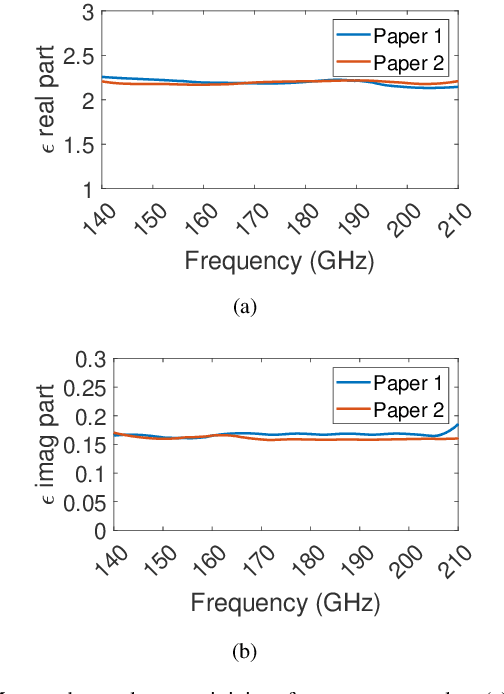
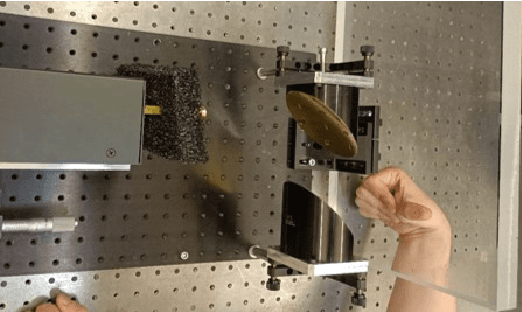
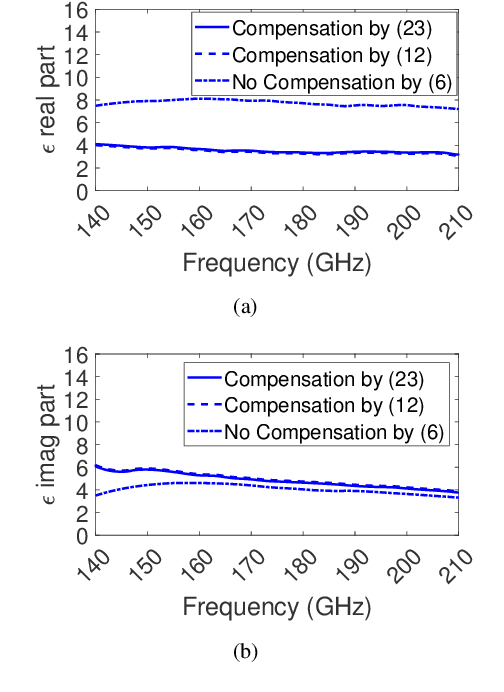
This paper introduces a novel approach to experimentally characterize effective human skin permittivity at sub-Terahertz (sub-THz) frequencies, specifically from $140$~to $210$~GHz, utilizing a quasi-optical measurement system. To ensure accurate measurement of the reflection coefficients of human skin, a planar, rigid, and thick reference plate with a low-loss dielectric is utilized to flatten the human skin surface. A permittivity characterization method is proposed to reduce permittivity estimation deviations resulting from the pressure effects on the phase displacements of skins under the measurements but also to ensure repeatability of the measurement. In practical permittivity characterizations, the complex permittivities of the finger, palm, and arm of seven volunteers show small standard deviations for the repeated measurements, respectively, while those show significant variations across different regions of the skins and for different persons. The proposed measurement system holds significant potential for future skin permittivity estimation in sub-THz bands, facilitating further studies on human-electromagnetic-wave interactions based on the measured permittivity values.
Human Skin Permittivity Characterization for Mobile Handset Evaluation at Sub-THz
May 09, 2024This manuscript proposes a method for characterizing the complex permittivity of the human finger skin based on an open-ended waveguide covered with a thin dielectric sheet at sub-terahertz frequencies. The measurement system is initially analyzed through full-wave simulations with a detailed finger model. Next, the model is simplified by replacing the finger with an infinite sheet of human skin to calculate the forward electromagnetic problem related to the permittivity characterization. Following this, a radial basis network is employed to train the inverse problem solver. Finally, the complex permittivities of finger skins are characterized for 10 volunteers. The variations in complex relative permittivity across different individuals and skin regions are analyzed at 140~GHz, revealing a maximum deviation of $\pm 0.7$ for both the real and imaginary parts. Repeated measurements at the same location on the finger demonstrate good repeatability with a relative estimation uncertainty $<\pm 1\%$.