 Add to Chrome
 Add to Firefox
 Add to Edge
An Efficient Black-Box Reduction from Online Learning to Multicalibration, and a New Route to $Φ$-Regret Minimization
Apr 21, 2026
We give a Gordon-Greenwald-Marks (GGM) style black-box reduction from online learning to online multicalibration. Concretely, we show that to achieve high-dimensional multicalibration with respect to a class of functions H, it suffices to combine any no-regret learner over H with an expected variational inequality (EVI) solver. We also prove a converse statement showing that efficient multicalibration implies efficient EVI solving, highlighting how EVIs in multicalibration mirror the role of fixed points in the GGM result for $Φ$-regret. This first set of results resolves the main open question in Garg, Jung, Reingold, and Roth (SODA '24), showing that oracle-efficient online multicalibration with $\sqrt{T}$-type guarantees is possible in full generality. Furthermore, our GGM-style reduction unifies the analyses of existing online multicalibration algorithms, enables new algorithms for challenging environments with delayed observations or censored outcomes, and yields the first efficient black-box reduction between online learning and multiclass omniprediction. Our second main result is a fine-grained reduction from high-dimensional online multicalibration to (contextual) $Φ$-regret minimization. Together with our first result, this establishes a new route from external regret to Phi-regret that bypasses sophisticated fixed-point or semi-separation machinery, dramatically simplifies a result of Daskalakis, Farina, Fishelson, Pipis, and Schneider (STOC '25) while improving rates, and yields new algorithms that are robust to richer deviation classes, such as those belonging to any reproducing kernel Hilbert space.

The Stability of Online Algorithms in Performative Prediction
Feb 27, 2026The use of algorithmic predictions in decision-making leads to a feedback loop where the models we deploy actively influence the data distributions we see, and later use to retrain on. This dynamic was formalized by Perdomo et al. 2020 in their work on performative prediction. Our main result is an unconditional reduction showing that any no-regret algorithm deployed in performative settings converges to a (mixed) performatively stable equilibrium: a solution in which models actively shape data distributions in ways that their own predictions look optimal in hindsight. Prior to our work, all positive results in this area made strong restrictions on how models influenced distributions. By using a martingale argument and allowing randomization, we avoid any such assumption and sidestep recent hardness results for finding stable models. Lastly, on a more conceptual note, our connection sheds light on why common algorithms, like gradient descent, are naturally stabilizing and prevent runaway feedback loops. We hope our work enables future technical transfer of ideas between online optimization and performativity.
Defensive Generation
Feb 24, 2026We study the problem of efficiently producing, in an online fashion, generative models of scalar, multiclass, and vector-valued outcomes that cannot be falsified on the basis of the observed data and a pre-specified collection of computational tests. Our contributions are twofold. First, we expand on connections between online high-dimensional multicalibration with respect to an RKHS and recent advances in expected variational inequality problems, enabling efficient algorithms for the former. We then apply this algorithmic machinery to the problem of outcome indistinguishability. Our procedure, Defensive Generation, is the first to efficiently produce online outcome indistinguishable generative models of non-Bernoulli outcomes that are unfalsifiable with respect to infinite classes of tests, including those that examine higher-order moments of the generated distributions. Furthermore, our method runs in near-linear time in the number of samples and achieves the optimal, vanishing T^{-1/2} rate for generation error.
Empirically Understanding the Value of Prediction in Allocation
Feb 09, 2026Institutions increasingly use prediction to allocate scarce resources. From a design perspective, better predictions compete with other investments, such as expanding capacity or improving treatment quality. Here, the big question is not how to solve a specific allocation problem, but rather which problem to solve. In this work, we develop an empirical toolkit to help planners form principled answers to this question and quantify the bottom-line welfare impact of investments in prediction versus other policy levers such as expanding capacity and improving treatment quality. Applying our framework in two real-world case studies on German employment services and poverty targeting in Ethiopia, we illustrate how decision-makers can reliably derive context-specific conclusions about the relative value of prediction in their allocation problem. We make our software toolkit, rvp, and parts of our data available in order to enable future empirical work in this area.
In Defense of Defensive Forecasting
Jun 13, 2025This tutorial provides a survey of algorithms for Defensive Forecasting, where predictions are derived not by prognostication but by correcting past mistakes. Pioneered by Vovk, Defensive Forecasting frames the goal of prediction as a sequential game, and derives predictions to minimize metrics no matter what outcomes occur. We present an elementary introduction to this general theory and derive simple, near-optimal algorithms for online learning, calibration, prediction with expert advice, and online conformal prediction.
The Value of Prediction in Identifying the Worst-Off
Jan 31, 2025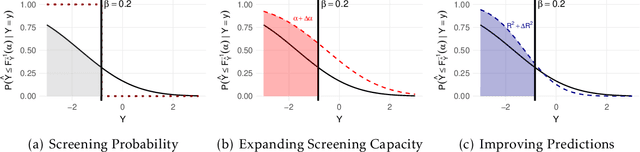
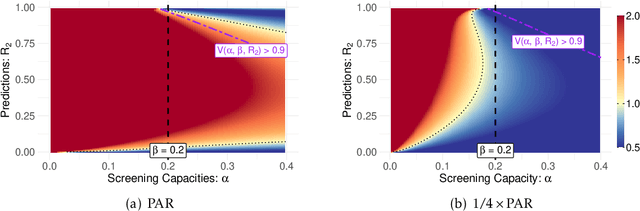
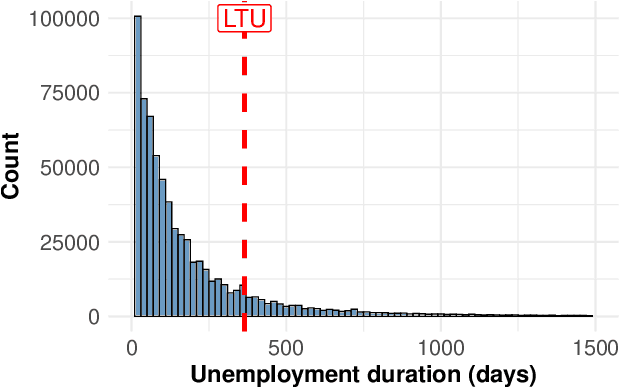
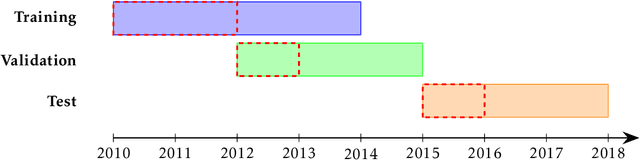
Machine learning is increasingly used in government programs to identify and support the most vulnerable individuals, prioritizing assistance for those at greatest risk over optimizing aggregate outcomes. This paper examines the welfare impacts of prediction in equity-driven contexts, and how they compare to other policy levers, such as expanding bureaucratic capacity. Through mathematical models and a real-world case study on long-term unemployment amongst German residents, we develop a comprehensive understanding of the relative effectiveness of prediction in surfacing the worst-off. Our findings provide clear analytical frameworks and practical, data-driven tools that empower policymakers to make principled decisions when designing these systems.
The Relative Value of Prediction in Algorithmic Decision Making
Dec 13, 2023Algorithmic predictions are increasingly used to inform the allocations of goods and interventions in the public sphere. In these domains, predictions serve as a means to an end. They provide stakeholders with insights into likelihood of future events as a means to improve decision making quality, and enhance social welfare. However, if maximizing welfare is the ultimate goal, prediction is only a small piece of the puzzle. There are various other policy levers a social planner might pursue in order to improve bottom-line outcomes, such as expanding access to available goods, or increasing the effect sizes of interventions. Given this broad range of design decisions, a basic question to ask is: What is the relative value of prediction in algorithmic decision making? How do the improvements in welfare arising from better predictions compare to those of other policy levers? The goal of our work is to initiate the formal study of these questions. Our main results are theoretical in nature. We identify simple, sharp conditions determining the relative value of prediction vis-\`a-vis expanding access, within several statistical models that are popular amongst quantitative social scientists. Furthermore, we illustrate how these theoretical insights may be used to guide the design of algorithmic decision making systems in practice.