 Add to Chrome
 Add to Firefox
 Add to Edge
PL-KKT-hPINN: Enforcing Nonlinear Equality Constraints on Neural Networks via Piecewise-Linear Projection
Jun 09, 2026
While physics-informed neural networks (PINNs) have shown strong potential for process modeling, physical equations are only enforced as soft constraints during training, and thus, they do not guarantee constraint satisfaction at inference. We propose a framework, called piecewise-linear Karush--Kuhn--Tucker hard-constrained PINNs (PL-KKT-hPINNs), that strictly enforces nonlinear equality constraints through piecewise-linear projection. This extends the KKT-hPINN framewor, which exactly enforces linear equalities through the Karush--Kuhn--Tucker (KKT) conditions associated with orthogonally projecting neural network outputs onto the constraint feasible region. The method is demonstrated on a continuous stirred-tank reactor (CSTR) case study for both one and two inputs. Results show that PL-KKT-hPINN preserves predictive accuracy comparable to that of a standard neural network while achieving substantially lower constraint violations. In addition, the proposed model shows improved robustness in low-data regimes, yielding lower RMSE than the unconstrained neural network for limited training sample sizes. These results demonstrate that PL-KKT-hPINN provides a computationally efficient and physically consistent framework for surrogate modeling of nonlinear chemical engineering systems.

A Digital Twin Simulator of a Pastillation Process with Applications to Automatic Control based on Computer Vision
Mar 18, 2025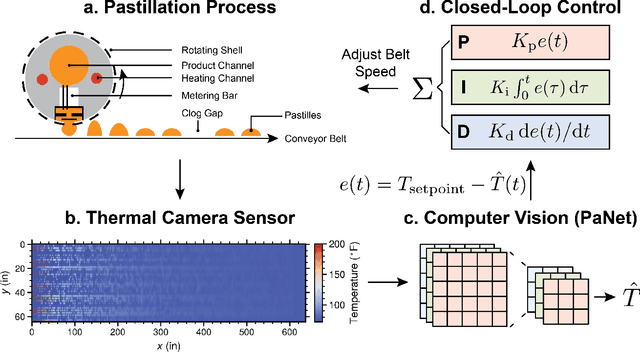
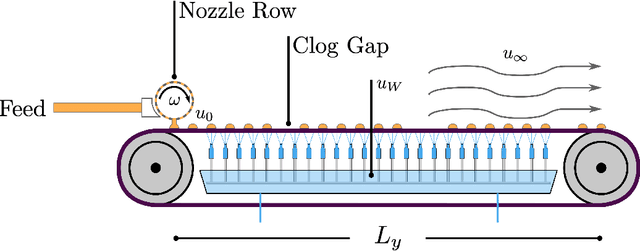
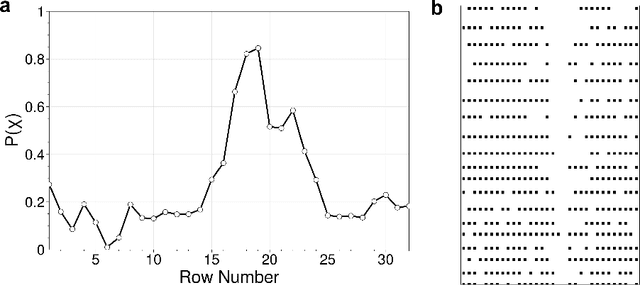
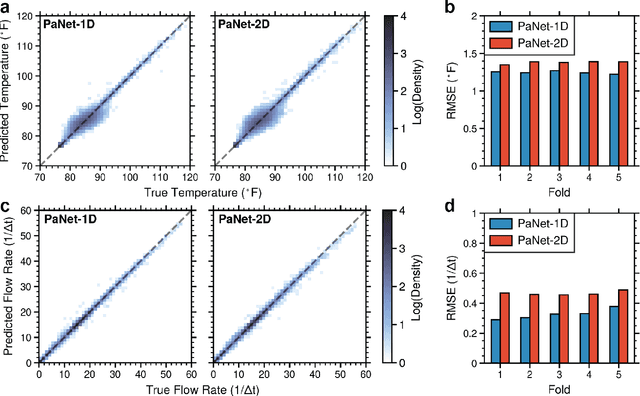
We present a digital-twin simulator for a pastillation process. The simulation framework produces realistic thermal image data of the process that is used to train computer vision-based soft sensors based on convolutional neural networks (CNNs); the soft sensors produce output signals for temperature and product flow rate that enable real-time monitoring and feedback control. Pastillation technologies are high-throughput devices that are used in a broad range of industries; these processes face operational challenges such as real-time identification of clog locations (faults) in the rotating shell and the automatic, real-time adjustment of conveyor belt speed and operating conditions to stabilize output. The proposed simulator is able to capture this behavior and generates realistic data that can be used to benchmark different algorithms for image processing and different control architectures. We present a case study to illustrate the capabilities; the study explores behavior over a range of equipment sizes, clog locations, and clog duration. A feedback controller (tuned using Bayesian optimization) is used to adjust the conveyor belt speed based on the CNN output signal to achieve the desired process outputs.
Convolutional Neural Networks: Basic Concepts and Applications in Manufacturing
Oct 14, 2022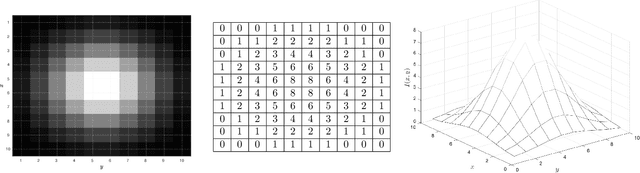
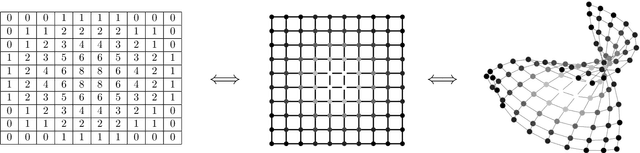
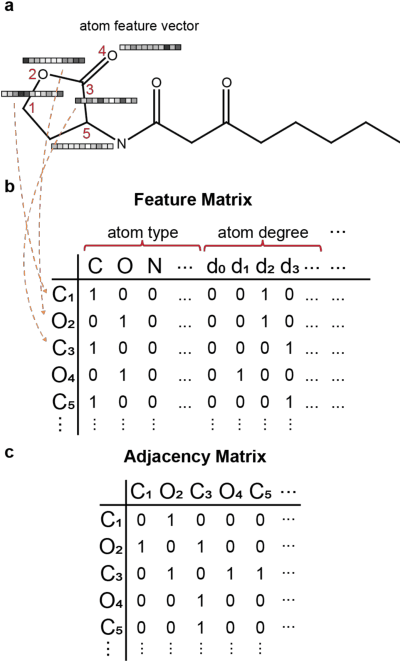
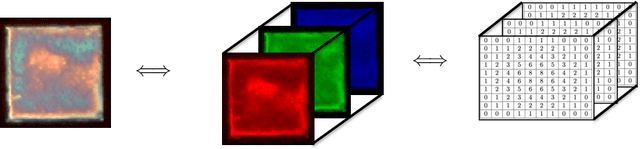
We discuss basic concepts of convolutional neural networks (CNNs) and outline uses in manufacturing. We begin by discussing how different types of data objects commonly encountered in manufacturing (e.g., time series, images, micrographs, videos, spectra, molecular structures) can be represented in a flexible manner using tensors and graphs. We then discuss how CNNs use convolution operations to extract informative features (e.g., geometric patterns and textures) from the such representations to predict emergent properties and phenomena and/or to identify anomalies. We also discuss how CNNs can exploit color as a key source of information, which enables the use of modern computer vision hardware (e.g., infrared, thermal, and hyperspectral cameras). We illustrate the concepts using diverse case studies arising in spectral analysis, molecule design, sensor design, image-based control, and multivariate process monitoring.
SAFE-OCC: A Novelty Detection Framework for Convolutional Neural Network Sensors and its Application in Process Control
Feb 03, 2022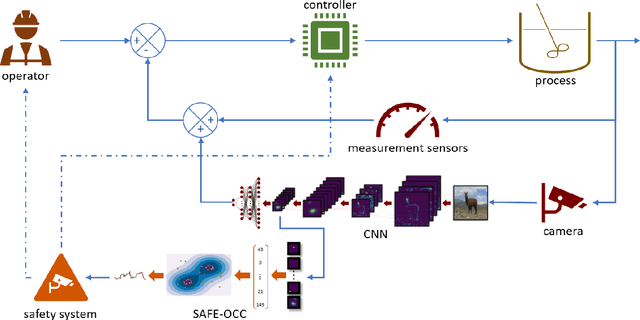
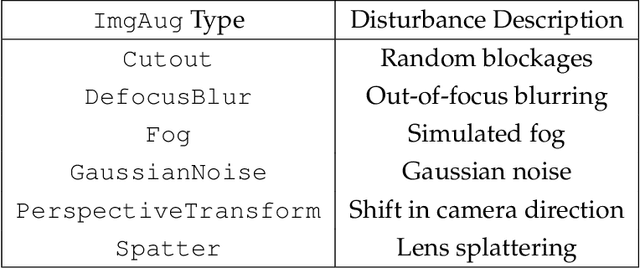
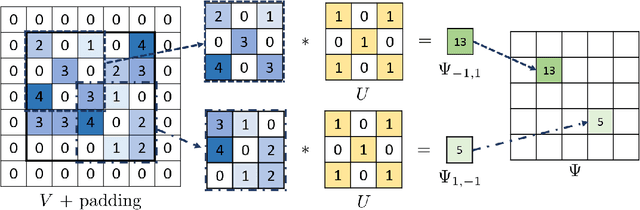
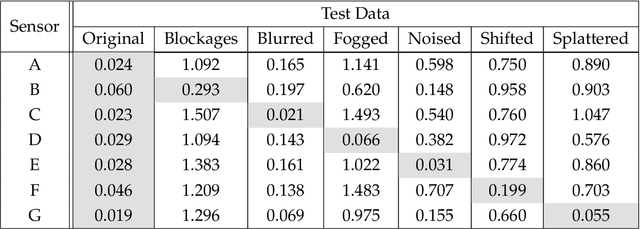
We present a novelty detection framework for Convolutional Neural Network (CNN) sensors that we call Sensor-Activated Feature Extraction One-Class Classification (SAFE-OCC). We show that this framework enables the safe use of computer vision sensors in process control architectures. Emergent control applications use CNN models to map visual data to a state signal that can be interpreted by the controller. Incorporating such sensors introduces a significant system operation vulnerability because CNN sensors can exhibit high prediction errors when exposed to novel (abnormal) visual data. Unfortunately, identifying such novelties in real-time is nontrivial. To address this issue, the SAFE-OCC framework leverages the convolutional blocks of the CNN to create an effective feature space to conduct novelty detection using a desired one-class classification technique. This approach engenders a feature space that directly corresponds to that used by the CNN sensor and avoids the need to derive an independent latent space. We demonstrate the effectiveness of SAFE-OCC via simulated control environments.