 Add to Chrome
 Add to Firefox
 Add to Edge
PL-KKT-hPINN: Enforcing Nonlinear Equality Constraints on Neural Networks via Piecewise-Linear Projection
Jun 09, 2026
While physics-informed neural networks (PINNs) have shown strong potential for process modeling, physical equations are only enforced as soft constraints during training, and thus, they do not guarantee constraint satisfaction at inference. We propose a framework, called piecewise-linear Karush--Kuhn--Tucker hard-constrained PINNs (PL-KKT-hPINNs), that strictly enforces nonlinear equality constraints through piecewise-linear projection. This extends the KKT-hPINN framewor, which exactly enforces linear equalities through the Karush--Kuhn--Tucker (KKT) conditions associated with orthogonally projecting neural network outputs onto the constraint feasible region. The method is demonstrated on a continuous stirred-tank reactor (CSTR) case study for both one and two inputs. Results show that PL-KKT-hPINN preserves predictive accuracy comparable to that of a standard neural network while achieving substantially lower constraint violations. In addition, the proposed model shows improved robustness in low-data regimes, yielding lower RMSE than the unconstrained neural network for limited training sample sizes. These results demonstrate that PL-KKT-hPINN provides a computationally efficient and physically consistent framework for surrogate modeling of nonlinear chemical engineering systems.

Explainability: Relevance based Dynamic Deep Learning Algorithm for Fault Detection and Diagnosis in Chemical Processes
Mar 22, 2021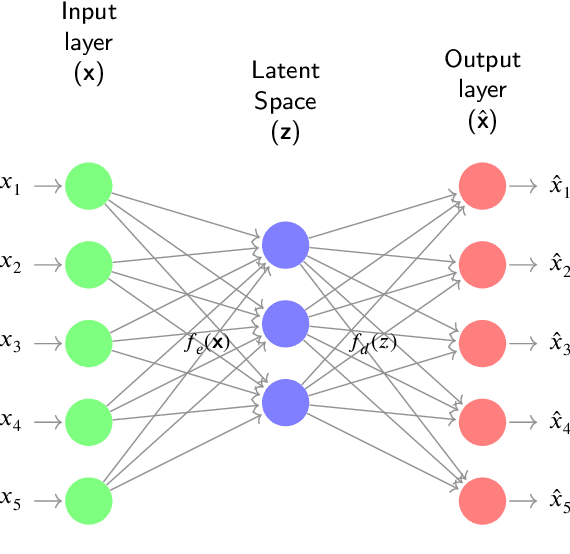
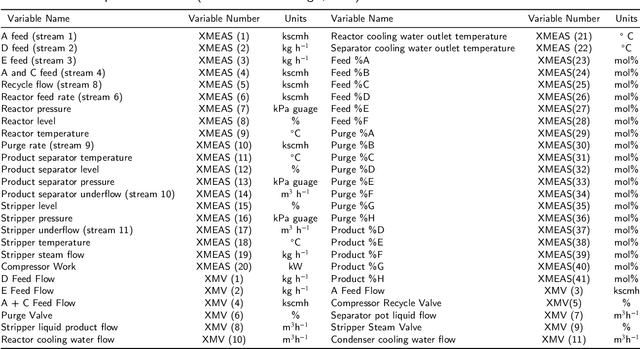
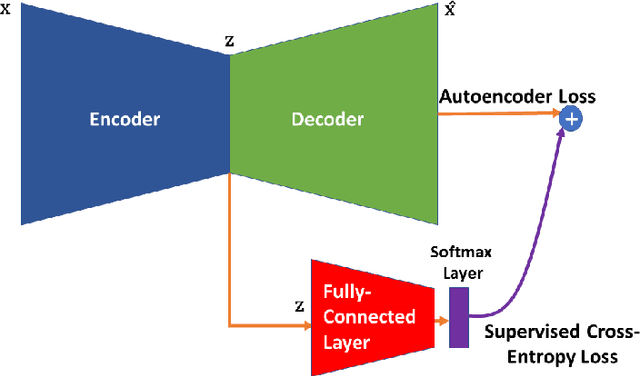
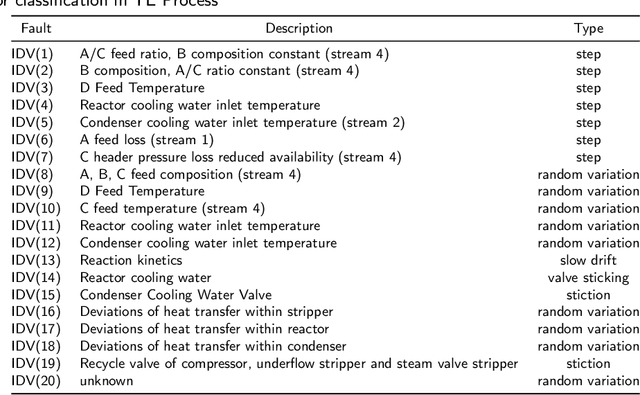
The focus of this work is on Statistical Process Control (SPC) of a manufacturing process based on available measurements. Two important applications of SPC in industrial settings are fault detection and diagnosis (FDD). In this work a deep learning (DL) based methodology is proposed for FDD. We investigate the application of an explainability concept to enhance the FDD accuracy of a deep neural network model trained with a data set of relatively small number of samples. The explainability is quantified by a novel relevance measure of input variables that is calculated from a Layerwise Relevance Propagation (LRP) algorithm. It is shown that the relevances can be used to discard redundant input feature vectors/ variables iteratively thus resulting in reduced over-fitting of noisy data, increasing distinguishability between output classes and superior FDD test accuracy. The efficacy of the proposed method is demonstrated on the benchmark Tennessee Eastman Process.
Hierarchical Deep Recurrent Neural Network based Method for Fault Detection and Diagnosis
Dec 07, 2020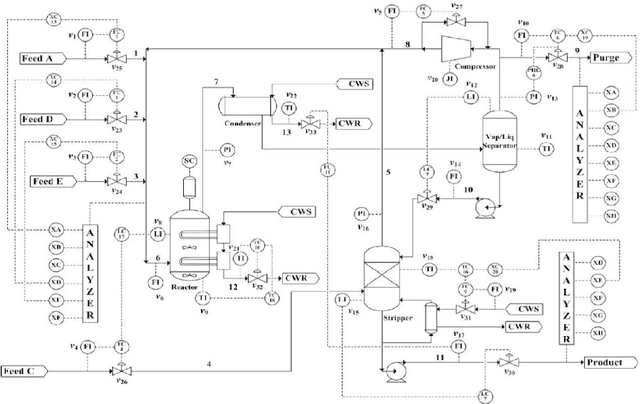
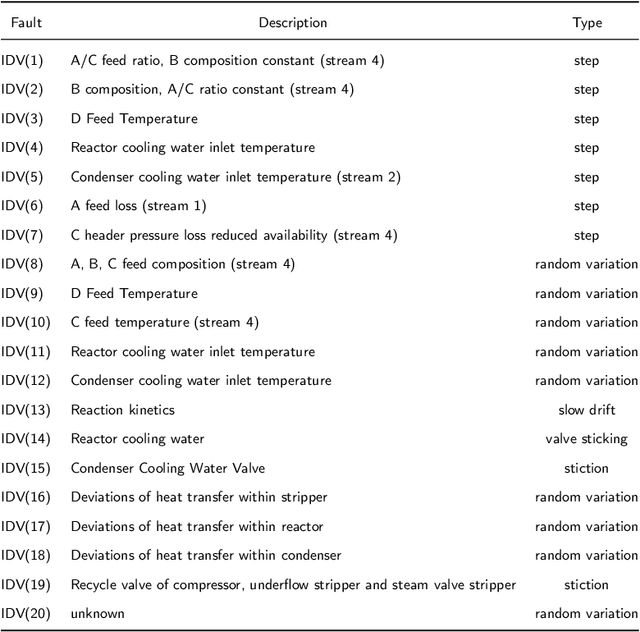
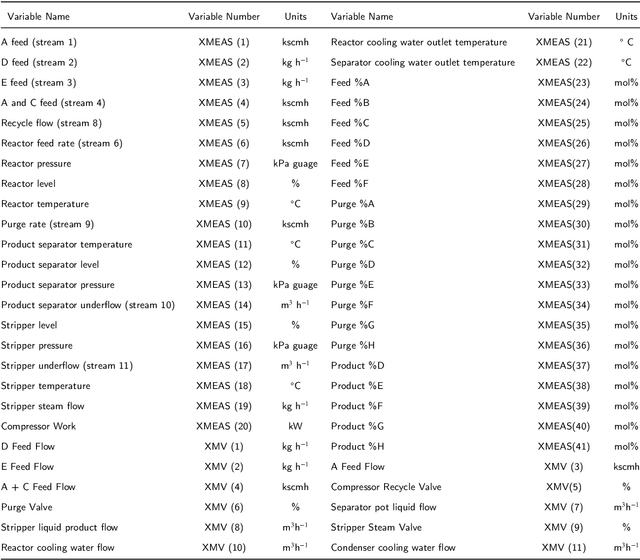
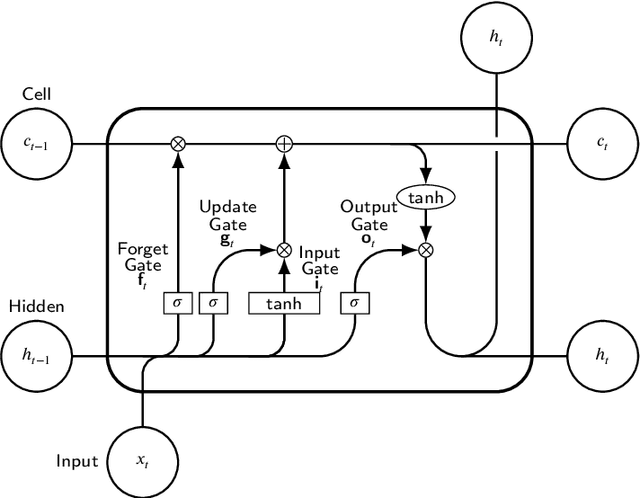
A Deep Neural Network (DNN) based algorithm is proposed for the detection and classification of faults in industrial plants. The proposed algorithm has the ability to classify faults, especially incipient faults that are difficult to detect and diagnose with traditional threshold based statistical methods or by conventional Artificial Neural Networks (ANNs). The algorithm is based on a Supervised Deep Recurrent Autoencoder Neural Network (Supervised DRAE-NN) that uses dynamic information of the process along the time horizon. Based on this network a hierarchical structure is formulated by grouping faults based on their similarity into subsets of faults for detection and diagnosis. Further, an external pseudo-random binary signal (PRBS) is designed and injected into the system to identify incipient faults. The hierarchical structure based strategy improves the detection and classification accuracy significantly for both incipient and non-incipient faults. The proposed approach is tested on the benchmark Tennessee Eastman Process resulting in significant improvements in classification as compared to both multivariate linear model-based strategies and non-hierarchical nonlinear model-based strategies.