 Add to Chrome
 Add to Firefox
 Add to Edge
Algebraic Quantum Intelligence: A New Framework for Reproducible Machine Creativity
Feb 15, 2026
Large language models (LLMs) have achieved remarkable success in generating fluent and contextually appropriate text; however, their capacity to produce genuinely creative outputs remains limited. This paper posits that this limitation arises from a structural property of contemporary LLMs: when provided with rich context, the space of future generations becomes strongly constrained, and the generation process is effectively governed by near-deterministic dynamics. Recent approaches such as test-time scaling and context adaptation improve performance but do not fundamentally alter this constraint. To address this issue, we propose Algebraic Quantum Intelligence (AQI) as a computational framework that enables systematic expansion of semantic space. AQI is formulated as a noncommutative algebraic structure inspired by quantum theory, allowing properties such as order dependence, interference, and uncertainty to be implemented in a controlled and designable manner. Semantic states are represented as vectors in a Hilbert space, and their evolution is governed by C-values computed from noncommutative operators, thereby ensuring the coexistence and expansion of multiple future semantic possibilities. In this study, we implement AQI by extending a transformer-based LLM with more than 600 specialized operators. We evaluate the resulting system on creative reasoning benchmarks spanning ten domains under an LLM-as-a-judge protocol. The results show that AQI consistently outperforms strong baseline models, yielding statistically significant improvements and reduced cross-domain variance. These findings demonstrate that noncommutative algebraic dynamics can serve as a practical and reproducible foundation for machine creativity. Notably, this architecture has already been deployed in real-world enterprise environments.

Kernel-based optimally weighted conformal prediction intervals
May 27, 2024Conformal prediction has been a popular distribution-free framework for uncertainty quantification. In this paper, we present a novel conformal prediction method for time-series, which we call Kernel-based Optimally Weighted Conformal Prediction Intervals (KOWCPI). Specifically, KOWCPI adapts the classic Reweighted Nadaraya-Watson (RNW) estimator for quantile regression on dependent data and learns optimal data-adaptive weights. Theoretically, we tackle the challenge of establishing a conditional coverage guarantee for non-exchangeable data under strong mixing conditions on the non-conformity scores. We demonstrate the superior performance of KOWCPI on real time-series against state-of-the-art methods, where KOWCPI achieves narrower confidence intervals without losing coverage.
Flow-based distributionally robust optimization
Nov 07, 2023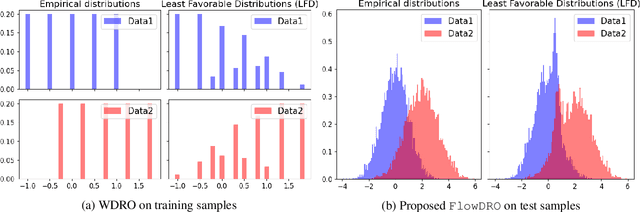

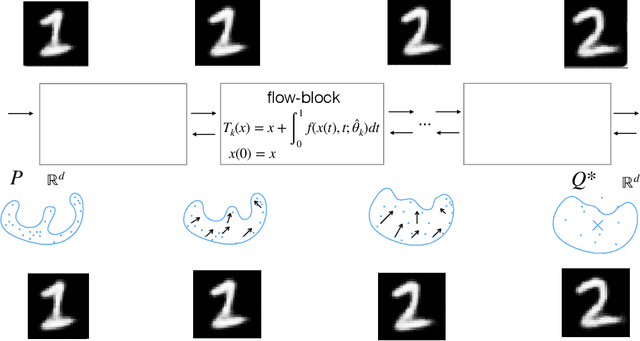
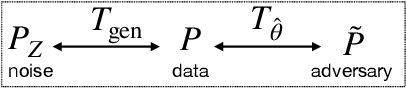
We present a computationally efficient framework, called FlowDRO, for solving flow-based distributionally robust optimization (DRO) problems with Wasserstein uncertainty sets while aiming to find continuous worst-case distribution (also called the Least Favorable Distribution, LFD). The requirement for LFD to be continuous is so that the algorithm can be scalable to problems with larger sample sizes and achieve better generalization capability for the induced robust algorithms. To tackle the computationally challenging infinitely dimensional optimization problem, we leverage flow-based models and continuous-time invertible transport maps between the data distribution and the target distribution. We also develop a Wasserstein proximal gradient flow type of algorithm. In theory, we establish the equivalence of the solution by optimal transport map to the original formulation, as well as the dual form of the problem through Wasserstein calculus and Brenier theorem. In practice, we parameterize the transport maps by a sequence of neural networks progressively trained in blocks by gradient descent. Our computational framework is general, can handle high-dimensional data with large sample sizes, and can be useful for various applications. We demonstrate its usage in adversarial learning, distributionally robust hypothesis testing, and a new mechanism for data-driven distribution perturbation differential privacy, where the proposed method gives strong empirical performance on real high-dimensional data.