 Add to Chrome
 Add to Firefox
 Add to Edge
MLLM-Routed Heterogeneous Ensembles for Robust Cross-Dataset Image Classification
Aug 13, 2026
Modern image classification models excel when trained on single task-specific datasets but often struggle to generalize across domains and difficulty levels. We propose ARMDIL, an Adaptive Router for Multi-Domain Image classification with LLMs. ARMDIL is an ensemble that uses a multimodal large language model (MLLM) agent to dynamically route each image to the most suitable vision backbone. Our diverse ensemble employs convolutional neural networks (ResNets), self-supervised representation learners (SSL), and vision-language models (VLMs), each trained on a unified label space constructed from multiple image datasets with differing distributions and characteristics. Empirical evaluations illuminate the distinct capabilities and vulnerabilities of each architecture across disparate visual domains. Crucially, we show that ARMDIL effectively navigates these trade-offs, performing competitively with specialized training-based routers. Furthermore, it drastically improves adaptability by allowing new information to be integrated via simple prompt modifications, while enhancing interpretability through natural language reasoning traces. These advances in cross-dataset image classification pave the way for more reliable general-purpose vision systems such as AI assistants and autonomous robots.

Recommendations for Verifying HDR Subjective Testing Workflows
May 19, 2023
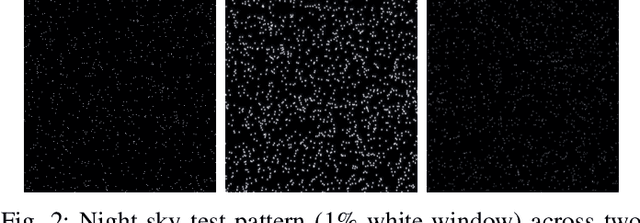

Over the past few years, there has been an increase in the demand and availability of High Dynamic Range (HDR) displays and content. To ensure the production of high-quality materials, human evaluation is required. However, ascertaining whether the full playback pipeline is indeed HDR-compliant can be challenging. In this paper, we present a set of recommendations for conformance testing to validate various aspects of the testing workflow, including playback, displays, brightness, colours, and viewing environment. We assessed the effectiveness of HDR conversion techniques used in current standards development (3GPP) for making source materials. Additionally, we evaluate HDR display technologies, including OLED and LCD, using both consumer television and a reference monitor.