 Add to Chrome
 Add to Firefox
 Add to Edge
Mixture of Mini Experts: Overcoming the Linear Layer Bottleneck in Multiple Instance Learning
Mar 23, 2026
Multiple Instance Learning (MIL) is the predominant framework for classifying gigapixel whole-slide images in computational pathology. MIL follows a sequence of 1) extracting patch features, 2) applying a linear layer to obtain task-specific patch features, and 3) aggregating the patches into a slide feature for classification. While substantial efforts have been devoted to optimizing patch feature extraction and aggregation, none have yet addressed the second point, the critical layer which transforms general-purpose features into task-specific features. We hypothesize that this layer constitutes an overlooked performance bottleneck and that stronger representations can be achieved with a low-rank transformation tailored to each patch's phenotype, yielding synergistic effects with any of the existing MIL approaches. To this end, we introduce MAMMOTH, a parameter-efficient, multi-head mixture of experts module designed to improve the performance of any MIL model with minimal alterations to the total number of parameters. Across eight MIL methods and 19 different classification tasks, we find that such task-specific transformation has a larger effect on performance than the choice of aggregation method. For instance, when equipped with MAMMOTH, even simple methods such as max or mean pooling attain higher average performance than any method with the standard linear layer. Overall, MAMMOTH improves performance in 130 of the 152 examined configurations, with an average $+3.8\%$ change in performance. Code is available at https://github.com/mahmoodlab/mammoth.

Do Multiple Instance Learning Models Transfer?
Jun 11, 2025Multiple Instance Learning (MIL) is a cornerstone approach in computational pathology (CPath) for generating clinically meaningful slide-level embeddings from gigapixel tissue images. However, MIL often struggles with small, weakly supervised clinical datasets. In contrast to fields such as NLP and conventional computer vision, where transfer learning is widely used to address data scarcity, the transferability of MIL models remains poorly understood. In this study, we systematically evaluate the transfer learning capabilities of pretrained MIL models by assessing 11 models across 21 pretraining tasks for morphological and molecular subtype prediction. Our results show that pretrained MIL models, even when trained on different organs than the target task, consistently outperform models trained from scratch. Moreover, pretraining on pancancer datasets enables strong generalization across organs and tasks, outperforming slide foundation models while using substantially less pretraining data. These findings highlight the robust adaptability of MIL models and demonstrate the benefits of leveraging transfer learning to boost performance in CPath. Lastly, we provide a resource which standardizes the implementation of MIL models and collection of pretrained model weights on popular CPath tasks, available at https://github.com/mahmoodlab/MIL-Lab
A2Perf: Real-World Autonomous Agents Benchmark
Mar 04, 2025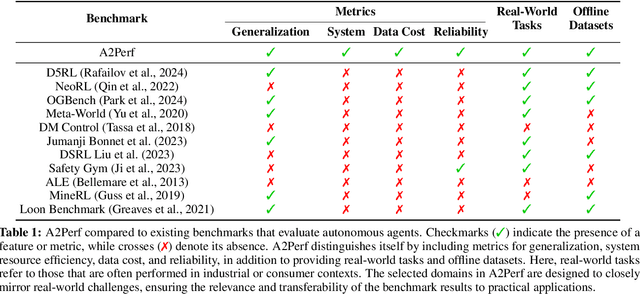
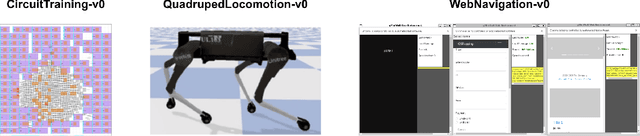
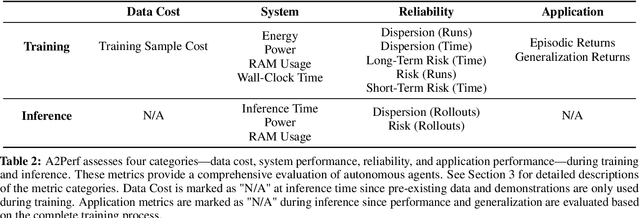
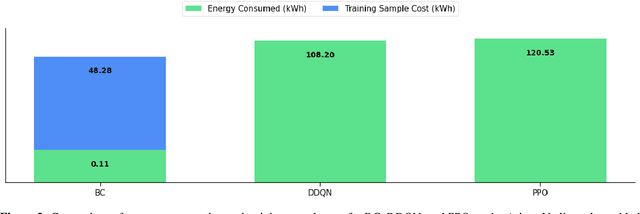
Autonomous agents and systems cover a number of application areas, from robotics and digital assistants to combinatorial optimization, all sharing common, unresolved research challenges. It is not sufficient for agents to merely solve a given task; they must generalize to out-of-distribution tasks, perform reliably, and use hardware resources efficiently during training and inference, among other requirements. Several methods, such as reinforcement learning and imitation learning, are commonly used to tackle these problems, each with different trade-offs. However, there is a lack of benchmarking suites that define the environments, datasets, and metrics which can be used to provide a meaningful way for the community to compare progress on applying these methods to real-world problems. We introduce A2Perf--a benchmark with three environments that closely resemble real-world domains: computer chip floorplanning, web navigation, and quadruped locomotion. A2Perf provides metrics that track task performance, generalization, system resource efficiency, and reliability, which are all critical to real-world applications. Using A2Perf, we demonstrate that web navigation agents can achieve latencies comparable to human reaction times on consumer hardware, reveal reliability trade-offs between algorithms for quadruped locomotion, and quantify the energy costs of different learning approaches for computer chip-design. In addition, we propose a data cost metric to account for the cost incurred acquiring offline data for imitation learning and hybrid algorithms, which allows us to better compare these approaches. A2Perf also contains several standard baselines, enabling apples-to-apples comparisons across methods and facilitating progress in real-world autonomy. As an open-source benchmark, A2Perf is designed to remain accessible, up-to-date, and useful to the research community over the long term.