 Add to Chrome
 Add to Firefox
 Add to Edge
"Why This Avoidance Maneuver?" Contrastive Explanations in Human-Supervised Maritime Autonomous Navigation
Apr 09, 2026
Automated maritime collision avoidance will rely on human supervision for the foreseeable future. This necessitates transparency into how the system perceives a scenario and plans a maneuver. However, the causal logic behind avoidance maneuvers is often complex and difficult to convey to a navigator. This paper explores how to explain these factors in a selective, understandable manner for supervisors with a nautical background. We propose a method for generating contrastive explanations, which provide human-centric insights by comparing a system's proposed solution against relevant alternatives. To evaluate this, we developed a framework that uses visual and textual cues to highlight key objectives from a state-of-the-art collision avoidance system. An exploratory user study with four experienced marine officers suggests that contrastive explanations support the understanding of the system's objectives. However, our findings also reveal that while these explanations are highly valuable in complex multi-vessel encounters, they can increase cognitive workload, suggesting that future maritime interfaces may benefit most from demand-driven or scenario-specific explanation strategies.

Efficient Online Learning and Adaptive Planning for Robotic Information Gathering Based on Streaming Data
Jul 17, 2025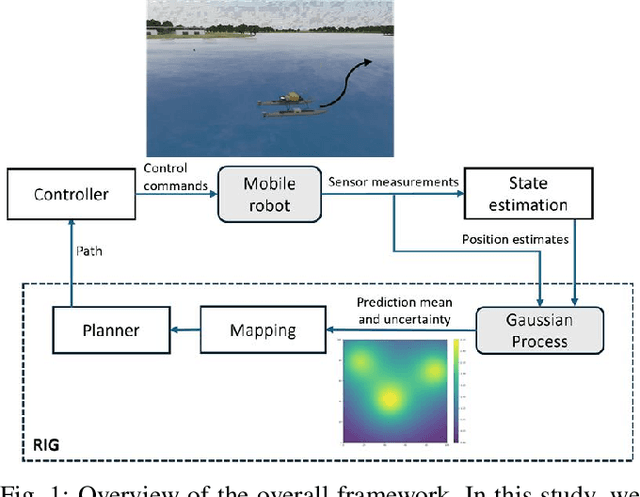
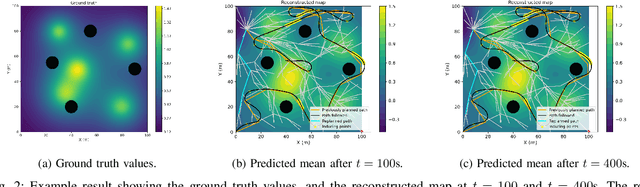
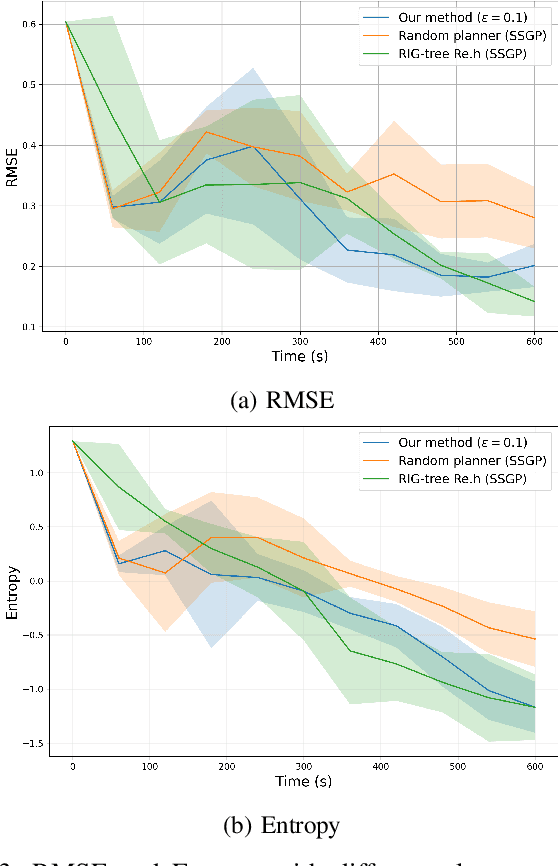
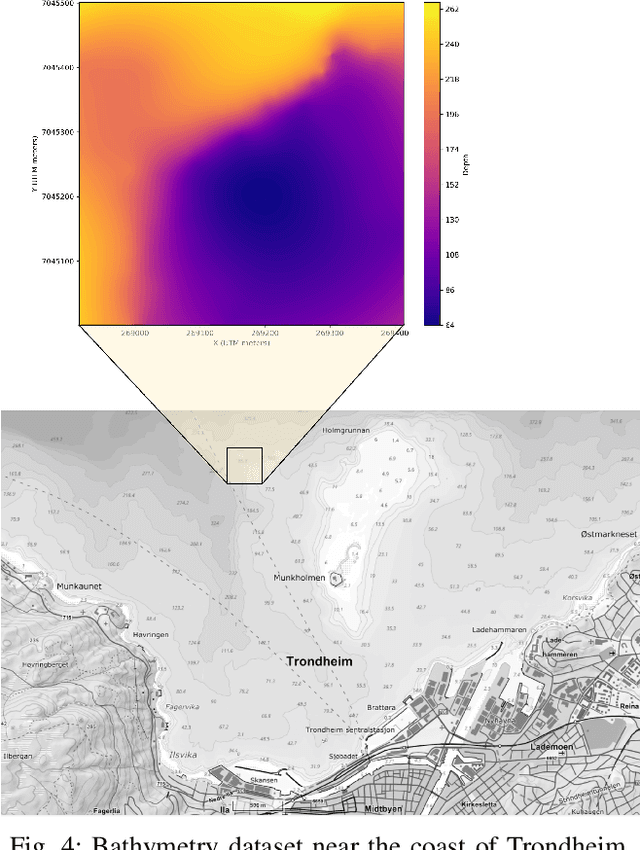
Robotic information gathering (RIG) techniques refer to methods where mobile robots are used to acquire data about the physical environment with a suite of sensors. Informative planning is an important part of RIG where the goal is to find sequences of actions or paths that maximize efficiency or the quality of information collected. Many existing solutions solve this problem by assuming that the environment is known in advance. However, real environments could be unknown or time-varying, and adaptive informative planning remains an active area of research. Adaptive planning and incremental online mapping are required for mapping initially unknown or varying spatial fields. Gaussian process (GP) regression is a widely used technique in RIG for mapping continuous spatial fields. However, it falls short in many applications as its real-time performance does not scale well to large datasets. To address these challenges, this paper proposes an efficient adaptive informative planning approach for mapping continuous scalar fields with GPs with streaming sparse GPs. Simulation experiments are performed with a synthetic dataset and compared against existing benchmarks. Finally, it is also verified with a real-world dataset to further validate the efficacy of the proposed method. Results show that our method achieves similar mapping accuracy to the baselines while reducing computational complexity for longer missions.