 Add to Chrome
 Add to Firefox
 Add to Edge
Machine Unlearning for the XGBoost Model with Network Intrusion Datasets
Jun 17, 2026
Machine Unlearning (MU) has emerged as an important technique for removing specific data points from trained models without requiring full retraining. However, most existing MU research focuses on deep learning and image data, leaving a gap in the domain of network intrusion detection, which relies heavily on tabular data. This work introduces XGBoost-Forget, an unlearning approach for the XGBoost model, to address this gap. The approach is evaluated on two tabular Network Intrusion (NI) datasets, IoT-23 and GeNIS, using multiple metrics to assess model performance, unlearning efficiency, and forgetting quality. The results show that XGBoost-Forget maintains predictive performance close to the original model while providing significantly faster unlearning, demonstrating its potential for MU in tabular NI settings.

Evaluating Local Explainability Metrics for Machine Learning Models on Tabular Data
May 26, 2026Despite the wide use of explainability techniques to attempt to understand the behavior of Artificial Intelligence (AI), the generated explanations may not always be reliable. An explanation can appear plausible to humans but fail to capture the internal reasoning of a model, particularly when dealing with complex tabular data. This paper studies the trustworthiness of local explainability techniques when applied to complex tabular classification tasks, considering evaluated metrics for three main properties: faithfulness to the model's predictions, robustness to input data variations, and complexity of the explanation itself. A benchmark was performed for Local Interpretable Model-Agnostic Explanations (LIME), Kernel SHapley Additive exPlanations (SHAP), and Feature Ablation techniques, across 32 datasets and different types of machine learning models. Model performance ranges were analyzed to identify two groups: consensus-correct, which are samples that all models predicted correctly, and consensus-wrong, samples that all models predicted incorrectly. The obtained results demonstrate that that the explanations are not always correlated with a model's predictive performance. Instead, dataset complexity and feature distributions seem to be the main factors affecting explanation quality and reliability.
Machine Learning Transferability for Malware Detection
Mar 27, 2026Malware continues to be a predominant operational risk for organizations, especially when obfuscation techniques are used to evade detection. Despite the ongoing efforts in the development of Machine Learning (ML) detection approaches, there is still a lack of feature compatibility in public datasets. This limits generalization when facing distribution shifts, as well as transferability to different datasets. This study evaluates the suitability of different data preprocessing approaches for the detection of Portable Executable (PE) files with ML models. The preprocessing pipeline unifies EMBERv2 (2,381-dim) features datasets, trains paired models under two training setups: EMBER + BODMAS and EMBER + BODMAS + ERMDS. Regarding model evaluation, both EMBER + BODMAS and EMBER + BODMAS + ERMDS models are tested against TRITIUM, INFERNO and SOREL-20M. ERMDS is also used for testing for the EMBER + BODMAS setup.
Revisiting Network Traffic Analysis: Compatible network flows for ML models
Nov 11, 2025To ensure that Machine Learning (ML) models can perform a robust detection and classification of cyberattacks, it is essential to train them with high-quality datasets with relevant features. However, it can be difficult to accurately represent the complex traffic patterns of an attack, especially in Internet-of-Things (IoT) networks. This paper studies the impact that seemingly similar features created by different network traffic flow exporters can have on the generalization and robustness of ML models. In addition to the original CSV files of the Bot-IoT, IoT-23, and CICIoT23 datasets, the raw network packets of their PCAP files were analysed with the HERA tool, generating new labelled flows and extracting consistent features for new CSV versions. To assess the usefulness of these new flows for intrusion detection, they were compared with the original versions and were used to fine-tune multiple models. Overall, the results indicate that directly analysing and preprocessing PCAP files, instead of just using the commonly available CSV files, enables the computation of more relevant features to train bagging and gradient boosting decision tree ensembles. It is important to continue improving feature extraction and feature selection processes to make different datasets more compatible and enable a trustworthy evaluation and comparison of the ML models used in cybersecurity solutions.
Binary and Multiclass Cyberattack Classification on GeNIS Dataset
Nov 11, 2025The integration of Artificial Intelligence (AI) in Network Intrusion Detection Systems (NIDS) is a promising approach to tackle the increasing sophistication of cyberattacks. However, since Machine Learning (ML) and Deep Learning (DL) models rely heavily on the quality of their training data, the lack of diverse and up-to-date datasets hinders their generalization capability to detect malicious activity in previously unseen network traffic. This study presents an experimental validation of the reliability of the GeNIS dataset for AI-based NIDS, to serve as a baseline for future benchmarks. Five feature selection methods, Information Gain, Chi-Squared Test, Recursive Feature Elimination, Mean Absolute Deviation, and Dispersion Ratio, were combined to identify the most relevant features of GeNIS and reduce its dimensionality, enabling a more computationally efficient detection. Three decision tree ensembles and two deep neural networks were trained for both binary and multiclass classification tasks. All models reached high accuracy and F1-scores, and the ML ensembles achieved slightly better generalization while remaining more efficient than DL models. Overall, the obtained results indicate that the GeNIS dataset supports intelligent intrusion detection and cyberattack classification with time-based and quantity-based behavioral features.
SPATA: Systematic Pattern Analysis for Detailed and Transparent Data Cards
Sep 30, 2025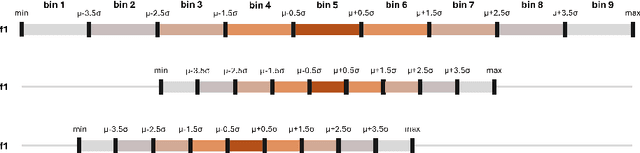
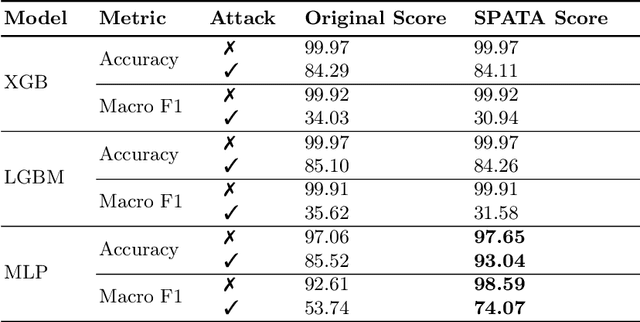
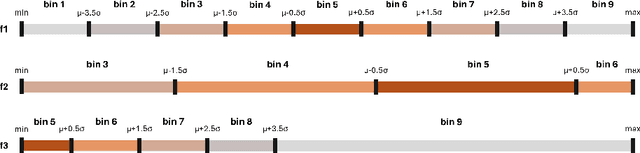
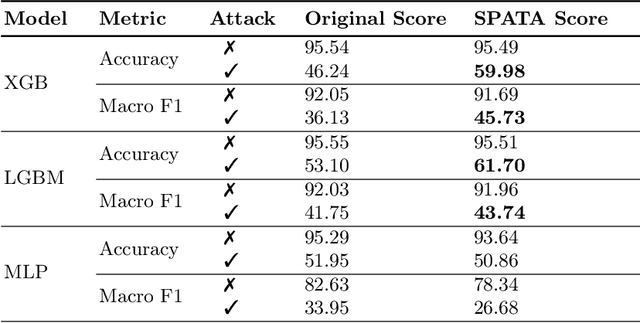
Due to the susceptibility of Artificial Intelligence (AI) to data perturbations and adversarial examples, it is crucial to perform a thorough robustness evaluation before any Machine Learning (ML) model is deployed. However, examining a model's decision boundaries and identifying potential vulnerabilities typically requires access to the training and testing datasets, which may pose risks to data privacy and confidentiality. To improve transparency in organizations that handle confidential data or manage critical infrastructure, it is essential to allow external verification and validation of AI without the disclosure of private datasets. This paper presents Systematic Pattern Analysis (SPATA), a deterministic method that converts any tabular dataset to a domain-independent representation of its statistical patterns, to provide more detailed and transparent data cards. SPATA computes the projection of each data instance into a discrete space where they can be analyzed and compared, without risking data leakage. These projected datasets can be reliably used for the evaluation of how different features affect ML model robustness and for the generation of interpretable explanations of their behavior, contributing to more trustworthy AI.
Flow Exporter Impact on Intelligent Intrusion Detection Systems
Dec 18, 2024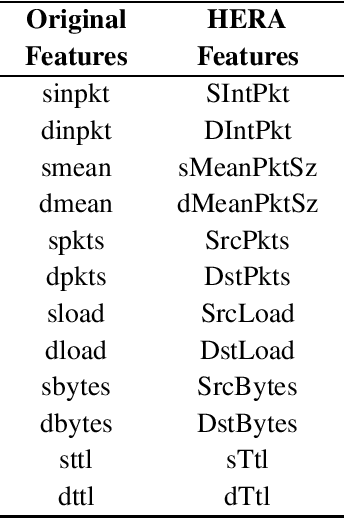
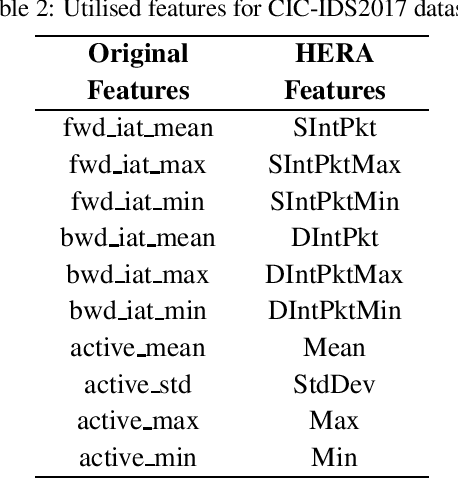
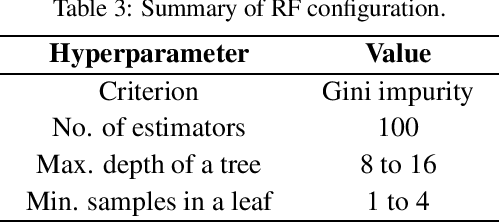
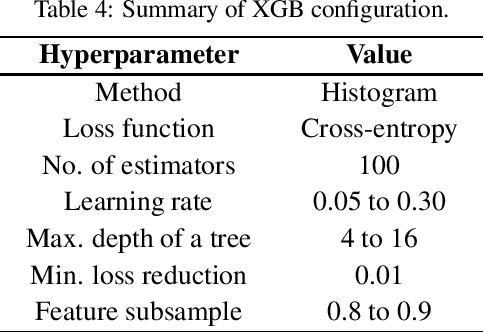
High-quality datasets are critical for training machine learning models, as inconsistencies in feature generation can hinder the accuracy and reliability of threat detection. For this reason, ensuring the quality of the data in network intrusion detection datasets is important. A key component of this is using reliable tools to generate the flows and features present in the datasets. This paper investigates the impact of flow exporters on the performance and reliability of machine learning models for intrusion detection. Using HERA, a tool designed to export flows and extract features, the raw network packets of two widely used datasets, UNSW-NB15 and CIC-IDS2017, were processed from PCAP files to generate new versions of these datasets. These were compared to the original ones in terms of their influence on the performance of several models, including Random Forest, XGBoost, LightGBM, and Explainable Boosting Machine. The results obtained were significant. Models trained on the HERA version of the datasets consistently outperformed those trained on the original dataset, showing improvements in accuracy and indicating a better generalisation. This highlighted the importance of flow generation in the model's ability to differentiate between benign and malicious traffic.
Intelligent Green Efficiency for Intrusion Detection
Nov 11, 2024


Artificial Intelligence (AI) has emerged in popularity recently, recording great progress in various industries. However, the environmental impact of AI is a growing concern, in terms of the energy consumption and carbon footprint of Machine Learning (ML) and Deep Learning (DL) models, making essential investigate Green AI, an attempt to reduce the climate impact of AI systems. This paper presents an assessment of different programming languages and Feature Selection (FS) methods to improve computation performance of AI focusing on Network Intrusion Detection (NID) and cyber-attack classification tasks. Experiments were conducted using five ML models - Random Forest, XGBoost, LightGBM, Multi-Layer Perceptron, and Long Short-Term Memory - implemented in four programming languages - Python, Java, R, and Rust - along with three FS methods - Information Gain, Recursive Feature Elimination, and Chi-Square. The obtained results demonstrated that FS plays an important role enhancing the computational efficiency of AI models without compromising detection accuracy, highlighting languages like Python and R, that benefit from a rich AI libraries environment. These conclusions can be useful to design efficient and sustainable AI systems that still provide a good generalization and a reliable detection.
Adversarial Evasion Attack Efficiency against Large Language Models
Jun 12, 2024Large Language Models (LLMs) are valuable for text classification, but their vulnerabilities must not be disregarded. They lack robustness against adversarial examples, so it is pertinent to understand the impacts of different types of perturbations, and assess if those attacks could be replicated by common users with a small amount of perturbations and a small number of queries to a deployed LLM. This work presents an analysis of the effectiveness, efficiency, and practicality of three different types of adversarial attacks against five different LLMs in a sentiment classification task. The obtained results demonstrated the very distinct impacts of the word-level and character-level attacks. The word attacks were more effective, but the character and more constrained attacks were more practical and required a reduced number of perturbations and queries. These differences need to be considered during the development of adversarial defense strategies to train more robust LLMs for intelligent text classification applications.
Efficient Network Traffic Feature Sets for IoT Intrusion Detection
Jun 12, 2024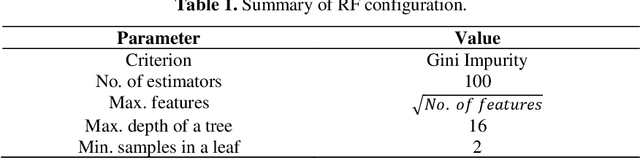
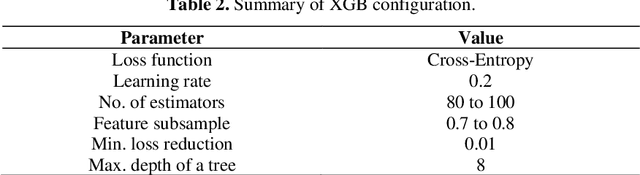
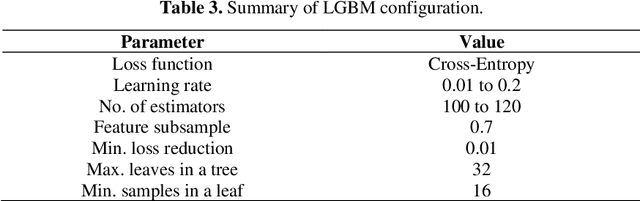
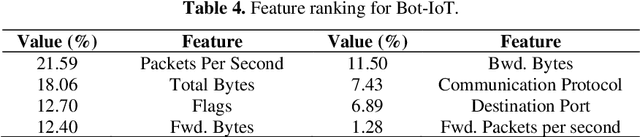
The use of Machine Learning (ML) models in cybersecurity solutions requires high-quality data that is stripped of redundant, missing, and noisy information. By selecting the most relevant features, data integrity and model efficiency can be significantly improved. This work evaluates the feature sets provided by a combination of different feature selection methods, namely Information Gain, Chi-Squared Test, Recursive Feature Elimination, Mean Absolute Deviation, and Dispersion Ratio, in multiple IoT network datasets. The influence of the smaller feature sets on both the classification performance and the training time of ML models is compared, with the aim of increasing the computational efficiency of IoT intrusion detection. Overall, the most impactful features of each dataset were identified, and the ML models obtained higher computational efficiency while preserving a good generalization, showing little to no difference between the sets.